Nuclear Experts Detail Israel Arsenal Estimates and New Dimona Construction
A new Federation of American Scientists report estimates Israel maintains 90 nuclear warheads, detailing delivery systems, submarine capabilities, and construction at Dimona.
A newly published assessment by nuclear experts at the Federation of American Scientists examines Israel's nuclear capabilities, detailing estimated warheads, delivery systems, and ongoing construction near the Negev Nuclear Research Center in Dimona. The comprehensive report was published in the Bulletin of the Atomic Scientists.
Arsenal Estimates and Plutonium Reserves
According to the Federation of American Scientists evaluation, Israel maintains an estimated stockpile of 90 nuclear warheads, matching the figure published in the previous review from 2021. This calculation derives from estimated weapons-grade plutonium inventories, suspected nuclear delivery platforms, and declassified or leaked government documents. The International Panel on Fissile Materials estimated in early 2025 that Israel may have accumulated between 800 and 1,000 kilograms of plutonium.
While theoretically sufficient to produce between 160 and 250 nuclear weapons, experts note that total plutonium production serves as a misleading metric for the actual size of the arsenal. Israel, much like other nuclear-armed nations, retains a portion of its plutonium as a strategic reserve rather than converting the entire inventory into deployed warheads. Furthermore, delivery platform constraints and military doctrine govern the actual number of required weapons.
Air Delivery Systems and Nuclear-Capable Aircraft
The review outlines the aircraft potentially assigned to nuclear missions, noting that F-16 fighter jets have long been considered the primary platform for airborne delivery. While the United States Air Force utilizes the F-15E for nuclear tasks, the report states it remains unverified whether the Israeli Air Force equipped its F-15I aircraft with similar capabilities. However, observers note a September 2019 deployment of F-15I jets from Tel Nof Airbase to the United Kingdom, which a U.S. official described at the time as a deployment of a nuclear squadron.
Regarding modern fifth-generation stealth fighters, the report mentions the F-35I Adir. Although the U.S. Air Force and several NATO allies utilize the F-35A for nuclear strike missions, a senior U.S. official previously declined to comment on whether Israel requested modifications to enable its F-35 fleet for nuclear weapons delivery. Warheads themselves are reportedly disassembled and stored in secure underground facilities rather than active airbases.
Jericho Ballistic Missiles and Submarine Fleet
Beyond aviation assets, the report evaluates land-based and sea-based delivery legs. Israel operates up to 50 Jericho ballistic missiles stationed at the Sdot Micha Airbase. While older Jericho 2 missiles maintain a range exceeding 1,500 kilometers, upgraded Jericho 3 missiles boast a range of 4,000 kilometers, sufficient to cover Iran, Pakistan, and parts of Eastern Europe.
Commercial satellite imagery reveals extensive bunker infrastructure at Sdot Micha, comprising 23 reinforced bunkers across northern and southern clusters capable of housing mobile launchers. Naval deterrence relies on the Dolphin submarine fleet stationed at the Haifa Naval Base. These vessels feature standard torpedo tubes alongside four enlarged 650-millimeter tubes, which analysts associate with launching sea-based cruise missiles.
Dimona Facility Expansion and Congressional Inquiry
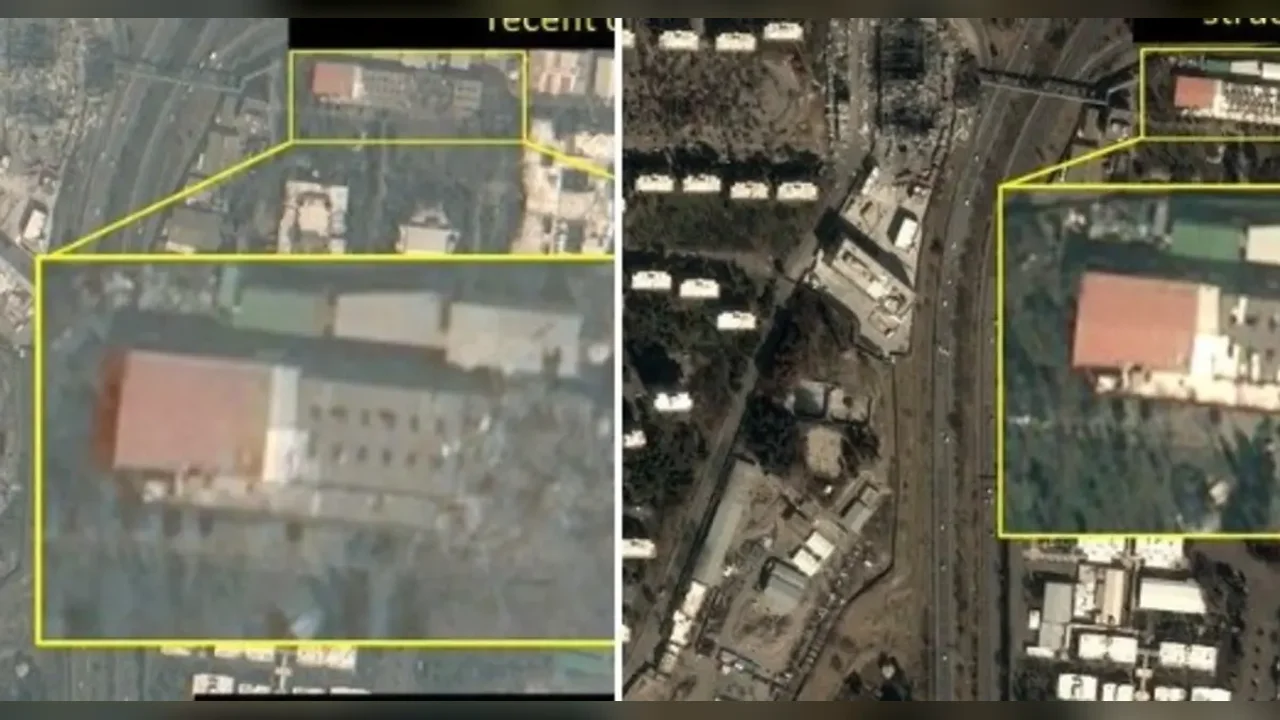
Satellite imagery indicates that the Dimona reactor site has undergone its most extensive construction phase in decades, featuring deep excavations and underground tunneling alongside a newly constructed circular structure of comparable diameter to the primary reactor vessel. Officials maintain plans to operate the aging reactor until 2040, though eventual replacement will present challenges given Israel's non-signatory status to the Nuclear Non-Proliferation Treaty.
Meanwhile, U.S. policy regarding the long-standing policy of ambiguity faced legislative pressure when 30 Democratic members of the U.S. Congress addressed a public letter to U.S. Secretary of State Marco Rubio, urging transparency regarding Israel's nuclear program. During a House Foreign Affairs Committee hearing in June, Rubio addressed the matter directly:
"If we are being honest, I think most of the world assesses that they have. But they have never admitted it publicly, and as part of our foreign policy, we also do not discuss it in that fashion."