IDF Strikes Expose Iran's Covert Chemical Weapons Research and Production Network
An investigative report reveals the three-tiered network behind Iran's chemical weapons program, spanning universities, defense facilities, and pharmaceutical plants targeted by recent Israeli strikes.
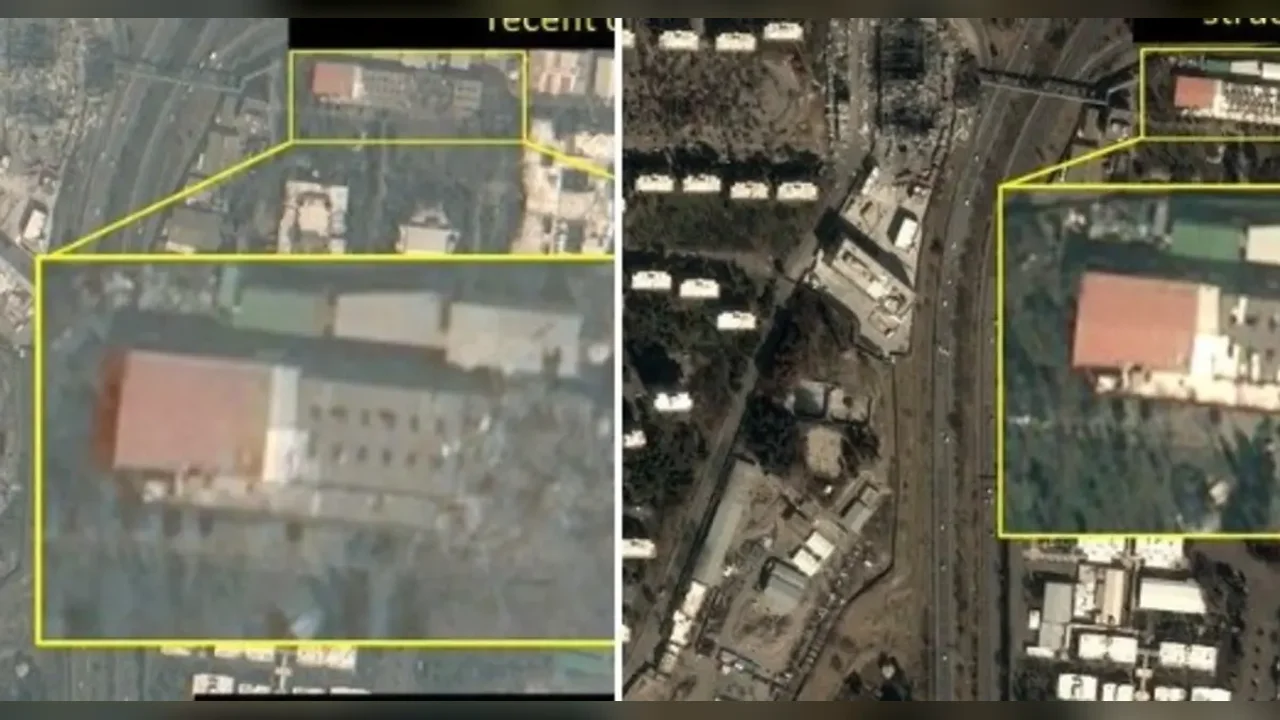
On March 31, the Israeli Air Force struck a pharmaceutical facility in Tehran that, according to the IDF, supplied the Iranian regime with materials used to develop chemical weapons. While not a nuclear site or missile plant, the facility formed part of a clandestine network spanning universities, research laboratories, and ostensibly civilian companies that bridged scientific research, defense development, and Iran's pharmaceutical industry.
The Three-Tiered Structure
Intelligence findings from researcher Ronen Solomon's book "Thwarting the Bomb" reveal that Iran's chemical weapons program relies on a tripartite structure. The first tier involves academic research conducted at universities and scientific institutions. The second tier encompasses development inside defense facilities subordinate to the Iranian Ministry of Defense. The third tier executes production through factories and commercial enterprises operating across both civilian and military sectors.
This operational model centers along the Tehran-Karaj axis. At the forefront, the Islamic Revolutionary Guard Corps' Imam Hussein University conducted extensive studies on central nervous system agents. As early as 2005, Dr. Hossein Fakharian published research involving fentanyl, alongside researcher Mohammad Javad Tajizadeh. According to the US Department of State, the university sought significant chemical anesthetic quantities from China in 2014, and in 2023 documents emerged detailing the development of an anesthetic-dispersing grenade. A year later, Washington announced that Iran had developed and armed munitions with pharmaceutical-based chemical agents.
Defense Research and Industrial Production
Beyond academia, the military apparatus operates the Organization of Defensive Innovation and Research, known as SPND, a research and development body established by the late Mohsen Fakhrizadeh, who was assassinated in 2020. Under this organization, the Shahid Meisami group operated facilities where the US imposed sanctions for involvement in developing and producing incapacitating chemical agents. Research findings indicate that experiments involving Novichok and variants of sarin took place at this center.
Fentanyl-family compounds can cause unconsciousness and respiratory depression, while mustard gas inflicts severe skin and respiratory injuries, and nerve agents such as sarin and Novichok risk paralysis and death. The third tier leverages the pharmaceutical industry. The Tofigh Daru factory, presenting itself as a commercial drug manufacturer, supplied fentanyl-family materials to SPND. In December 2023, Javad Mashayekh, an individual linked to the defense organization, was documented inside the factory's laboratories.
Nationwide Network and Historical Context
During recent Israeli strikes, all three components along this axis were targeted. The Shahid Meisami center was struck, the chemistry center at Imam Hussein University was destroyed according to the IDF, and Tofigh Daru was hit in late March. Similar networks extend beyond Tehran. In Isfahan Province, the Hakiman-e Sharq research company presented itself as a medical and healthcare enterprise before the US sanctioned it in July 2024 for chemical weapons research and development near the ISTT science park.
Iran's chemical weapons ambitions date back to the Iran-Iraq War, during which Tehran manufactured chemical agents and subsequently transferred weaponry to Libya in 1987, a fact confirmed last year by former Islamic Revolutionary Guard Corps Minister Mohsen Rafighdoost. Although efforts to rehabilitate damaged research facilities continue, security concerns extend to missile delivery systems. Iran possesses missiles equipped with cluster warheads, raising ongoing concerns regarding the potential adaptation of unconventional payload dispersion systems despite the absence of public evidence proving chemical warhead integration.