Israel Enters Global Top 25 Economies with Projected 747 Billion Dollar GDP
Israel is projected to enter the world's top 25 economies for the first time with a 747 billion dollar GDP in 2026, driven by growth upgrades and a stronger shekel.
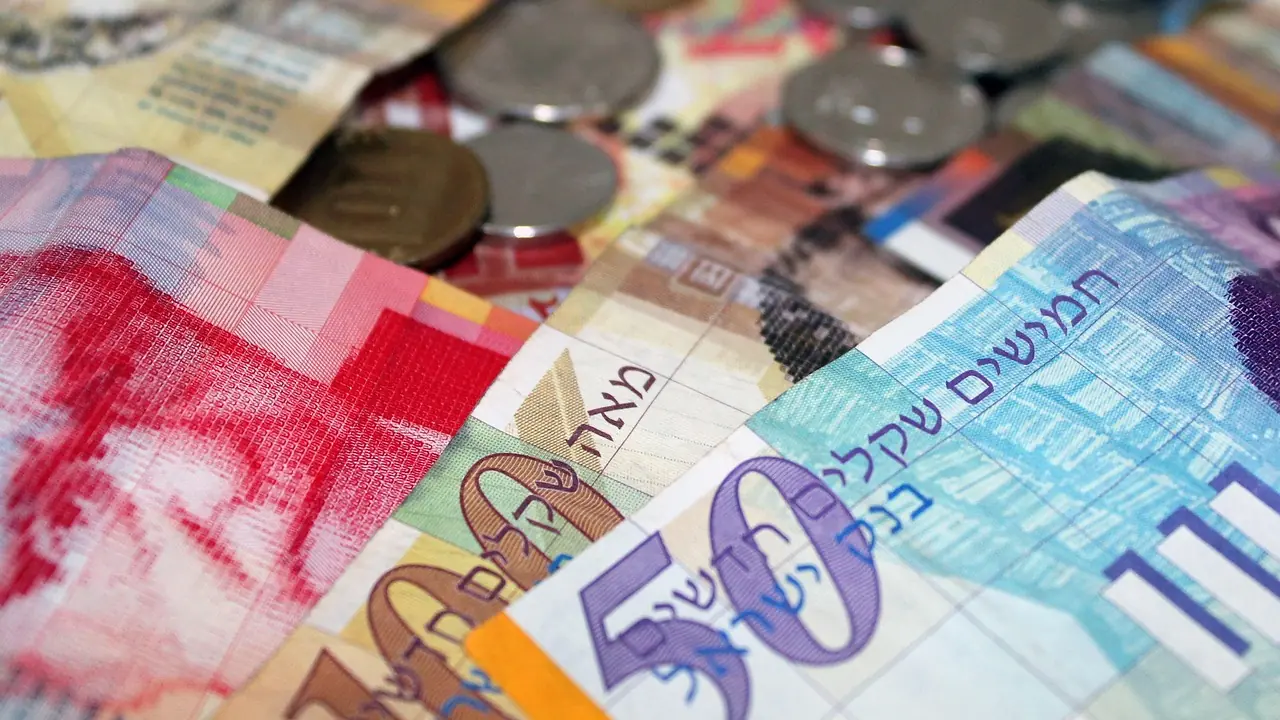
Israel is projected to conclude 2026 ranked among the top 25 largest economies in the world for the first time in its history. According to International Monetary Fund (IMF) projections released in October, Israel's nominal gross domestic product is expected to reach approximately 747 billion dollars this year, placing the country 25th globally, slightly ahead of Belgium and Argentina.
Israel has surpassed Sweden, whose GDP is projected to reach approximately 745 billion dollars, and Ireland, at 710 billion dollars. This marks an improvement from the IMF's April forecast, which placed Israel 26th with an expected output of approximately 720 billion dollars. In 2025, Israel held the 27th position.
Two primary factors drove this upward trajectory. First, the IMF upgraded Israel's 2026 growth forecast in October to 4.5%, up from 3.5% in the April outlook. Second, the strengthening of the shekel directly influenced a ranking calculated in dollar terms. During the year, the dollar traded around 2.9 shekels, and a stronger domestic currency inflates the measured dollar value of Israel's output even without a parallel surge in local economic activity.
At the top of the global economic ladder, the United States continues to lead with an expected GDP of 32.6 trillion dollars, followed by China at 21.5 trillion dollars and Germany at 5.5 trillion dollars.
The Purchasing Power Reality Check
Despite the milestone, economists emphasize that the nominal ranking requires careful interpretation. The gap between Israel and Sweden stands at approximately 1.9 billion dollars, leaving room for minor forecast adjustments or exchange rate fluctuations to alter their relative standings.
Furthermore, when measured by purchasing power parity (PPP), which accounts for differing price levels across nations, Israel ranks only 50th with an output of approximately 620 billion dollars in purchasing power terms. This stark contrast illustrates how heavily nominal rankings depend on foreign exchange rates rather than reflecting the broader domestic cost structure.