Israeli Offshore Gas Reservoirs Post Record 2 Billion Dollar Revenue Quarter
Israel's offshore gas reservoirs hit a record 2 billion dollars in quarterly revenue, yielding 600 million dollars for the state. Production upgrades and high global oil prices drove the surge.
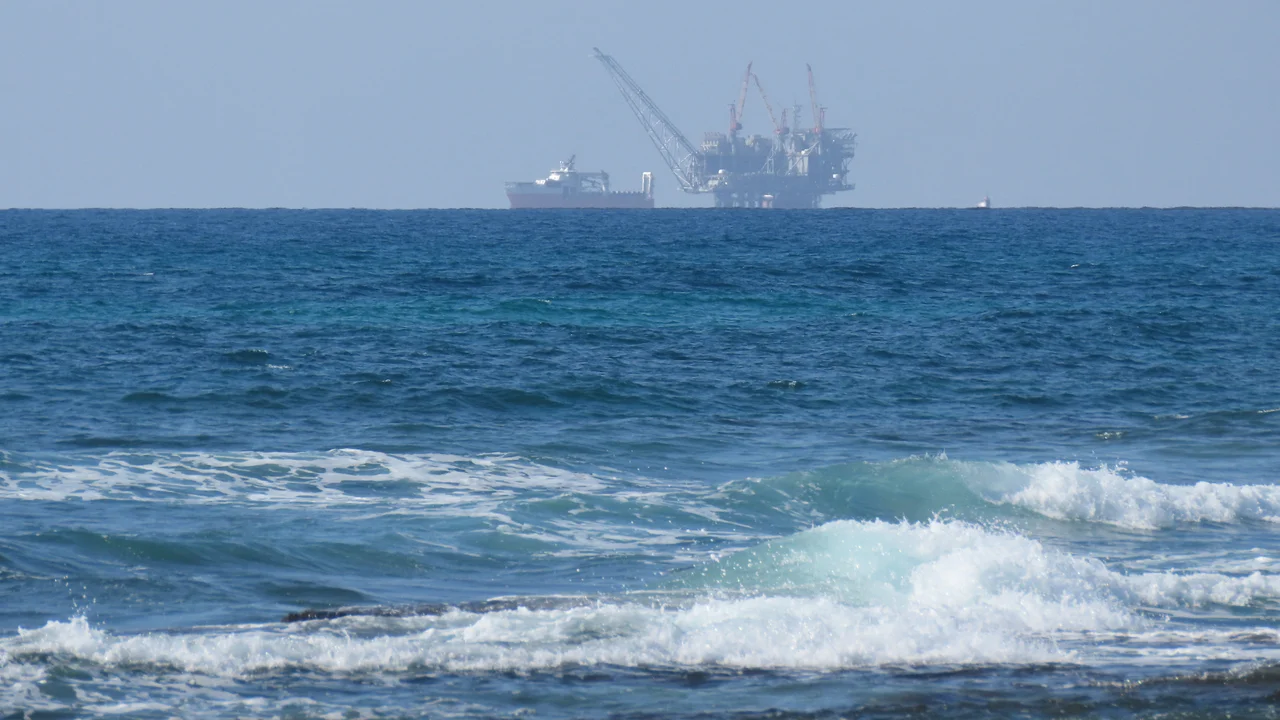
Israel's offshore natural gas reservoirs generated record quarterly revenues nearing 2 billion dollars, driven by expanded production capacity and elevated global energy prices. Partnerships operating the Leviathan, Tamar, and Energean-managed fields—primarily the Karish and Tanin reservoirs—reported the unprecedented financial results. State coffers and the national wealth fund are simultaneously projected to harvest approximately 600 million dollars from this single quarter, underscoring the sector's surging fiscal contribution.
Production Expansions and Export Bottlenecks
Two primary catalysts propelled the dramatic revenue surge: physical infrastructure upgrades and soaring global commodity prices. Pipeline installations directly connecting offshore wells to production platforms exceeded initial volume expectations. Earlier in the year, the Leviathan reservoir expanded its theoretical production capacity from 12 billion cubic meters annually to 15.8 billion, outstripping earlier forecasts of 14 billion. Concurrently, the Tamar field expanded its output capacity, reaching a projected 16 billion cubic meters annually.
With domestic production capacity surging, physical output ceased to act as the primary operational bottleneck. Instead, export capacity emerged as the principal limiting factor. This restraint was substantially mitigated by the state-owned National Gas Line Company laying the Ashdod-Ashkelon pipeline segment. Future infrastructure additions, including a planned Nitzana pipeline, are slated to expand regional export channels even further.
Brent Crude Prices and Export Formulas
Simultaneously, international crude prices spiked over preceding quarters amid geopolitical conflict involving Iran and the closure of the Strait of Hormuz. Although maritime shipments partially resumed through the Persian Gulf, elevated shipping and insurance surcharges—accounting for roughly 30 percent of transport costs—kept delivered energy expensive. Consequently, Brent crude traded at an average of 94 dollars per barrel.
This pricing dynamic directly impacted natural gas revenue because export contracts, particularly for Leviathan, utilize pricing formulas indexed to Brent crude. The average natural gas sales price for Leviathan in the third quarter of 2026 stood at 6.39 dollars per thermal unit, compared to 5.43 dollars in the same period of 2025. Because production expansions primarily feed export markets, reservoir operators capitalized on premium pricing for newly unlocked volumes.
Even the Karish-Tanin complex, which directs its natural gas exclusively to the domestic economy, benefited from high energy markets. While domestic gas sales prices remained fixed, the field produces significant quantities of condensate—a light liquid hydrocarbon recovered during gas extraction. Periodically collected by visiting tankers and sold on international markets, these condensate sales allowed the local supplier to capture global crude price premiums.
State Revenues and Fiscal Returns
The State of Israel stands as one of the primary beneficiaries of the offshore boom, collecting wellhead royalties, corporate taxes, and specialized resource levies. State royalties derived directly from reservoir revenues reached 209 million dollars for the quarter, up from 150 million dollars in the third quarter of 2025. Additionally, the Sheshinski excess-profits levy—assessed on reservoirs that have recouped their initial capital investments—contributed roughly 190 million dollars from the Tamar field, with Leviathan projected to enter the levy framework by 2028.
Corporate tax contributions from the energy partnerships added an estimated 200 million dollars. Combined with royalties and windfall taxes, state entities and the wealth fund anticipate receiving approximately 600 million dollars, equivalent to roughly 2 billion shekels, in a single quarter.
Market Outlook and Long-Term Concerns
Energy analysts view the current operational tempo as a historical watershed. Roi Shavit, an energy analyst at IBI Investment House, noted that capacity expansions and the Ashdod-Ashkelon flow routing pushed sales velocities to record highs. However, Shavit cautioned that record revenues do not translate one-to-one into net equity returns for unit holders:
"As reservoirs become increasingly profitable, the burden of the Sheshinski levy rises while partnerships simultaneously navigate a heavy capital expenditure cycle focused on expanding Leviathan and export infrastructure."
While offshore fields enjoy optimal production volumes and robust export pathways, Shavit emphasized that the central question for coming years is how much cash flow ultimately reaches investors.
Conversely, public advocates have raised warnings regarding long-term resource depletion. According to Ofir Peer, a public lobbyist for Lobby 99:
"Short-term state revenues will not help us when they are driven by accelerated exports, which shorten reservoir lifespans and lead the country toward daily domestic gas shortages in under fifteen years."
Advocacy groups continue to press for export restrictions designed to secure domestic market surpluses, foster local competition, and lower consumer energy prices.