Decentralized Six-Man Council Shapes Iran's Leadership Following Khamenei
Months after the death of Ali Khamenei, Iran is governed by a decentralized six-man council balancing military commanders and civilian officials amid internal power struggles.
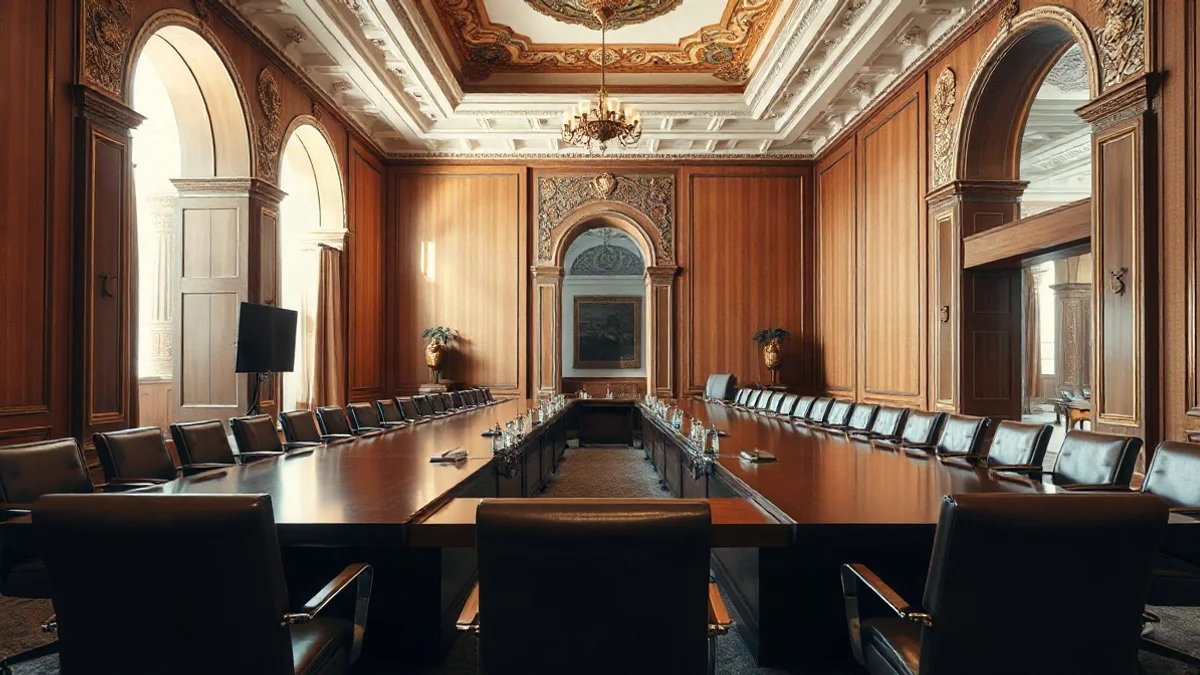
Eight months after succeeding his father as Supreme Leader, Mojtaba Khamenei remains largely unseen and unheard in Tehran. According to a comprehensive report published by the British weekly The Economist and corroborated by Western think tanks, the highly centralized autocratic rule maintained by his late father through a 44,000-strong bureaucracy has been replaced by a much more decentralized oligarchy. Major state decisions are now handled by a steering group of six senior officials drawn from the Supreme National Security Council.
The Ruling Council Dynamics
The six-man committee includes only two prominent civilian members: Minister of Foreign Affairs Abbas Araghchi, who serves as the regime's international voice, and President Masoud Pezeshkian, who is left to grapple with wartime recession, soaring inflation, and severe shortages of fuel and basic commodities driven by American blockades. The remaining four members emerged from the ranks of the Islamic Revolutionary Guard Corps (IRGC). Council Secretary Mohsen Rezaei commanded the organization at age 27 during the Iran-Iraq War, alongside current IRGC Commander Ahmad Vahidi. Parliament Speaker Mohammad Bagher Qalibaf previously led the IRGC air force, while Chief of the General Staff Ali Abdollahi serves as a senior military general.
Decentralized Flexibility and Power Struggles
Analysts note that the absence of a supreme arbiter provides the leadership with greater operational flexibility. While the late Khamenei frequently hesitated, the six officials reach decisions more rapidly on major issues such as nuclear policy and military strategy, with each enjoying wide autonomy within his domain. An academic in Tehran observed that removing the elder Khamenei effectively eliminated bureaucratic bottlenecks, making governance more efficient. However, this provisional power structure also breeds internal friction and ambiguity over ultimate authority. Tensions have frequently surfaced between pragmatic figures seeking diplomatic engagement with the United States and hardline factions backed by figures such as Saeed Jalili.
Regional Posture and Nuclear Ambitions
Meanwhile, internal security enforcement has loosened in some social spheres, allowing young Iranians to flout strict religious dress codes and celebrate events like Halloween, though the Basij paramilitary force under the command of hardline cleric Hossein Taeb continues a brutal crackdown on dissent, executing nearly 700 people over the past year. In the security arena, the decentralized chain of command is designed to ensure continuous missile and drone operations even if senior commanders are targeted. Hardline factions and the Assembly of Experts have increasingly called for reversing the late leader's fatwa against nuclear weapons, declaring a shift in nuclear doctrine an inevitable necessity as indirect diplomatic channels with Washington remain stalled.