Maldives Imposes Strict Real Estate Bans on Israelis Amid 20B Project Dispute
The Maldives is facing a domestic political storm over a 20 billion dollar real estate project involving an Emirati firm, sparking strict bans on Israeli investors and dual citizens.
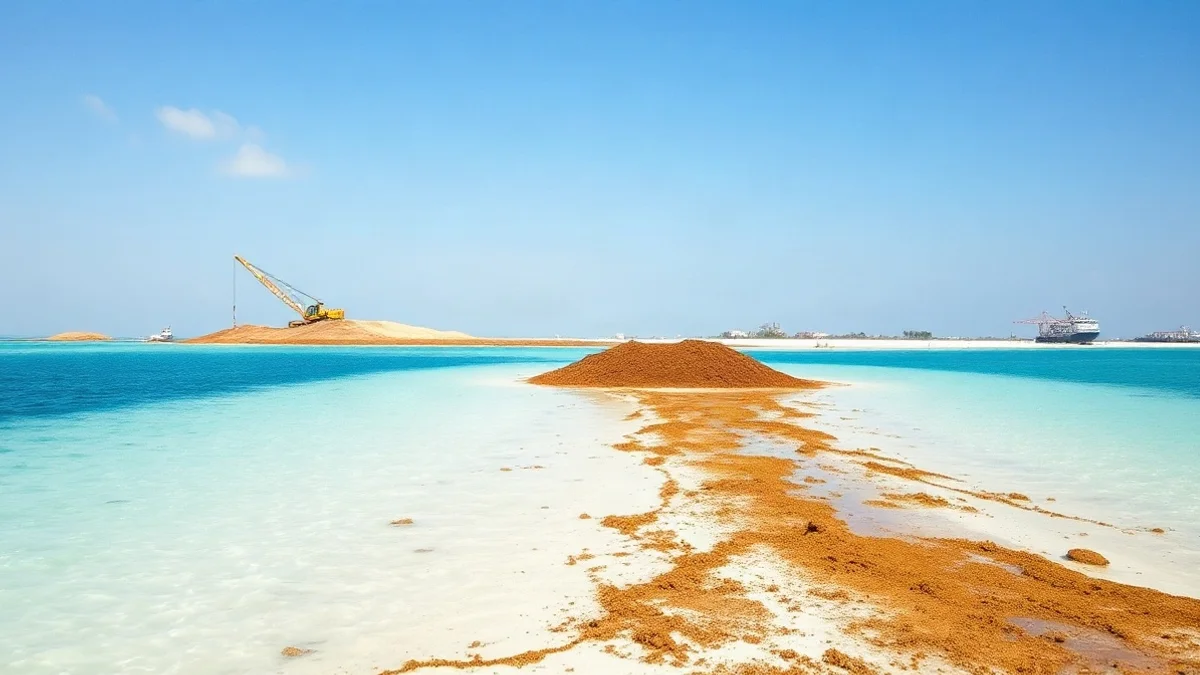
Political and Economic Storm Over the Maldives
The decision by the Maldivian government to institute an unconditional, permanent ban on Israeli nationals, closing loopholes for dual citizens, has exposed a complex political, economic, and constitutional crisis. Behind the dramatic headlines regarding border controls and real estate restrictions lies a fierce domestic struggle in the Indian Ocean archipelago. President Mohamed Muizzu faces intense pushback from the political opposition, local protests, and legal challenges over a massive multi-billion-dollar development project.
At the center of the controversy is the link between immigration laws and the newly proposed Real Estate Bill in parliament. The legislation not only bans tourist entries but explicitly prohibits selling leasehold rights in integrated development zones to citizens of countries barred from entering the Maldives. It specifically targets Israeli citizens and corporate entities under their direct or indirect ownership, declaring any conflicting transaction null and void.
The Megaproject Driving the Controversy
The real estate bill became highly contentious due to the Rasmalé project, a massive artificial city being constructed through land reclamation in the Fushidhiggaru lagoon near Malé and the international airport. Launched in December 2023 to address severe local housing shortages with a target of 65,000 residential units, the project has turned into a political flashpoint.
In September 2026, the government signed a commercial term sheet with Eagle Hills, a development company based in Abu Dhabi in the United Arab Emirates. The firm was allocated 5,000 dunams of the new island to establish the Maldives Waterfront and Marina, featuring luxury hotels, private apartments, a yacht marina, and commercial hubs with an estimated investment of up to 20 billion US dollars.
However, the selection of the Emirati firm triggered deep suspicion because its founder and chairman is Emirati billionaire Mohamed Alabbar. Critics associate him with business ties to Israel, ranging from public support for the Abraham Accords to marketing international real estate projects to Israeli investors. Although Alabbar publicly committed to obeying local laws and government ministers insisted his past ties were severed, opponents warned that the deal could serve as a backdoor for Israeli property acquisition.
Opposition Pushback and Sovereignty Concerns
Critics also argue that land reclaimed using 800 million US dollars of public funds is being handed over to foreign entities on 99-year lease contracts that automatically renew upon transfer, permanently stripping the state of ownership. The Maldivian Democratic Party (MDP) passed a resolution in its national council demanding a referendum on the project, backed by mass street protests in Malé.
Former President Yameen addressed a large rally, vowing that a future government would cancel the Eagle Hills agreement without compensation. The debate has also drawn in religious and constitutional arguments, with legal experts warning that allowing foreign settlers could eventually grant them citizenship and threaten the Islamic identity of the nation as defined by Article 10 of the constitution.
President Muizzu Defends the Project and Enforces Strict Screening
President Muizzu has flatly rejected calls for a referendum, asserting that the project will proceed once parliament passes the real estate bill. He defended the partnership as a vital driver of economic growth that will deliver 5,000 additional housing units for local families.
To neutralize accusations of a backdoor for Israeli investors, Muizzu introduced stringent screening mechanisms in the real estate bill:
-
Foreign nationals from any single country are restricted to purchasing a maximum of 25 percent of the properties within the project.
-
Properties will be sold on 99-year leases without automatic renewal.
-
Rigorous Know Your Customer (KYC) and due diligence checks will be enforced on all financial transactions to prevent Israeli citizens or dual passport holders from investing.
Simultaneously, Muizzu utilized diplomatic messaging to reaffirm his alignment with Palestinian interests, marking the anniversary of the Palestinian declaration of independence with statements of solidarity addressed to Palestinian leadership.
Tighter Immigration Enforcement for Dual Nationals
For travelers, the political shifts have translated into stringent border enforcement. The amended immigration law broadens entry bans to include individuals subject to International Criminal Court (ICC) or Interpol arrest warrants, terrorism suspects, and any holders of Israeli passports, even if traveling on a third-country document.
Although international aviation norms recognize a traveler's primary citizenship as declared on their active passport, local border authorities in Malé prioritize domestic sovereignty. Immigration officials cross-reference place-of-birth data in foreign passports, advanced passenger information systems, and electronic arrival forms such as the IMUGA declaration. Concealing Israeli citizenship constitutes a criminal offense of providing false information, resulting in immediate detention and deportation.