Pollution incidents in Judea and Samaria: Sewage threatening the water of millions of Israelis
A report by the Binyamin Regional Council points to a series of cases where sewage and waste were dumped into open areas and stream channels, raising concerns about environmental consequences that extend beyond the region's borders. Binyamin Regional Council head and Yesha Council chairman Israel Gantz: "The State of Israel must treat this situation as a national environmental threat."
Raw sewage spilled in the field, waste dumped into stream channels, and environmental hazards that recur again and again — this is the situation emerging from a new report by the Binyamin Regional Council. In just one month, 19 pollution incidents were documented in Binyamin. The council warns that the consequences could reach far beyond Judea and Samaria and affect water sources and areas where millions of Israelis live.
A report by the Land Department of the Binyamin Regional Council, based on observations and reports from land surveyors, presents the scope of the phenomenon during the month of July. The incidents were documented in a series of locations throughout Binyamin — from western Binyamin and the Route 443 area, through Route 60, to Ma'ale Levona and Nahal Prat.
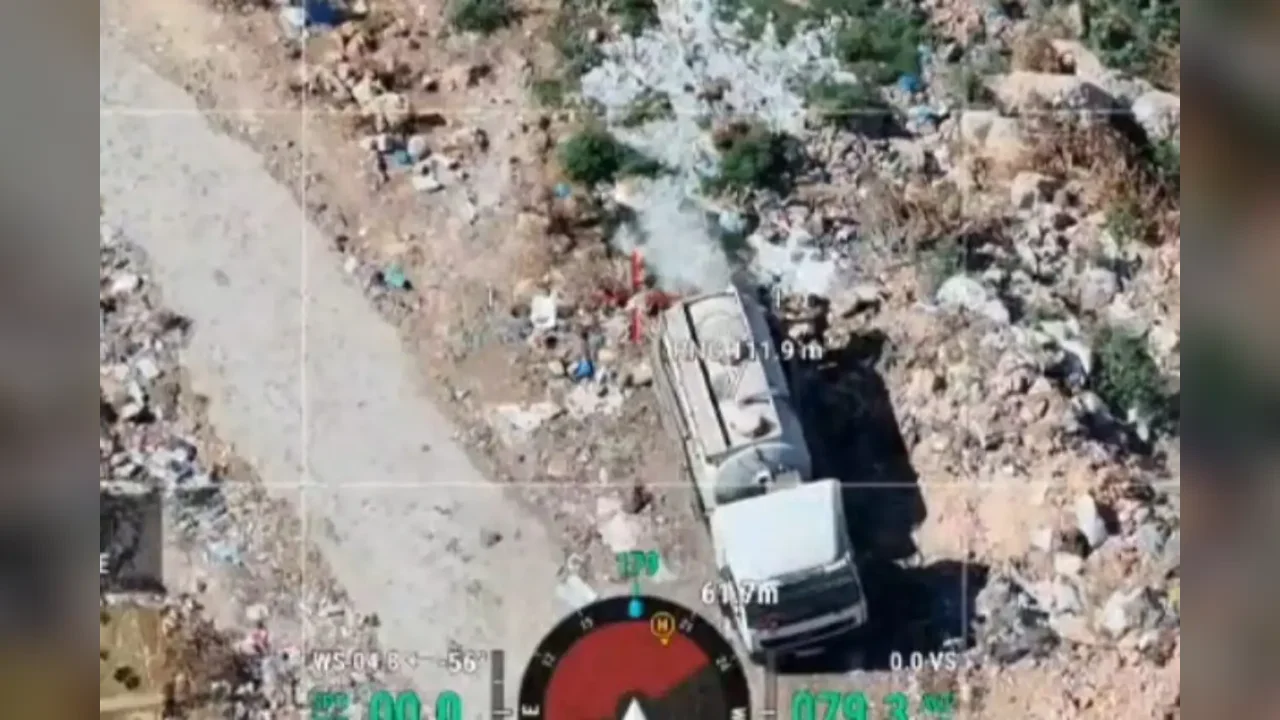
In western Binyamin, not far from Modi'in and Route 443, a truck was documented dumping soil in the Beit Ur al-Tahta area. In the Beit Anan area, another hazard was documented, and in Nahal Salman, several cases were recorded where sewage tankers dumped their contents in the field. In one case, a sewage tanker was even caught in the act.
In the Burqa area, near Route 60, several reports were also received during the same month. At the beginning of July, a report was received about a sewage tanker dumping waste south of the village. A few days later, another tanker was caught on the outskirts of Burqa, and later in the month, another report was received from the same area.
Further north, near the Ma'ale Levona junction, a sewage tanker was caught on July 20 dumping sewage in the field. In this case, the forces managed to arrive in time, but in eight of the 19 incidents documented during the month, the suspects or vehicles had already left the scene before the forces arrived.
The pollution also reached Nahal Prat, one of the well-known and popular nature sites in the Jerusalem and Ma'ale Adumim area. During the month, waste dumping was documented there, alongside other pollution hotspots throughout Binyamin.
Fear of the spread of pollution to water sources
19 incidents in 31 days are not a collection of isolated cases, but a recurring phenomenon. And this, the council emphasizes, reflects only the incidents that were caught and documented.
However, the problem does not end where the sewage or waste is dumped. After all, Binyamin sits on a major watershed, and sewage dumped into stream channels or seeping into the ground can reach extensive water systems and affect areas where millions of Israelis live.
Deputy head of the Binyamin Regional Council and chairman of the Samaria Environmental Quality Association, Amihai Rahamim, attacked the phenomenon and called on the Civil Administration to step up enforcement.
"The Land of Israel is a 'good land, a land of brooks of water, of fountains and depths that spring out of valleys and hills,' it is certainly not supposed to be a land of raw sewage streams," said Rahamim.
According to him, "The Arabs in Binyamin, Judea and Samaria are careful, even in the field of sewage, to destroy every good plot and every stream by dumping raw sewage directly and through sewage tankers that dump sewage without any purification straight into the streams and groundwater. I call on the Civil Administration to act assertively and proactively to eradicate the phenomenon and take responsibility for sewage management from end to end."
Binyamin Regional Council head and Yesha Council chairman Israel Gantz said that the significance of the events goes far beyond the borders of Binyamin.
"Anyone who looks at the map understands immediately: this is not a distant story and not a problem for the residents of Judea and Samaria alone. We are talking about pollution near Modi'in, along the axes that connect Jerusalem to the center of the country, and in the streams that we all hike in," said Gantz.
"There is no Green Line for groundwater and there is no barrier that can stop a stream. The State of Israel must treat this pollution as a national environmental threat, take responsibility for sewage treatment, and prevent the pollution at the source. This concerns the water and environment of millions of citizens in Israel."