How Modern Sanitation and Technology Diminished Our Sense of Smell
Two new books, William Tullett's 'Sniff' and Bjørn Berge's 'Smell', explore how modern sanitation and technology replaced our reliance on the sense of smell with labels and expiration dates.
A few centuries ago, the human experience was deeply rooted in the olfactory realm. Clothes, professions, and social standing were unmistakably announced by scents before a single word was spoken. Modern sanitation, refrigeration, and synthetic fragrances largely sanitized our urban environments, trading pungent realities for hygiene and comfort. Yet, alongside the foul stenches we successfully eliminated, we also lost a fundamental way of engaging with the world.
Two notable books explore this sensory shift from different angles. In "Sniff: A History of Smells," historian William Tullett traces the social and historical trajectory of specific odors across centuries. Meanwhile, in "Smell: The Tale of a Fading Sense," translated from Norwegian by Lucy Moffatt, architect Bjørn Berge compiles a whimsical cabinet of curiosities examining how scent intersects with history, chemistry, and memory. While Tullett offers a broad historical panorama, Berge delivers a more eclectic and playful collection.
The Decline of Olfactory Literacy
Neither author argues that modern humans have literally lost their sense of smell. Instead, both suggest that we have suffered a collective decline in "olfactory literacy"—the ability to interpret and decode the information scents provide. In the past, people relied on their noses to test food freshness, detect fires, or identify nearby tanneries. Today, technological regulations, expiration dates, and warning labels have replaced the nose as our primary source of environmental information.
Tullett illustrates this historical depth through fascinating vignettes. In medieval Paris, an English churchman described the scent of libraries as sweeter than spice shops. Centuries later, in 1978, this intoxicating aroma became an unusual motive for theft. Bruno Pagano, accused of stealing thousands of pounds worth of rare volumes from Oxford University's Bodleian Library, told police that the scent of the books simply made him want to take them.
Industrialization and Environmental Cost
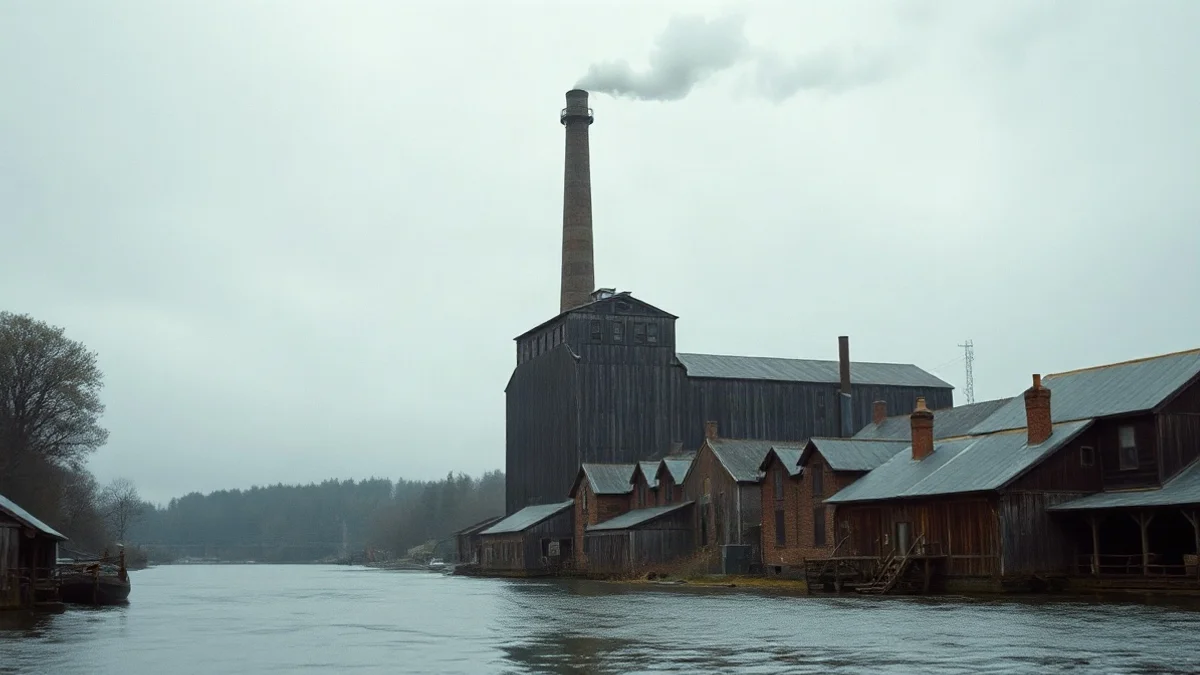
Industrial progress dramatically altered the olfactory landscape, often exchanging organic aromas for heavy industrial pollution. For generations, paper production relied on soaking rags in chlorine, later shifting to sulfite-treated wood chips. By the 1940s, this process generated such a foul discharge in Maine's Androscoggin River that local children sold clothespins to passersby to block out the stench.
Tullett points out that these sensory burdens were rarely distributed equally. In the United States, industrial paper mills were frequently established in predominantly minority neighborhoods, forcing marginalized communities to bear the brunt of environmental pollution.
Scents as Social Markers
Berge focuses more closely on the social and erotic dimensions of scent. In the sixteenth century, women might carry a peeled apple under their armpits to absorb their natural scent before gifting it to a lover. Napoleon famously requested Josephine not to bathe before his return from the campaign trail so he could enjoy her natural aroma.
During wartime, scent identification took on stark survival value. During the Vietnam War, Viet Cong fighters could reportedly detect American troops by the scent of their soap, aftershave, and dairy-rich diet, while American forces learned to recognize the distinct aroma of fermented fish sauce.
Modernity has not eradicated scents; rather, it has transformed our relationship with them. We no longer smell milk to check if it has soured; we check the expiration date. While our modern world smells undeniably cleaner, we have traded an intuitive sensory connection for technological certainty.