Exceptionally: Class Action Reform to Advance During Knesset Recess
The Constitution Committee is expected to discuss an amendment to the Class Action Law during the Knesset recess, following agreements between the coalition and the opposition. The amendment aims to curb the abuse of class actions, particularly against small businesses.
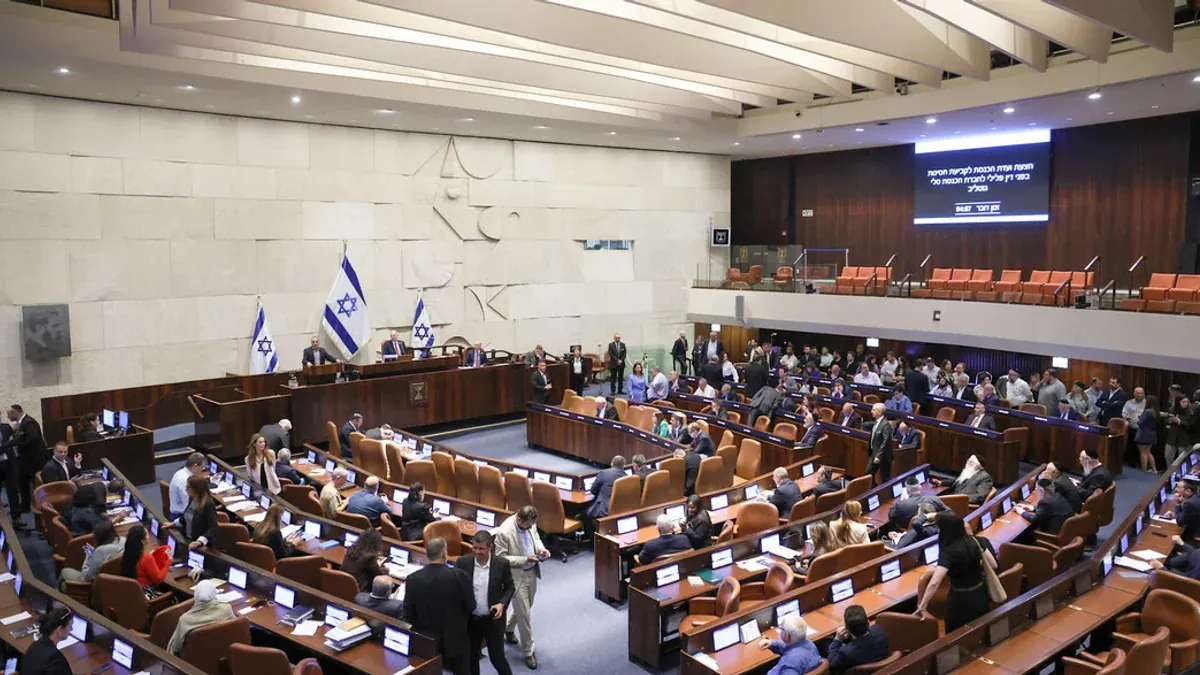
The Knesset Constitution, Law and Justice Committee is expected, in an exceptional move, to discuss an amendment to the Class Action Law ahead of its second and third readings during the Knesset recess, most likely in September. This follows agreements between the coalition and the opposition within the framework of the "Agreements Committee," which approves discussions during the recess. The move was promoted by former Knesset member Abir Kara, who has been working in recent years for the benefit of small and medium-sized businesses suffering from a multitude of class action lawsuits.
The amendment to the law passed its first reading in early 2024 but has not progressed since.
Chairman of the Constitution Committee, MK Simcha Rothman, stated:
"I see great importance in promoting the Class Action Law, and I played a central role in pushing the Agreements Committee. I will do everything in my power to ensure that the discussions, which will likely be held in September, will ripen into the legislation of the law within this Knesset."
Kara said in response: "Thousands of business owners, entrepreneurs, and outstanding citizens have fallen victim in a 'Sodom state' to frivolous lawsuits by a cartel of serial plaintiffs and greedy lawyers. It is a factory of destruction and ruin that takes place like a daylight robbery in court and crushes families. During the struggle I led in recent years, I realized that there is no choice but to make legislative changes that will close this looting factory. I and tens of thousands of other business owners take our hats off to the Minister of Justice, the Chairman of the Constitution Committee, the Chairman of the Coalition, the Leader of the Opposition Yair Lapid, the wonderful MK Merav Ben-Ari, and the professional echelons in the Ministry of Justice. This war, which has been joined by elements in both the opposition and the coalition, will correct a terrible injustice that has harmed the most productive and contributing public in the country."
Canceling the possibility of filing a class action against micro-businesses
The amendment is expected to revolutionize the field in an attempt to solve the abuse of the law, and it is stirring emotions in the market among business owners exposed to lawsuits and lawyers. Work on the amendment has been ongoing for four years at the Ministry of Justice.
One of the central amendments in the proposal is the cancellation of the possibility of filing a class action against micro-businesses. These are currently defined as a business with up to five employees or with an annual turnover of 2 million shekels. Today, class actions are filed against micro-businesses for high amounts, and they are forced to defend themselves against them at significant costs, including legal representation.
Another significant change will be the establishment of a mandatory prior notice requirement for certain minor offenses. For example, violation of the Spam Law and violation of the obligation to deduct packaging weight from the price.
In recent years, class actions in the field of spam have increased, to the point of deliberate efforts to hunt for annoying advertising materials. Small businesses found themselves dealing with lawsuits for millions. According to the amendment, a lawsuit can only be filed if the business has not corrected the violation. Even then, the lawsuit can be for correcting the violation and not for receiving compensation for the public.
If the business has corrected the violation, the claimant will be able to receive a reward of 2,000 shekels, and it will not be possible to file a lawsuit against the business.
According to the amendment to the law, the attorneys' fees in class actions will be limited, and it will be possible to impose legal costs on the lawyers as well if the court finds it justified. The bill also seeks to prevent a situation of "serial plaintiffs" by limiting the number of class actions per class representative to five per year.
The amendment also establishes an obligation to contact the authorities in case of illegal collection. However, if, for example, the authority pollutes, does not pay pensions, or discriminates — there is no obligation for prior notice.
"Returning the class action to its original purpose"
Shahar Turgeman, President of the Federation of Israeli Chambers of Commerce, supports the amendment and calls on the coalition and the opposition to complete the work. "Class actions are an essential legal tool, and no one wants to harm it. But when it is used to file lawsuits in esoteric cases that do not belong in court, one must stop and ask whether it still serves the public, or mainly generates profit for lawyers."
According to him, "Even the Ministry of Justice has reached the conclusion that there is a need to update the law and reduce its abuse. The goal is to return the class action to its original purpose — protecting the public in cases of real injustices."
Alongside this, Adv. Doron Radai, Chairman of the Class Action Committee in the Central District of the Israel Bar Association, says that "as a result of a focused public campaign led by former MK Abir Kara, the impression is created as if Amendment 16 to the Class Action Law is intended mainly to protect small businesses. In practice, this is only a partial picture."
According to Radai, many of the proposed amendments do not concern small businesses at all, but rather expand the protections given to large entities and public authorities. "The bill significantly expands the protections available to state authorities against class actions; adds health funds and water corporations to the list of bodies enjoying these protections; grants additional protections to insurance companies and management companies in cases of long-term contracts."
In his view, the proper way to protect small businesses is through dedicated and focused legislation that will exclude small businesses. "Such an approach will allow for targeted protection for small businesses, without fundamentally changing the balances on which the Class Action Law is based and without expanding, incidentally, protections for large entities and public authorities."