European Travel Data Reveals 63 Percent of Trips Rely on Cars Rather Than Flights
Data from the European Union statistical office shows that 63% of European trips are made by car, while flights capture major tourism spending. Meanwhile, Israeli travel relies heavily on air transport due to geographic isolation.
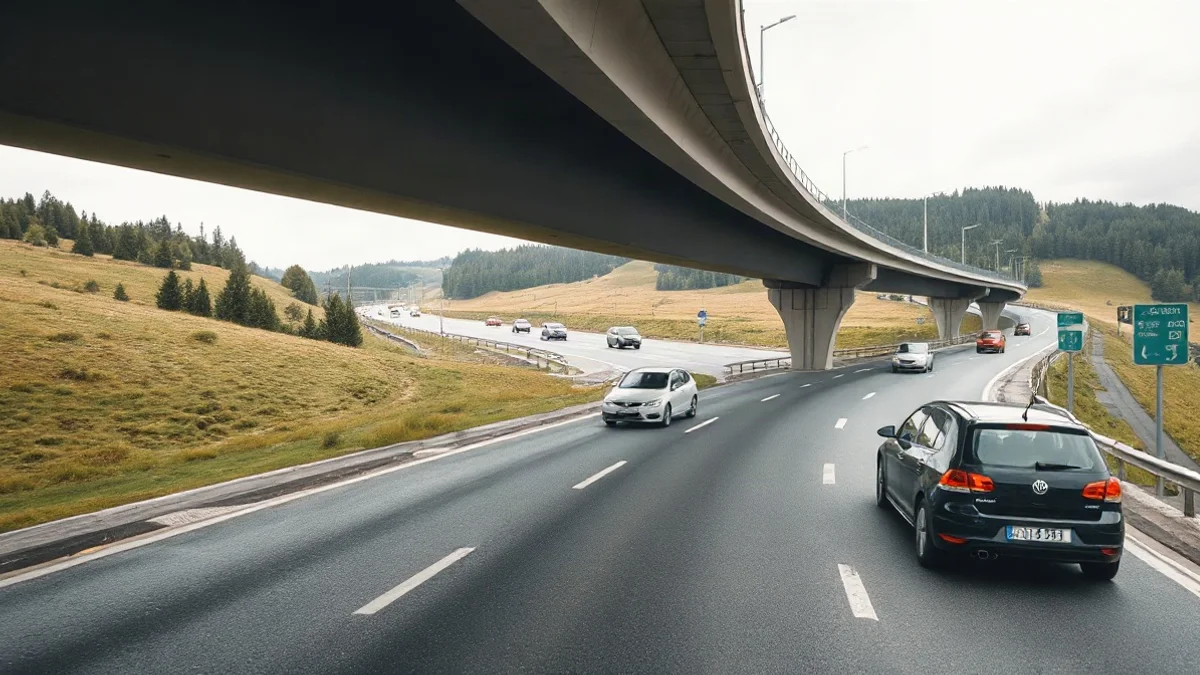
When envisioning European vacations, many picture busy airport terminals, last-minute deals, and short low-cost flights across the continent. However, newly released data from the Statistical Office of the European Union for the year 2025 reveals a remarkably different reality behind the bustling aviation sector.
Ground Transportation Dominates European Travel
Out of 1.2 billion tourism and business trips involving overnight stays, a striking 63.3% were conducted by car, while commercial flights accounted for a mere 17.2%. Overall, ground transport commanded 81.4% of total EU travel, breaking down into 63.3% by private or rental cars, 13.3% by train, 3.8% by bus, and 1.4% via maritime transport.
This volume is heavily driven by domestic tourism. Roughly 92% of all EU resident trips remained within European borders, with 70% representing domestic travel within the traveler's home country and 22% heading to another member state. Only 8% of journeys targeted destinations outside the bloc.
Domestic Versus International Dynamics
When separating domestic trips from international travel, the transport breakdown shifts dramatically. For domestic journeys, private vehicles reign supreme at 75.1%, followed by trains at 16.4% and buses at 3.9%, leaving air travel negligible. Conversely, for international trips to other countries, airplanes become the primary mode at 51.4%, car travel plummets to 35.7%, and rail accounts for just 5.9%.
Statistical analysts emphasize a vital methodological caveat: these figures count the number of individual trips rather than distances traveled in kilometers. A two-hour weekend car trip to a nearby holiday village is recorded as a single journey, exactly like a 10-hour flight to the USA.
The Financial Weight of International Trips
Although domestic car trips form the overwhelming majority numerically, international travel and flights capture the bulk of Europe's tourism spending. Total European travel expenditures reached approximately 645.6 billion euros in 2025.
Out of that total, 379.4 billion euros—roughly 59% of the financial pie—was spent on international trips, despite those journeys comprising only 30% of total travel volume. Meanwhile, domestic tourism generated 266.2 billion euros. For international travel, accommodation at 35% or 131.3 billion euros and transportation at 32% or 121.5 billion euros constituted the main expense categories.
Geographic Constraints Shape Israeli Travel Habits
In contrast, Israel presents a starkly different picture, driven primarily by geographic isolation and the absence of open land borders for mass tourism. According to data from the Central Bureau of Statistics for 2025, Israelis recorded roughly 9.4 million departures abroad. Among those, 88% were completed by air, 10.8% through land border crossings mainly into Sinai and Jordan, and 1.2% by sea.
Analysts note that Israeli figures reflect international departures only and do not factor in millions of domestic holidays taken in Eilat, the northern region, or the Dead Sea, where private cars serve as the primary transport mode much like in Europe.
How Geography and Economy Dictate Trends
Disparities across European nations illustrate how geography, country size, and purchasing power shape vacation habits. Malta recorded the highest aviation share in the European Union at 61.6% of all trips, followed by Cyprus at 51.1% and Ireland at 41.8%. Malta also registered 38.4% of trips via maritime vessels, meaning 100% of Maltese outbound travel relies on air or sea. Wealthy small nations such as Luxembourg with 38.5% flights and Denmark with 36.6% flights likewise exhibited high aviation rates.
By contrast, Romania logged 94.0% of all trips via land transport, with 89% of Romanian journeys staying domestic. Slovenia followed at 90.4%, Bulgaria at 89.0%, and the Czech Republic at 88.9%, reflecting how close land borders and purchasing power encourage rail and car travel. Alongside Malta, Greece at 15.9% and Finland at 6.9% stood out in maritime transport.