Towards trading: The important lesson for investors from the Israeli company
The Tel Aviv Stock Exchange closed in the green led by insurance, and on Wall Street, chips recovered as Nvidia broke a streak of declines before tonight's report. Two local companies provide a lesson on inflated forecasts. What is expected today?
The trading day opened before the main event of the week — Nvidia's reports, which will be published tonight after the close in the US.
Yesterday, the stock exchange closed in the green. The TA 35 and 125 indices strengthened by 0.4%, with the insurance index standing out with a jump of 3% — a continuation of the strong rally in the sector against the backdrop of the reports. Phoenix rose 3.1% and Menora 2.7% after the results, and Clal, Migdal, and Harel added about 3% each.
The big star was Nayax, the fintech company, which jumped 12.9% after announcing the acquisition of an American company in the smart parking field — a deal that the market interpreted as a new growth engine. On the other hand, Shagrir plummeted 19.1% and Smart Shooter fell 16% after the reports.
Two local companies provided a lesson this week on the gap between promises and performance, and both deserve attention precisely because they illustrate a recurring pattern.
Aerodrome, the drone company controlled by Ronen Elad, projected revenues of 16 million dollars for 2026 — but in the first half recorded revenues of only about 3 million shekels, an annual rate of about 6 million shekels. That is, a fraction of the target, and even a decrease of about 51% compared to last year.
At the same time, it announced a third CEO within a year. The stock, however, jumped about 336% since the beginning of the year — not on the back of orders or profits, but on the back of big names that entered as investors (including Yossi Cohen, Barak Rosen, and Asaf Tuchmair), which created a FOMO wave that attracted retail investors.
Nur Ink, of entrepreneur Moshe Nur, tells a similar story. The company, which develops innovative DTF ink for printing on textiles, projected sales of 30 million dollars in 2027 — but in the first half recorded revenues of only 149 thousand shekels, an annual rate of about 300 thousand shekels. The cash register was almost empty (only 412 thousand shekels in June), and shareholders were required to commit to injecting funds to keep the company afloat. The stock fell about 37% since the beginning of the year.
How to identify this in real time?
There are several recurring warning signs:
-
An extreme gap between an ambitious forecast and a meager revenue base — when a company that brings in a few hundred thousand shekels promises hundreds of millions within a few years, it is worth being careful.
-
A jump in the stock that is not backed by an improvement in performance but by "stock market PR" — the entry of well-known names, announcements of "agreements" that in the fine print are not a real purchase commitment.
-
Managerial instability (CEO carousel) and accelerated cash burn. The simple rule: when a stock flies hundreds of percent without the numbers in its reports changing accordingly, it is a sign for caution, not for enthusiasm.
It is important to remember that your savings may also be exposed to such stocks through funds and investment houses. The lesson is to check the numbers yourself, read additional sources, and be critical of any bombastic statement — this effort can save a lot of money.
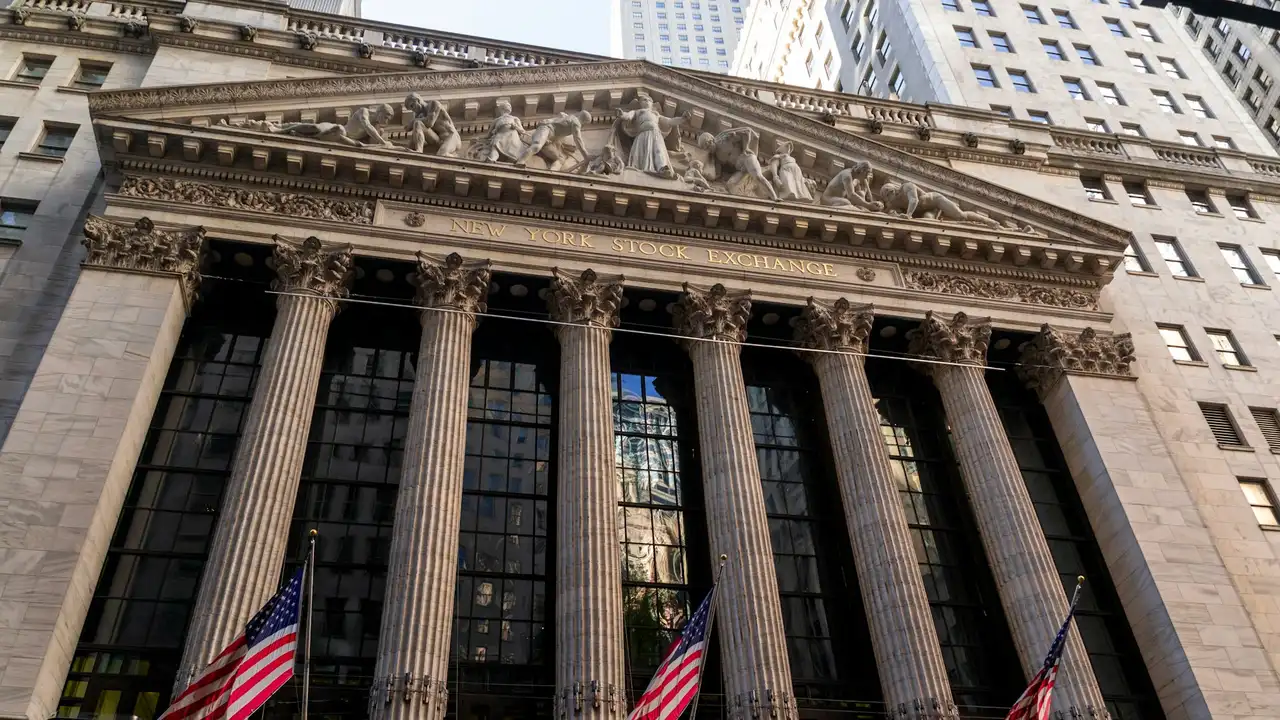
In New York, the trend was positive. The S&P 500 and the Dow rose 0.3%, the Nasdaq 0.6%. The chips recovered, as investors returned to growth stocks ahead of Nvidia's reports — and the stock itself rose 2% and broke a streak of seven days of declines.
The decline in yields also supported (the 10-year yield to 4.63%). In the background, renewed trade tension between the US and Canada, and Bitcoin that touched 80 thousand dollars for the first time in three months. Data on new home sales and consumer confidence fell to a low since January — background for the Jackson Hole conference this week, where Fed Chair Warsh will speak.
The opening today is expected to be supported by the recovery in chips on Wall Street and the decline in yields. But the whole week, in fact, boils down to Nvidia's report tonight — the event that will determine the direction of the entire chip sector.
For the Israeli saver, Aerodrome and Nur are a particularly important reminder that the difference between a company with real performance (like Nvidia, which backs its rally with huge profits) and a company that relies on promises is the numbers in the bottom line. Anyone who invests for the long term will do well if they remember this rule — and if they avoid the attempt to guess Nvidia's results. It is worth following the report with a cool head.