Earth in Focus: Formation, Life Systems, and Cosmic Vulnerability
Earth is the only known planet capable of sustaining life, protected by a unique atmosphere, magnetic field, and stable axial tilt supported by the Moon. While facing modern climate pressures, it remains humanity's sole home in the cosmos.
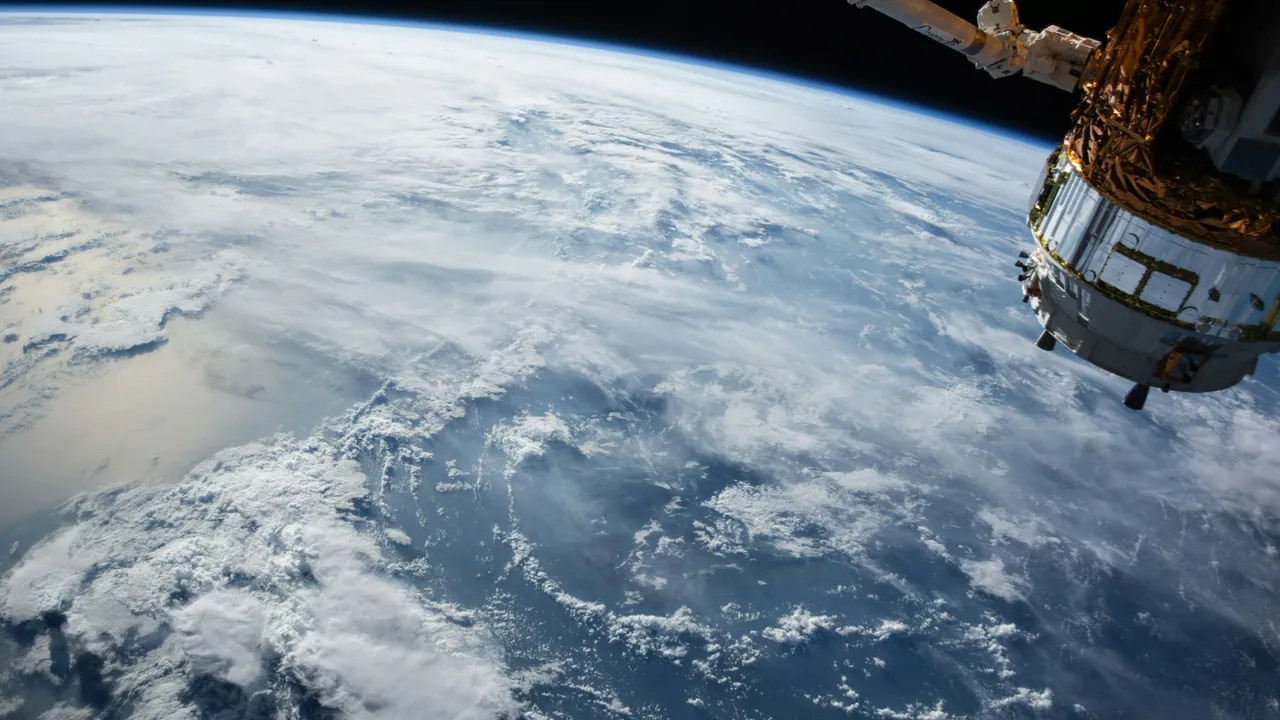
Earth stands as a unique planet within the solar system, distinguished primarily by its capacity to sustain life. This exceptional status depends on a delicate intersection of conditions, including its precise orbital distance from the Sun, liquid surface water, a protective atmosphere, balanced temperatures, and the stabilizing influence of a large Moon. Ranking as the fifth-largest planet overall and the largest among the four terrestrial worlds, Earth is also notable as the only planet in the solar system whose English name derives from Old English terms for soil or ground rather than Greco-Roman mythology.
Formation and Geological Structure
Earth formed approximately 4.5 billion years ago when a vast molecular cloud of gas, dust, and ice collapsed under gravity, flattening into a spinning disk. The densest central region ignited to form the Sun, while the remaining rocky debris coalesced to form the inner planets. Early bombardments by asteroids and comets likely delivered crucial water and organic compounds, though some studies suggest substantial water content may have been present from the beginning. Over hundreds of millions of years, the planet cooled, forming oceans that currently cover roughly 71 percent of the surface with an average depth of 3.6 kilometers.
The planet's interior is organized into four distinct layers: the inner core, outer core, mantle, and crust. The solid inner core, composed primarily of iron and nickel, reaches temperatures up to 5,400 degrees Celsius and measures about 1,221 kilometers in radius. Surrounding it is a 2,300-kilometer-thick liquid outer core, followed by the viscous mantle of molten rock spanning roughly 2,900 kilometers. The outermost solid crust varies in thickness, averaging about 30 kilometers under landmasses and thinning to approximately five kilometers beneath ocean basins.
Planetary Shields and Atmospheric Balance
Earth's atmosphere and magnetic field serve as critical planetary shields. The atmosphere provides breathable air, regulates climate, and burns up most incoming meteors. Greenhouse gases, while currently a central environmental concern, play an essential role in maintaining an average surface temperature of about 15 degrees Celsius via the natural greenhouse effect. Without this trapping of thermal radiation, global temperatures would plummet to roughly 18 degrees Celsius below zero. Additionally, the ozone layer filters out harmful ultraviolet radiation from the Sun.
The planetary magnetic field, generated by rapid rotation and molten core dynamics, deflects lethal solar wind particles that could otherwise strip away the atmosphere or disrupt global navigation and communication systems. Neighboring celestial bodies also contribute to this stability. The gravitational influence of Jupiter helps deflect hazardous asteroids, while the Moon exerts a steady tidal force that maintains Earth's 23.4-degree axial tilt, preventing extreme climate fluctuations over millennia.
The Origins of Life and Modern Anthropogenic Pressures
Following the formation of Earth, roughly a billion years passed before the appearance of single-celled organisms, with multicellular life emerging approximately 2.1 billion years ago. While the exact genesis of life remains an enduring scientific mystery, researchers explore several leading hypotheses. These include hydrothermal vent ecosystems, the classic Miller-Urey prebiotic chemistry experiments demonstrating amino acid synthesis, extraterrestrial delivery via carbonaceous meteorites such as the Murchison meteorite, and catalytic mineral clay surfaces.
In the modern era, industrial activities have accelerated global warming by releasing vast quantities of greenhouse gases like carbon dioxide and methane. Average global temperatures have risen by approximately 1.4 degrees Celsius compared to pre-industrial levels in the 19th century. This warming drives the retreat of polar glaciers and increases sea levels by one to three millimeters annually, threatening coastal populations worldwide.
Reflecting on humanity's place in the cosmos, astronomer Carl Sagan famously urged NASA to turn the Voyager 1 camera back toward Earth in 1990 from a distance of six billion kilometers. Captured as a tiny pixel against the vast cosmic void, Earth was immortalized as the "Pale Blue Dot." Sagan emphasized the profound humility inspired by this distant perspective:
"The Earth is a very small stage in a vast cosmic arena. Think of the endless cruelties visited by the inhabitants of one corner of this pixel on the scarcely distinguishable inhabitants of some other corner... Our posturings, our imagined self-importance, the delusion that we have some privileged position in the Universe, are challenged by this point of pale light."
As scientific exploration continues to search for habitable exoplanets, Earth remains the only known world capable of supporting human existence, underscoring the urgent imperative to preserve our sole planetary home.