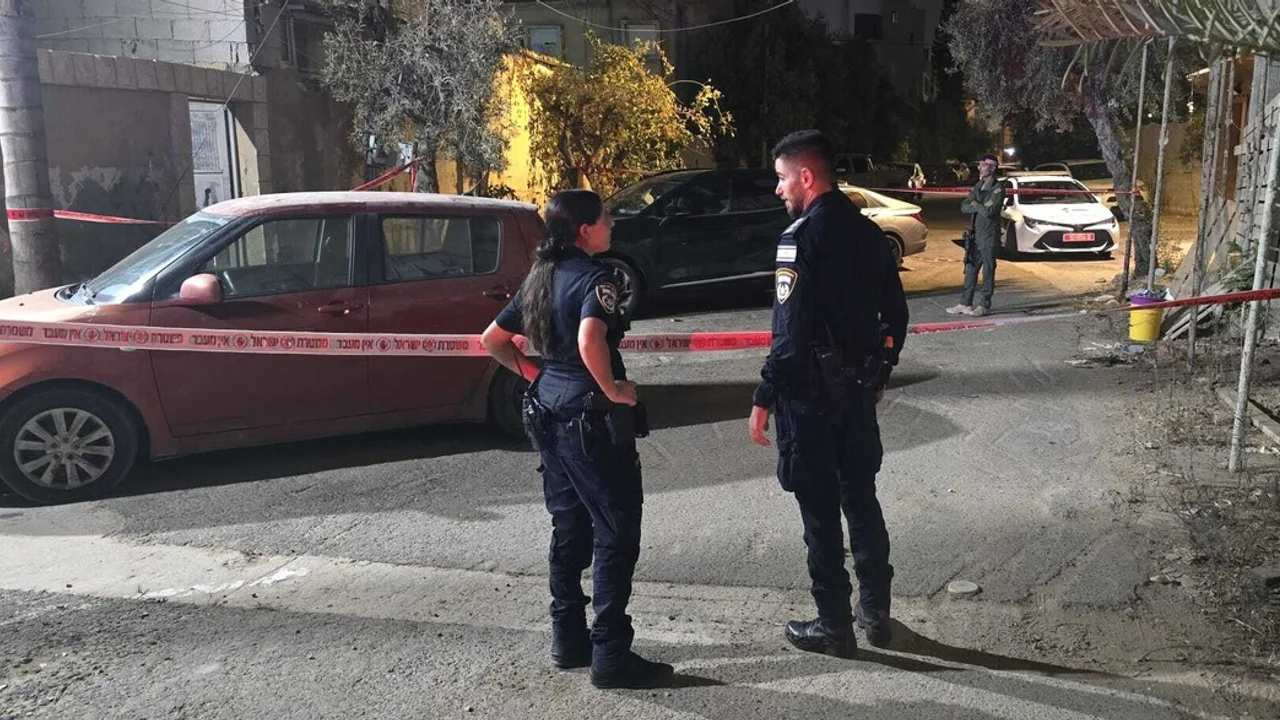
Dramatic development: Police have reopened the investigation into the Tair Rada murder case
Following a significant development and by order of the Police Commissioner, the police have opened a new investigative direction. The case was removed from the Northern District Central Investigation Unit and transferred to Tel Aviv.
Almost two decades after the murder of Tair Rada, one of the most shocking and talked-about murder cases in the country's history is returning to the investigators' table. According to a report on News 13, the police have begun to re-examine the case following new information that has recently come into their possession.
The investigation, which was handled over the years by the Northern District Central Investigation Unit (YAMAR), has now been transferred to the Tel Aviv Central Investigation Unit, where investigators have begun to examine the information in several directions. Following this development, new investigative actions were carried out, and meetings were held at the top of the police force, in which the Police Commissioner, Rav-Nitzav Dani Levy, also participated. In those meetings, it was decided that there is a new investigative direction that justifies an in-depth examination.
"As a mother, I didn't know anything"
Ilana Rada, Tair's mother, recently told in an interview on the "Maariv" podcast that already during the shiva (mourning period), she began to feel that something in the picture presented to her was not complete. "I, as a mother, didn't know anything - I didn't know that Tair was cut in the neck, I didn't know that they pushed her into the toilet stall and closed it. I was in complete disconnection from the facts, but during the shiva, there were events that made me understand that something here was not right," she said.
According to her, on one of those days, a girl approached her and said she was there, but before she could elaborate, her father stopped the conversation. "She just said she was there. But before I could get another word out of her, before I could ask her what she saw, her father, who was sitting next to us, just grabbed her hand tightly. He silenced her on the spot and took her away. At that moment, I saw how live testimony was simply erased before my eyes."
Rada also returned to the day her daughter disappeared. "I arrived home and saw the door closed. I went in, looked in the sink, and saw it was empty - I understood she hadn't eaten lunch. The phone wouldn't stop ringing, her friend was looking for her." According to her, only later did she begin to understand that something serious was happening. "I started calling friends. When darkness fell in December, the rumor had already spread that they were looking for her. I called Shmulik (of blessed memory) and burst into tears. There was no such thing with her, she was always responsible." At 16:00, she called the community center, because Tair was supposed to participate in a dance class, but she was not there.
Kugel: "This is the only forensic evidence that links someone to the scene"
Only earlier this month, the affair was at the center of another discussion, when the director of the National Center of Forensic Medicine, Dr. Chen Kugel, testified in the libel suit filed by Olla Kravchenko. During his testimony, Kugel referred extensively to the forensic findings in the case, including a hair that was tested in 2018 and was found, according to him, to match Adir Habani.
Kugel said that after Dr. Nurit Bublil, the director of the laboratories at the institute, updated him on the finding, he asked to perform the test again to rule out a mistake. The repeat test yielded the same result. When asked why he saw this as a dramatic finding, he replied: "It is dramatic because this is the only forensic evidence that links someone to the scene and to the deceased. The idea behind forensics is that every contact leaves traces, and here for the first time there is this connection."
According to him, after the publication, the attitude of the State Attorney's Office toward the institute changed. "From the perspective of the State Attorney's Office, we stopped being an agreed-upon laboratory. They stopped talking to us, downplayed the value of the evidence. I don't think we should be a branch of the prosecution." Kugel confirmed that a total of 18 hairs were tested, 17 of them were found to belong to Tair Rada and one was found to match Adir Habani. He criticized the claims that the significance of the finding should be downplayed because it might match other people.
Another part of Kugel's testimony dealt with the type of blade that was used, in his opinion, for the injuries found at the scene. According to him, some of the cuts are consistent with a serrated blade, which contradicts Roman Zadorov's confession that he used a box cutter. Kugel also returned to the issue of the shoe print found on the toilet, noting that the way the blood dripped over the print indicates it was created very close to the time of the murder, and therefore belongs to the perpetrator.
The court has not yet ruled on the questions raised in the context of the libel suit.