Thieves raided the coffee cart that was burned on 7/10 and rehabilitated: "I've reached my limit"
Hagai Horowitz, who rebuilt his coffee cart after it was burned by terrorists on October 7, is now facing closure due to repeated thefts, vandalism, and bureaucratic decisions by the regional council that moved his business from its original, popular location.
After terrorists burned his coffee cart during the October 7 massacre, Hagai Horowitz from Kfar Aza was sure that the biggest challenge would be to start over. He rebuilt the business that had become a symbol for many of the region's residents, but according to him, it is precisely the post-war reality — decisions by the Sha'ar HaNegev Regional Council, repeated thefts, and economic difficulties — that now leaves him facing the possibility of closing the business.
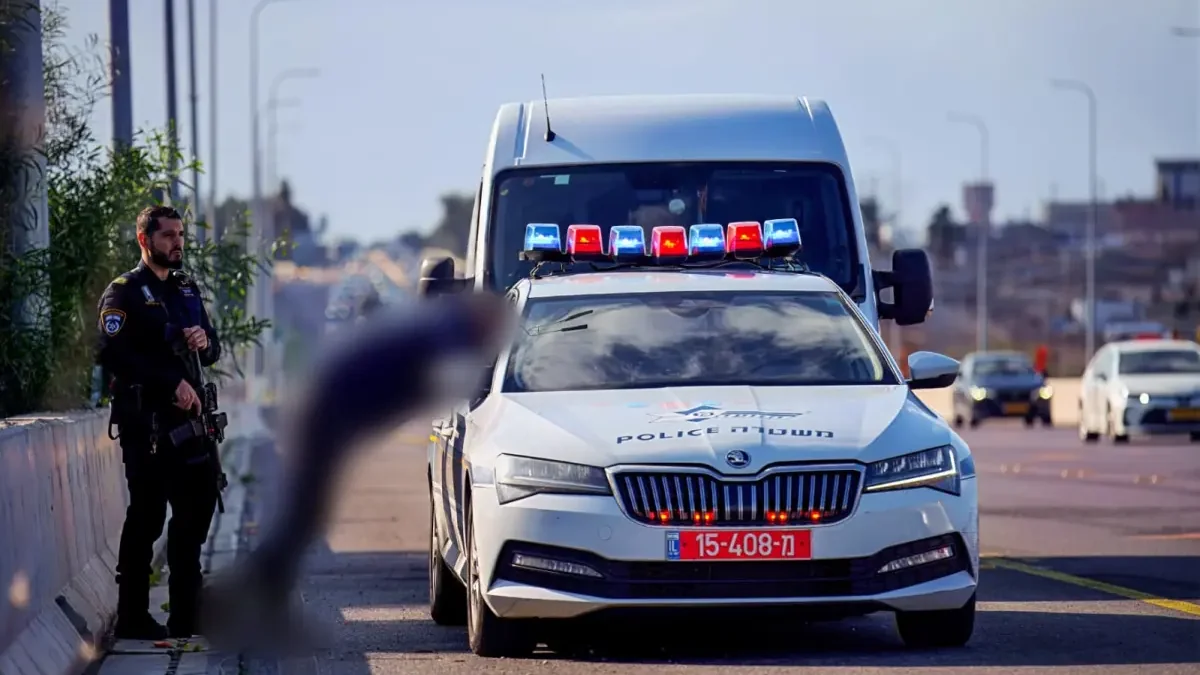
Horowitz opened a coffee cart in a different location near Kibbutz Ruhama about a year after the massacre, and about two months ago he managed to fulfill his dream and return to operate near the spot where the terrorists burned the first cart. However, the difficulties continue to accumulate in both locations. Last night, thieves tried to break into the coffee cart near Kibbutz Ruhama, but when they failed, they settled for vandalizing it. "I've reached my limit," says Hagai Horowitz with a sigh.
Horowitz, an agronomist by profession who worked for years at the cannabis company "Tikun Olam," had never worked in the restaurant business. For years, he dreamed of opening a pub in the Gaza Envelope called "Pub Ba-Sivuv" (Pub on the Turn), named after the bend in the road near the Black Arrow memorial between Kfar Aza and Mefalsim. At age 50, he decided to fulfill the dream — only he replaced the alcohol with caffeine and pastries, and established "Cafe Ba-Sivuv." The cart, which was one of the first in the area, attracted many visitors who came to a lookout point overlooking the northern Gaza Strip. However, during the October 7 massacre, the cart was burned by Hamas terrorists.
After being evacuated with the Kfar Aza community to the Ruhama area, Horowitz decided not to give up. In November 2024, he reopened the cart near the kibbutz, but since then, according to him, it has become a target for break-ins and vandalism. "The first time they stole my cash register, the second time a generator, and now they broke the cameras and the refrigerator. There is damage here worth tens of thousands of shekels," he says. According to Horowitz, the police closed his complaint for lack of public interest, and he feels there is a lack of adequate protection for his business.
At the same time, Horowitz tried to achieve his biggest dream — to return to the original location at the Black Arrow memorial. Last May, he managed to reopen the complex, but discovered that the reality was completely different from what he expected. "The council issued a tender and decided that I could not sell coffee in the place where I was. They moved me to the other side of the road and put another business in my place," he says. "It might sound small, but this decision finished me. People are used to coming to the original point, where there is shade and where the cart always was. They just don't come to me."
According to him, he invested his own money in restoring the place out of a belief that he would return to it. "After the destruction, I came to clean, I planted trees, pruned, and worked hard with the understanding that we are returning to our spot. There was a crying lack of sensitivity here. The IDF already approved my return in March 2025, but the council did not agree," he adds. "What Hamas failed to do, the council succeeded in doing." Now, less than three months after he also reopened the cart at the Black Arrow complex, Horowitz is already considering closing it due to losses and economic difficulty. "It's frustrating, it's annoying, and I've been walking around with this feeling for a long time," he shares. "I just wanted to return to what I built with my own hands."