Urban and Sophisticated Arab Cuisine: I Found the Culinary Queen of Haifa | Nir Kipnis
The Lower City in Haifa always evokes childhood memories in me. How good it is that it has so much to offer adults as well, with an emphasis on "foodies". A short tour of several stops and a stop for a meal at a restaurant that brings peace to the stomach.
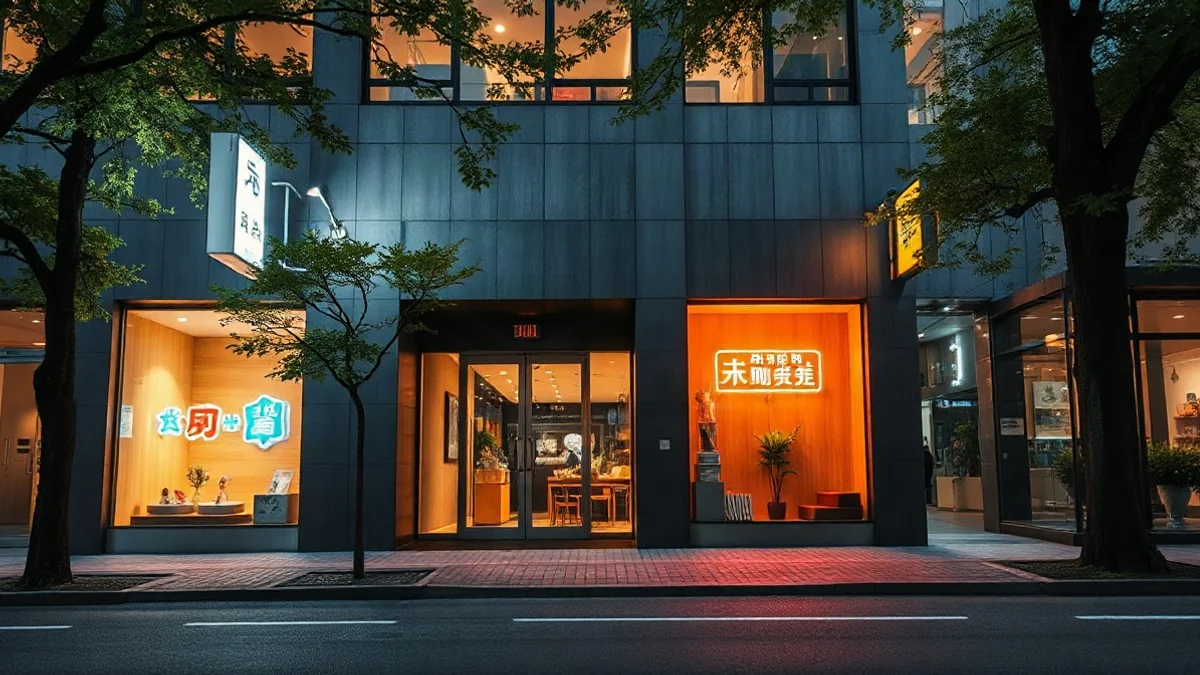
The streets of the Lower City in Haifa have a special charm. It is hard to notice it, but once you are conquered, you will want to return to this urban complex, half-standing in neglect, as if waiting for the magic wand that has already touched some of the buildings.
It is difficult to relate to such a large geographical area as a classic "complex", but veteran Haifa residents who used to - and perhaps still do - "go down to the city", as they say in Haifa slang, will immediately understand what I am talking about. It is, by and large, a kind of rectangle, the length of which is bounded by the area between the "Haifa Center - HaShmona" train station and Faisal Square - and its width is relatively narrow: between the sea and an imaginary line drawn from the Sharia Court, through Paris Square and to the outskirts of Wadi Nisnas, where the famous Emil's shawarma crossed the road.
From geography to history: part of the complex was built back in the Ottoman rule days, but the serious push was given by the British, who built the port in the area conquered from the sea below the German Colony and turned the city into a bustling commercial center: mandatory institutions, banks, warehouses and commercial areas.
So we talked a little about history and a little about geography. What is left? Biography! Well, my personal history also passes through HaAtzmaut Street in the city, in the days when it was still called the Way of the Kings: my father was suspected by the British intelligence of being involved in the bombing of the British police headquarters, at the corner of Khayat Street. The explosion was indeed carried out by the Irgun and my father was a member of the Haganah, but for the British it did not matter - he was interrogated and transferred to the detention camp in Latrun. His girlfriend at the time remained faithful to him during his imprisonment - married him upon his release from prison and I am the youngest son of that marriage, which lasted until the day of his death in 2010.
In recent years, the prestige of the Talpiot market complex in Hadar has risen as an up-to-date culinary center. Without detracting in the slightest from the experience in Talpiot (a matter for a separate column), I prefer the Lower City, precisely because it has old-school places. We will snack on something soon, I promise, but first a few words about the urban renewal in the complex.
Whoever bought an apartment in one of the old buildings in the city gained big time. Prices are still far from real estate prices in the center, but in some areas, especially those close to the campus and the renovated parts of HaNamal Street, it is already difficult to find "bargains" as in previous years. And now, to the table.
The food of the Lower City, in general, is a pattern of its birthplace - from Arab food with Lebanese inspiration, through ethnic Israeli food, with an emphasis on Romanian, and to up-to-date places in the spirit of the time.
Shall we mention some names? The Romanian crown is held by "Maayan HaBira" - an experience that has long since exceeded the field of mere culinary and "Yunik" ("Cafe Glida"), Romanian of the type that was once common in Israel and disappeared over the years. The more modern scene is held by a variety of businesses - from the excellent chef restaurant "Vanya", by chef Michael Gertopsky (on Sha'ar Palmer Street) to an excellent pizzeria (in my opinion, the best in Israel) like "Neapolitan" (HaNamal Street). There is a brewery ("Libira") with a pour of the local and not-so-bad-at-all product alongside sausages and other dishes - and there are magnificent gems like "Clemens" (beginning of HaNamal Street), a Greek tavern that proves that not only the lights of Piraeus remind of Haifa, but also the market in Thessaloniki.
Even the list above is very partial - and one could continue with the name-dropping again and again, had I not wanted to focus on one, special place, which is in my eyes a culinary expression of the Haifa charm: the exemplary coexistence of this city, the one that always fills me with optimism that it is possible otherwise.
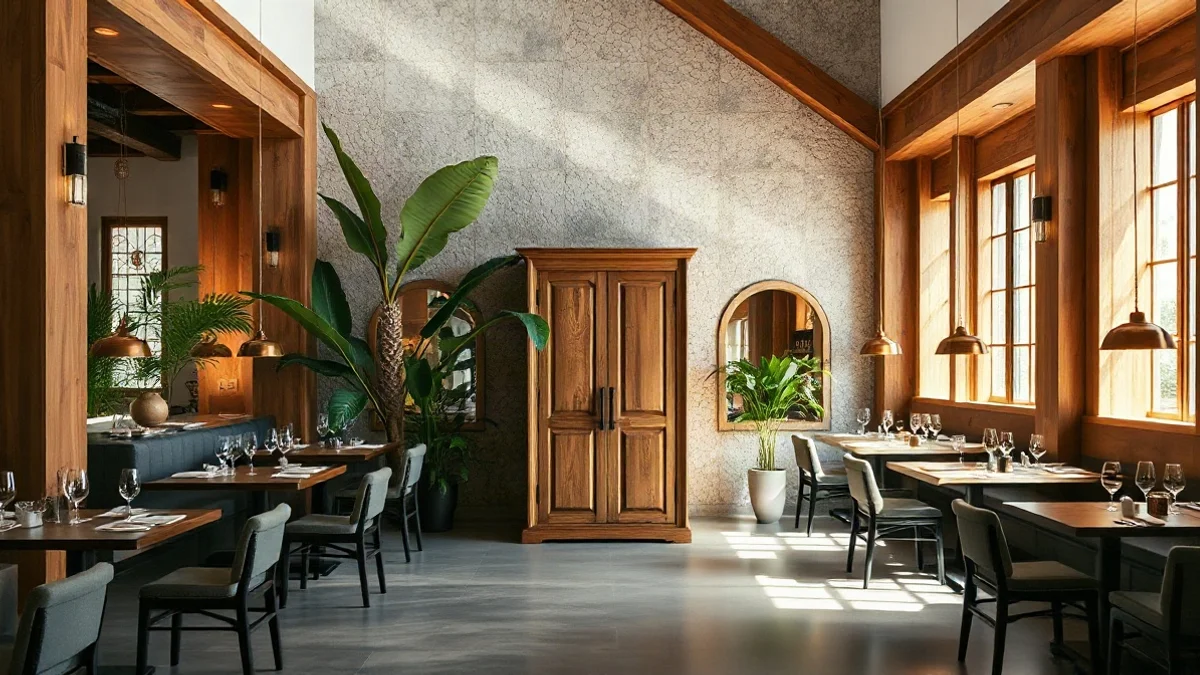
"Rola" (HaNamal 33) is an authentic Arab restaurant, named after the owner of the place, Rola Adib (together with chef Moin Halabi) - and after I dined here during the 11 or 12 years that it has been open, about 11 or 12 times, I can testify that I always came with high expectations and the reality managed to exceed them. Yes, it is that delicious. It is delicious already from the salads like the bulgur salad with beets (beet tabbouleh, 49 NIS) or even the hummus with hot chickpeas - and above all these the muhammara, from peppers, walnuts, mushrooms, onions and various spices (68 NIS).
It continues with appetizers like the freekeh and caramelized onion in long cooking with almonds and pine nuts (a vegan dish, in general - vegans will find quite a few options here, not only in salads like hummus and muhammara or in an appetizer like freekeh, but also in a vegan arayes dish or even a dessert in the form of vegan knafeh).
Meat lovers are invited not to miss the Urfa kebab from beef and lamb (99 NIS) and those who are not afraid to mix meat with milk, are invited to a dish that is in my opinion one of the best in the country: shishbarak (78 NIS, there is also a vegetarian version!) - dumplings filled with beef (or mushrooms and onions, in the vegetarian version) in a hot yogurt sauce that received a touch of chili oil, dried mint and pistachios - lick your fingers! We finished with an excellent knafeh (38 NIS) and mahalabia - sweet cream with dried fruits, pistachios and pine nuts (39 NIS).
We asked the waiter for a wine menu, only to discover that not only is there a beautiful selection of wines (we went for a Greek Assyrtiko, just to stay near the eastern basin of the Mediterranean Sea) and alcohol, but also that the guy, Rola's son, recently won the title of young sommelier (at the sommelier exhibition that took place last winter at the Culture Hall). Respect.
Just like the magic of the Lower City in Haifa, the secret of Rola's magic is also a bit elusive. That is, everything is very delicious, we already wrote, but there is something more here: a restaurant that does not exist in the country of high-end Arab cuisine that is not authentic rural but urban and sophisticated. I swear I made myself want to get on the train, get off at the "Haifa Center - HaShmona" station and walk 10 minutes on foot, just to eat at Rola again.