Beit Shemesh Surges 58% to Top 200,000 Residents as Holon Declines
Beit Shemesh grew 58% since 2019 to surpass 200,000 residents, leading major Israeli cities, while Holon remained the only large city to record a population decline.
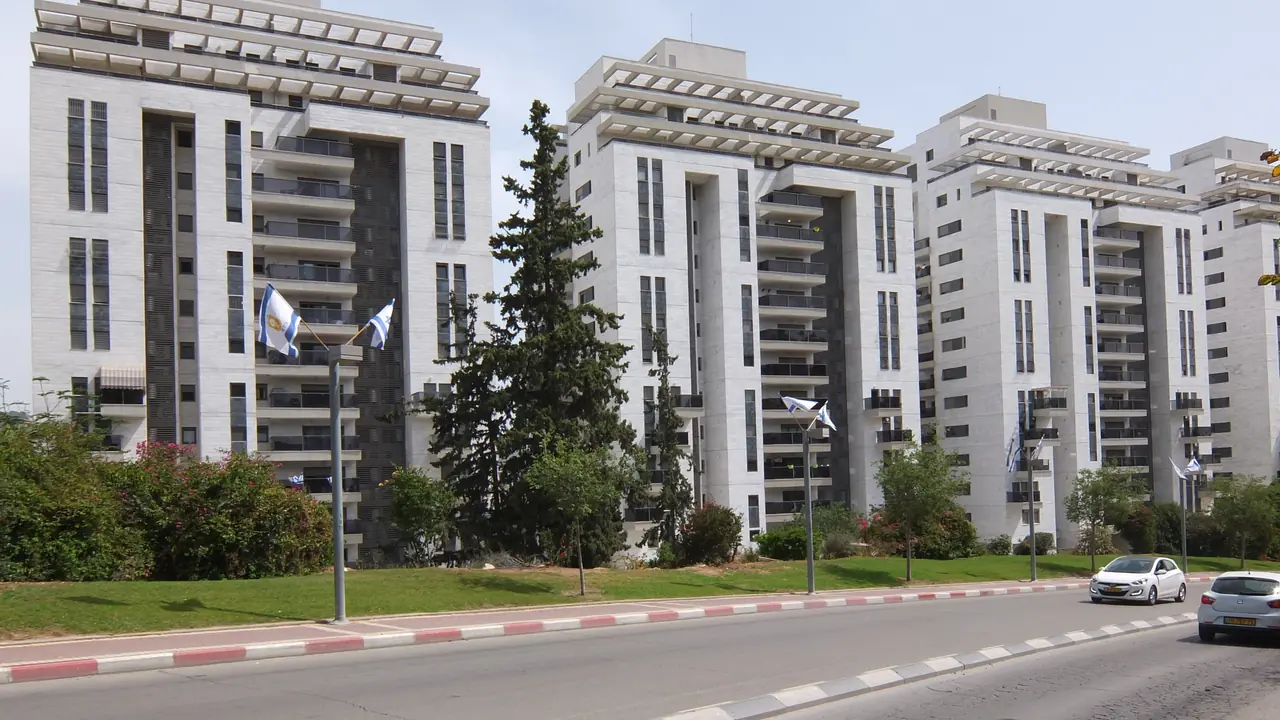
Beit Shemesh has surged past the threshold of 200,000 registered residents, recording a population of approximately 203,000 compared to about 129,000 in April 2019. This 58% expansion marks the fastest growth rate among major Israeli cities with populations exceeding 100,000 residents, propelling the city to the 11th position nationwide. It now sits just behind Holon, which stands as the sole large city to experience a population decline during the same period.
The demographic profile of Beit Shemesh is heavily skewed toward younger populations, with children and teenagers under the age of 18 accounting for 52.5% of registered residents, contrasted against a national average of 31.4%. Meanwhile, residents aged 65 and older represent a mere 4.5% of the municipal total. Driven largely by ultra-Orthodox families with high birth rates, the municipality continues to authorize new residential districts, including the neighborhood project approved last year that adds approximately 2,650 housing units.
Economic Impact and Housing Market Pressures
Intense residential demand has driven up property values across Beit Shemesh. A standard four-room apartment now commands an average price of roughly 2.4 million shekels. Consequently, home buyers utilizing the minimum equity requirements must secure a net monthly household income of approximately 25,500 shekels to qualify for financing.
Across the country, demographic shifts varied significantly among major urban centers. Lod and Ashkelon both expanded by approximately 24%, with Lod crossing the 100,000 registered resident milestone. Herzliya posted a 20% increase, Bnei Brak grew by 19%, and Modi'in-Maccabim-Re'ut registered an 18% growth rate. Ra'anana added about 14,000 registered residents to surpass the 100,000 threshold. In absolute numerical terms, Jerusalem added roughly 123,000 residents to reach 1.12 million, Tel Aviv added approximately 57,000, Netanya 42,000, and Bnei Brak 39,000.
Urban Declines and Age Distribution Contrasts
Holon recorded a slight contraction, listing about 490 fewer residents than in 2019, bringing its registered population to roughly 211,600. Residents aged 65 and above comprise 22.8% of Holon's registry. A similar senior demographic proportion appears in Kfar Sava, which grew by just 1.9%. Bat Yam also stagnated at a 1.9% growth rate, with seniors accounting for 27.6% of its registered populace—the highest concentration among large cities. Ashdod grew by a modest 3%, Petah Tikva and Beersheba each expanded by 6%, and Haifa saw a 6.7% increase, with nearly a quarter of its population aged 65 or older.
Rapid development was also evident in smaller and mid-sized localities. Harish expanded dramatically from about 9,200 registered residents in April 2019 to roughly 42,700, while Netivot grew by 60% to about 61,800. Sderot and Be'er Ya'akov each expanded by over 50%. Among mid-sized municipalities, Rosh HaAyin jumped 40%, followed by Kiryat Gat and Afula at roughly 33%. Data indicates that in Bnei Brak, minors represent 49.5% of registered residents and seniors account for 8%. Conversely, in Tel Aviv, minors comprise 19.4% and seniors make up 20.2%.