Bank of Israel Reports Shekel Weakens in Q3 Amid Institutional Shift
The Bank of Israel reports that the shekel weakened in Q3 2026, dropping 2.9% against the dollar and 2.4% against the euro. The shift was driven by a sharp reduction in institutional foreign currency sales and changing dynamics among major market players.
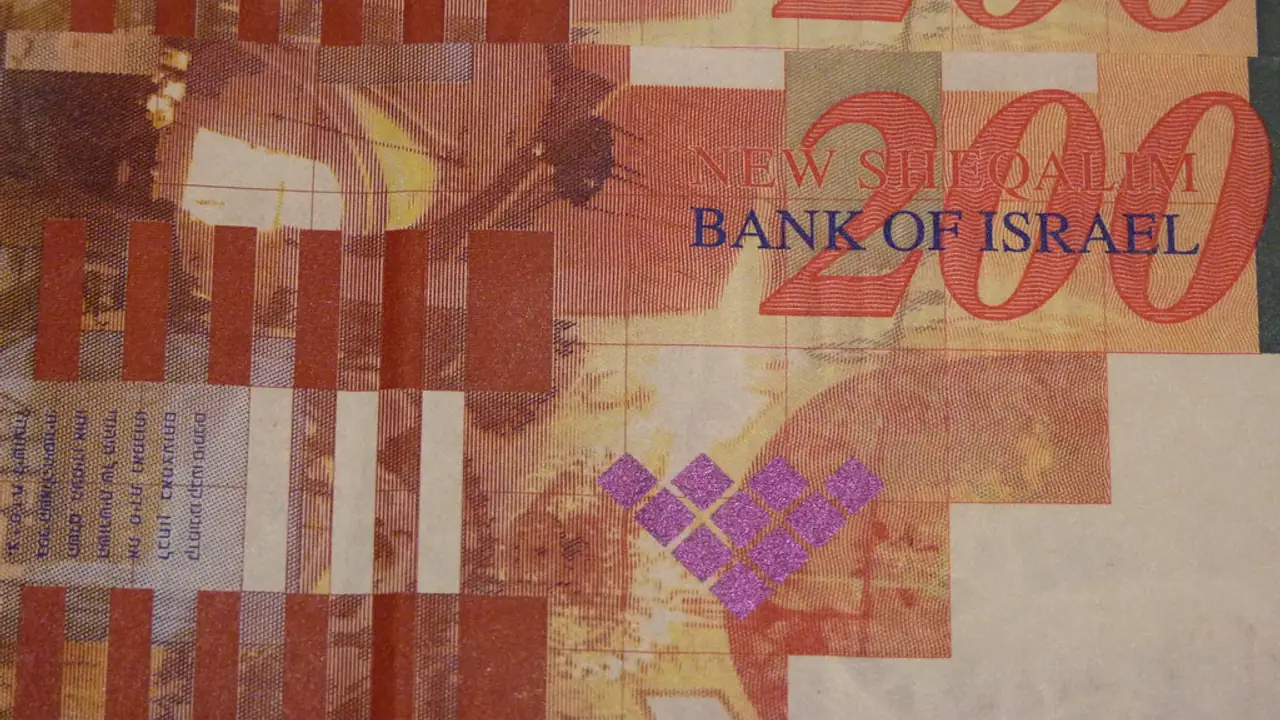
The Israeli foreign exchange market experienced a notable trend reversal in the third quarter of 2026, as the shekel weakened against major global currencies while the trading behavior of major domestic players shifted significantly.
According to an official report published Tuesday by the Bank of Israel covering the past quarter, the shekel depreciated by approximately 2.9% against the US dollar and about 2.4% against the euro. Against the nominal effective exchange rate basket of Israel's main trading partners, a weakening of 2.8% was recorded.
The shekel's depreciation occurred amidst a mixed global trend for the US dollar, rather than a sweeping strengthening of the greenback. While the dollar rose moderately by about 0.5% against the euro and 3.3% against the Swiss franc, it weakened significantly against leading Asian currencies, plunging roughly 12.4% against the South Korean won and dropping about 3.3% against the Japanese yen.
Institutional Shift and Market Activity
The primary explanation for the exchange rate fluctuations lies in a dramatic shift in the activity composition of various market sectors. Institutional entities—including pension funds, provident funds, and insurance companies, which exert the strongest influence on the shekel due to hedging activities for foreign investments—sharply curtailed their net foreign currency sales. These sales stood at approximately $4.4 billion in the third quarter, compared to massive net sales of about $13.8 billion in the preceding quarter. This drop in dollar supply reduced support for the local currency.
Simultaneously, the financial sector, primarily commercial banks, executed a sharp turn, moving from net sales of about $1.1 billion in the previous quarter to net foreign currency purchases totaling roughly $3.7 billion. Conversely, the business sector significantly scaled back its dollar purchases, dropping from $12.1 billion in the second quarter to a mere $1.7 billion in the third quarter.
Foreign residents maintained relative stability, continuing to sell net foreign currency amounting to approximately $6.5 billion, compared to $6.4 billion in the previous quarter. Meanwhile, the Bank of Israel refrained from active market intervention, executing no net foreign currency purchases throughout the entire quarter.
Volatility and Uncertainty Premiums
Another notable finding from the Bank of Israel report concerns the gap between actual volatility and future expectations. The realized volatility of the shekel-dollar exchange rate, measuring daily fluctuations during the quarter, fell by 1.7 percentage points to an average level of 9.0%.
However, in the derivatives and options market, the picture differed: implied volatility, reflecting expected future fluctuations anticipated by traders, edged up to 10.1%. This level is particularly exceptional in an international comparison. While global markets experienced calm and risk absorption—with implied volatility in emerging markets dropping to 8.7% and in developed markets to just 6.4%—the local market continues to price in an uncertainty premium and higher expected volatility.
Regarding overall activity, average daily trading volume against the local banking system contracted by 9.1% in the third quarter to stand at $16.0 billion, primarily driven by a decline in direct conversion transactions. Concurrently, foreign investors deepened their foothold in the local arena, with non-residents' relative share of total trading volume—comprising conversion transactions, options, and swaps—surging by 5.2 percentage points to reach 41.4% by the end of the quarter.