Poll Shows 59% of Arab Israelis Support Arab Party Coalition Participation
A University of Haifa poll shows 59% of Arab Israelis and 56% of Change Bloc voters support Arab party coalition membership, driven by hopes for better living conditions and crime reduction.
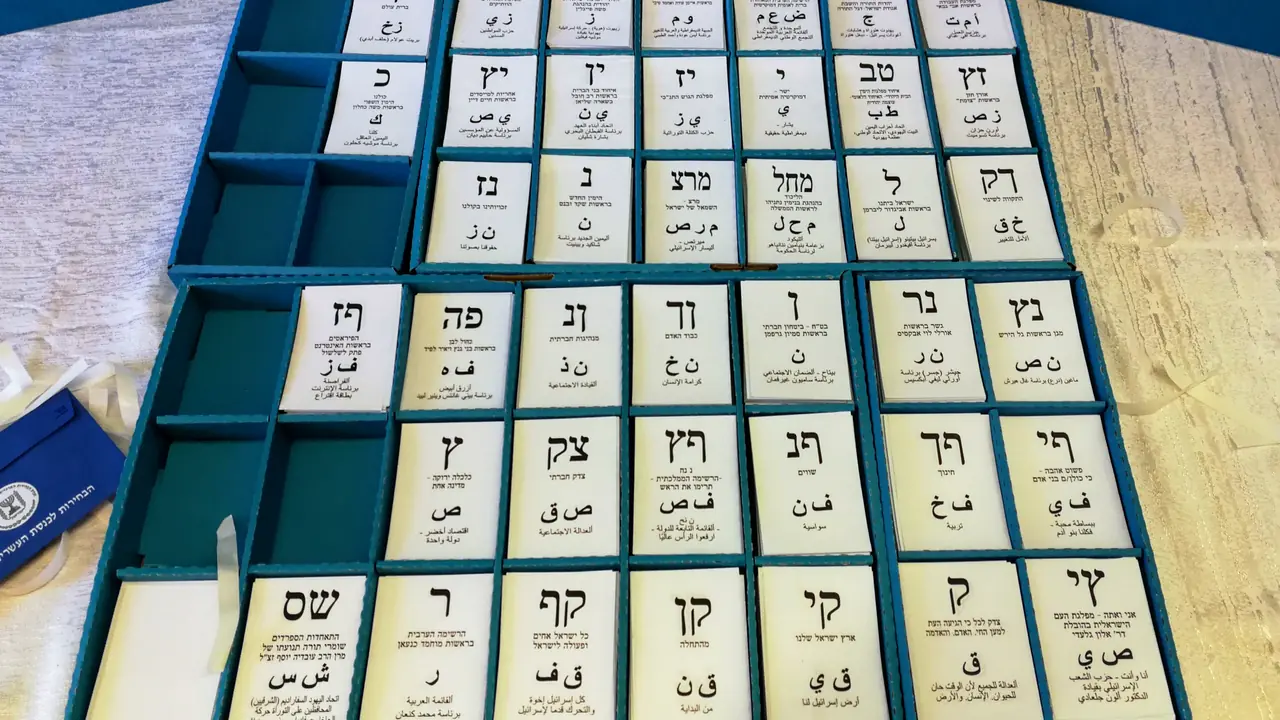
A recent survey conducted by the University of Haifa ahead of the elections for the 26th Knesset reveals that 59 percent of Arab citizens in Israel support the inclusion of Arab parties in government coalitions. Additionally, the poll indicates that 56 percent of voters aligned with the Change Bloc back a government featuring an Arab party, at least in scenarios where forming an alternative coalition is otherwise impossible.
The findings were gathered as part of the Arab-Jewish Relations Index in Israel project, utilizing two separate samples. The research engaged 1,003 Arab citizens interviewed face-to-face and 1,001 Jewish citizens who participated via an online platform, with a maximum sampling error of approximately 3.1 percent for each cohort.
Breakdown of Voter Support and Expectations
Among Change Bloc voters, 28 percent support a government partnership with an Arab party even when alternative coalition options exist, while another 28 percent endorse the move strictly as a last resort. Within the Arab public, support reaches 76 percent among voters of the Ra'am party.
When examining expectations surrounding potential coalition membership, 67 percent of Arab respondents pointed to increased state budgets for Arab municipalities as a primary goal. Furthermore, 64 percent highlighted the strengthening of their sense of belonging to the state, and 58 percent emphasized tackling violent crime within the Arab community.
Divergent Concerns and Security Perceptions
Regarding apprehensions over Arab political participation in the executive branch, 23 percent of Arab respondents believe such a step would alter the Jewish character of the state, and 20 percent fear it could impair national defense capabilities. In contrast, among the Jewish public, 65 percent express concern over potential erosion of the state's Jewish character, and 60 percent worry about a negative impact on defense readiness.
Despite these misgivings, the Jewish public also holds constructive expectations regarding such partnerships. Specifically, 70 percent of Jewish respondents hope that integration will help curb crime within Arab society, and 60 percent anticipate a reduction in the risk of Arab citizens participating in security offenses.
Academic Insights on Pragmatism and Living Standards
Professor Yuval Feinstein from the Department of Sociology at the University of Haifa noted that a majority of Change Bloc voters demonstrated openness to a coalition with an Arab party even before election results were finalized and formal negotiations began.
"In the Arab public, a large majority does not believe that scenarios causing apprehension in the Jewish public, such as compromising the Jewish character of the state or its defense capabilities, will materialize," Professor Feinstein stated. "From their perspective, the foundation for partnership is the expectation of improved living conditions, personal security, and a strengthened sense of belonging to the state."
Professor Nihad Ali emphasized that the Arab sector approaches these issues in a measured and calculated manner, undergoing ongoing processes of pragmatization regarding its relationship with the Jewish majority and the state. He observed that high proportions of the Arab public express a clear desire to integrate into the civic life of the country across multiple spheres.
Professor Sammy Smooha added that Arab parties are likely to support the formation of a change-oriented government even without a formal coalition agreement. According to Smooha, if agreements are eventually signed, they will focus on baseline policy guidelines that include budget allocations and combating crime in Arab society, rather than demanding the end of the occupation, the establishment of a Palestinian state, or the transformation of Israel into a binational entity.