Wildlife Photographer Amos Nachoum Documents Pristine Ecosystems of South Georgia
Award-winning photographer Amos Nachoum led an expedition to South Georgia, capturing massive wildlife colonies and exploring the island's rich whaling history and Shackleton's legacy.
Award-winning wildlife photographer Amos Nachoum recently completed his fourth expedition to the remote sub-Antarctic island of South Georgia, capturing breathtaking scenes of untouched nature and massive wildlife colonies. Located 1,200 kilometers east of the Falkland Islands and 1,600 kilometers northeast of the Antarctic Peninsula, the island spans over 3,500 square meters and is governed as part of the British Overseas Territory of South Georgia and the South Sandwich Islands. Nachoum and a small team of eight adventurers, photographers, and divers made the 1,500-kilometer voyage across the tumultuous South Atlantic aboard the Vinson of Antarctica, an advanced 24-meter polar sailing vessel.
A Wilderness Dominated by Millions of Animals
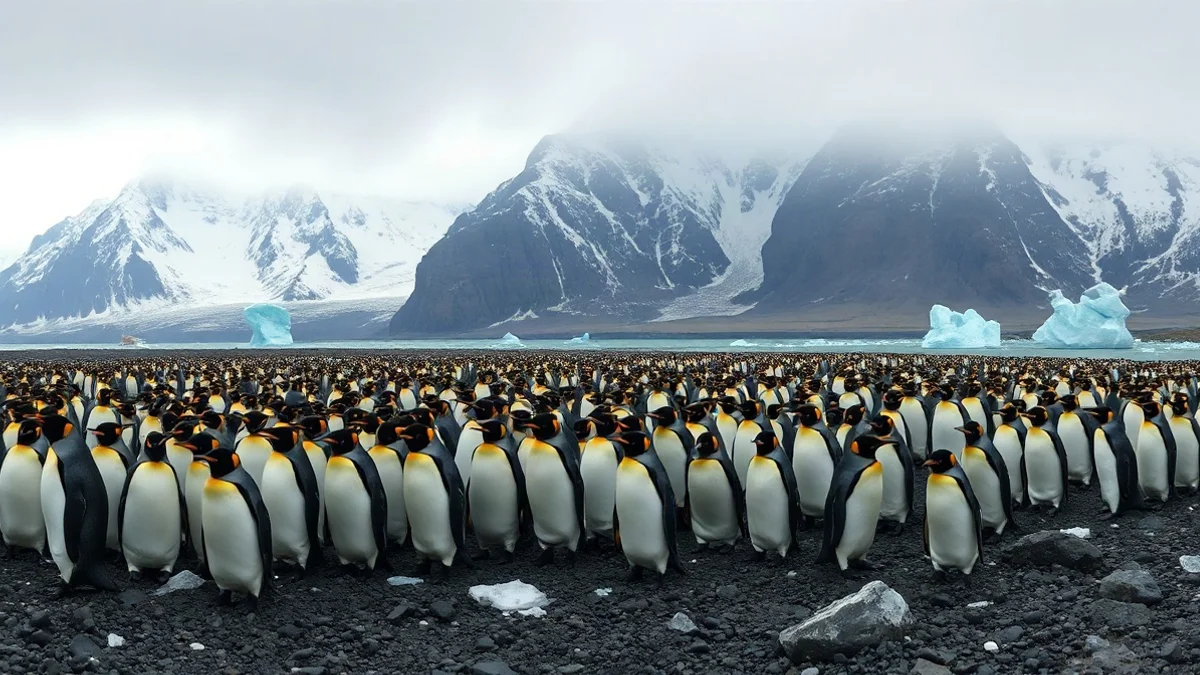
South Georgia hosts a staggering concentration of sub-Antarctic wildlife, including approximately 5 million seals across four species, tens of millions of breeding pairs of penguins, and roughly 65 million seabirds representing 30 distinct species. The island is also home to unique endemic species found nowhere else on Earth, such as the South Georgia pipit and the South Georgia pintail. Historically, the region was heavily exploited by the whaling industry from the late 19th century until the 1960s, leaving behind rusted industrial relics and abandoned stations like Grytviken and Stromness. Following the cessation of commercial whaling, populations of humpback whales, blue whales, and right whales have shown remarkable recovery.
Nachoum described the overwhelming sensory experience of encountering massive colonies of king penguins, gentoo penguins, and chinstrap penguins alongside thousands of southern elephant seals.
"We tried as much as possible not to disturb their rest, maintaining a mandatory distance of five meters, especially from the large males," Nachoum explained regarding the colossal elephant seals, which can reach lengths of over five meters and weigh between two and four tons while possessing the ability to dive to depths of 2,300 meters.
Diving into Sub-Zero Waters
During a stop at St. Andrews Bay on the island's northeast coast, the expedition team seized a rare opportunity to dive into freezing waters that hovered just one degree Celsius above freezing. Navigating strong currents and diving in heavy gloves at dawn, Nachoum spent two hours underwater observing the lightning-fast swimming mechanics of gentoo penguins as they hunted for plankton. These dives required precise timing, as penguins frequently hesitate at the shoreline for up to an hour due to the constant threat posed by predatory leopard seals lying in wait just offshore. Movement into and out of the water often occurred in synchronized waves, driven by cautious individuals testing the safety of the surf.
The Legacy of Sir Ernest Shackleton
Beyond its pristine ecosystems, South Georgia is inextricably linked to the heroic age of Antarctic exploration and the legendary British explorer Sir Ernest Shackleton. Shackleton led three British expeditions to the frozen continent, most notably the Imperial Trans-Antarctic Expedition aboard the Endurance in 1914. After the ship was crushed and sunk by pack ice in the Weddell Sea in January 1915, Shackleton and his crew executed a perilous journey across ice and sea to Elephant Island. Shackleton and five companions then sailed a 7-meter modified lifeboat named the James Caird across 1,300 kilometers of stormy Southern Ocean, landing at King Haakon Bay on South Georgia in May 1916. Following a grueling 36-hour trek across the island's unmapped glaciated mountains alongside Frank Worsley and Tom Crean, Shackleton reached Stromness and eventually secured the rescue of all remaining crew members stranded on Elephant Island.
Shackleton suffered a fatal heart attack in January 1922 during a subsequent expedition and was buried in the Grytviken cemetery. His granite headstone, standing two meters tall, faces south toward the Antarctic continent. The inscription carved into the monument reads: "I believe that a man should strive to the uttermost to reach his goal." Over a century later, in March 2022, the remarkably preserved wreck of the Endurance was discovered resting 3,008 meters deep in the Weddell Sea, cementing the enduring historical and exploratory allure of the region.