6 Fronts and Iran: Netanyahu's Mission During 'Blitz Visit' to Trump
The Prime Minister will fly to Washington for the memorial service of Senator Lindsey Graham and meetings with US President Donald Trump. The agenda includes Iran, Gaza, Lebanon, and Syria. Jerusalem has denied rumors of friction between the leaders.
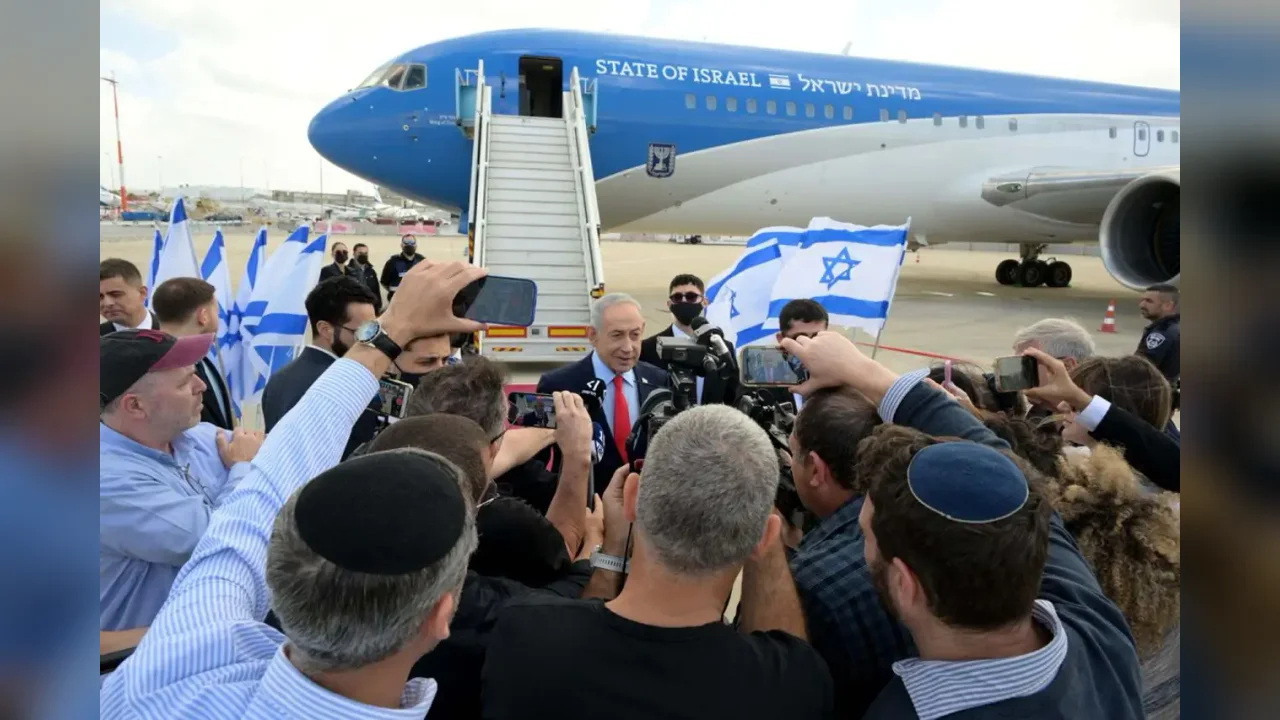
Prime Minister Benjamin Netanyahu will fly tomorrow, Monday, to the USA for a meeting with US President Donald Trump and senior administration officials, as well as to attend the memorial service for Republican Senator Lindsey Graham.
In Netanyahu's office, it was stated that the Prime Minister has additional meetings scheduled during this "blitz visit." His arrival comes against the backdrop of President Trump's invitation, and the main focus is expected to be the Iranian issue, alongside other active fronts in the Middle East. According to sources in Jerusalem, this is a direct continuation of the close cooperation between Jerusalem and Washington and the frequent conversations between the leaders — despite occasional disagreements.
"Deserving of respect"
At the cabinet meeting today, Netanyahu addressed the upcoming visit:
"I will fly to Washington to meet, at his invitation, with President Trump, and then to participate in the memorial service for a great friend of Israel, Senator Lindsey Graham, who I must say was one of the greatest friends of Israel since its establishment, and it is fitting that we pay him this respect."
"I will also discuss with President Trump all the issues on the agenda, including the situation in Iran." In Israel, emphasis is placed on the additional meetings expected for Netanyahu with senior administration officials in light of differing opinions regarding Israel's activities in the Middle East. Even before the trip, Netanyahu spoke with US Secretary of State Marco Rubio, who is considered close to Israeli positions.
Increasing pressure
Furthermore, Netanyahu revealed to cabinet ministers the fear of increased American pressure for withdrawals in Lebanon, Syria, and Gaza. Netanyahu stated that he intends to continue to stand up to this pressure. He explained his approach by requesting the cabinet's approval for the entry of the "Peace Council" into Gaza to manage humanitarian areas and the entry of the multinational force.
With the backing of the IDF Chief of Staff, Netanyahu gave Trump's "Peace Council" an advance on the eve of his trip to prevent increased demands behind closed doors on Tuesday. Netanyahu offered the "Peace Council" entry into areas not under IDF control, without withdrawing from the "yellow line." Thus, Netanyahu will be able to reject any demand for withdrawals from the outset.
In Jerusalem, they emphasized the cooperation and coordination between Netanyahu and Trump, pushing back against criticism of a distance between the two. Cooperation is also evident in the Saudi issue, despite criticism in the opposition regarding the civilian nuclear program that Trump approved, when he subsequently added the entry of Saudi Arabia into the Abraham Accords as a condition.
Also, the F-35 jets that Trump promised to Turkey will not arrive in the Middle East for the time being due to internal American reasons. Israel, meanwhile, is watching from the sidelines and is not entering the renewed war of varying intensity due to the American demand.
Cabinet decisions
The Security Cabinet approved today the conditions for the entry of multinational forces into the Gaza Strip as part of the establishment of humanitarian zones. Minister of National Security Itamar Ben Gvir opposed the approval of the "Peace Council" receiving an official mandate, but the proposal passed by a majority vote. The "Peace Council" is expected to establish humanitarian zones free from Hamas control. Currently, 200 representatives from Morocco and Uganda are approved to enter the Gaza Strip.
A political source said: "The principled approval for the International Stabilization Force (ISF) to enter the Gaza Strip was determined in President Trump's 20-point plan. The cabinet approved today the granting of immunity under the 'Immunities for International Organizations' law to the ISF, which will operate in full coordination with the IDF in areas beyond the yellow line. Forces from countries hostile to Israel, such as Qatar and Turkey, will not enter."
During the discussion, Minister Ben Gvir said: "Hamas did not meet their commitment to demilitarize the Strip, and therefore we are not committed to it either. The solution in Gaza is to encourage emigration." Minister Orit Strock noted: "The only good thing here is the international consensus, but if a 'new Gaza' is established, it will be a disgrace for eternity."