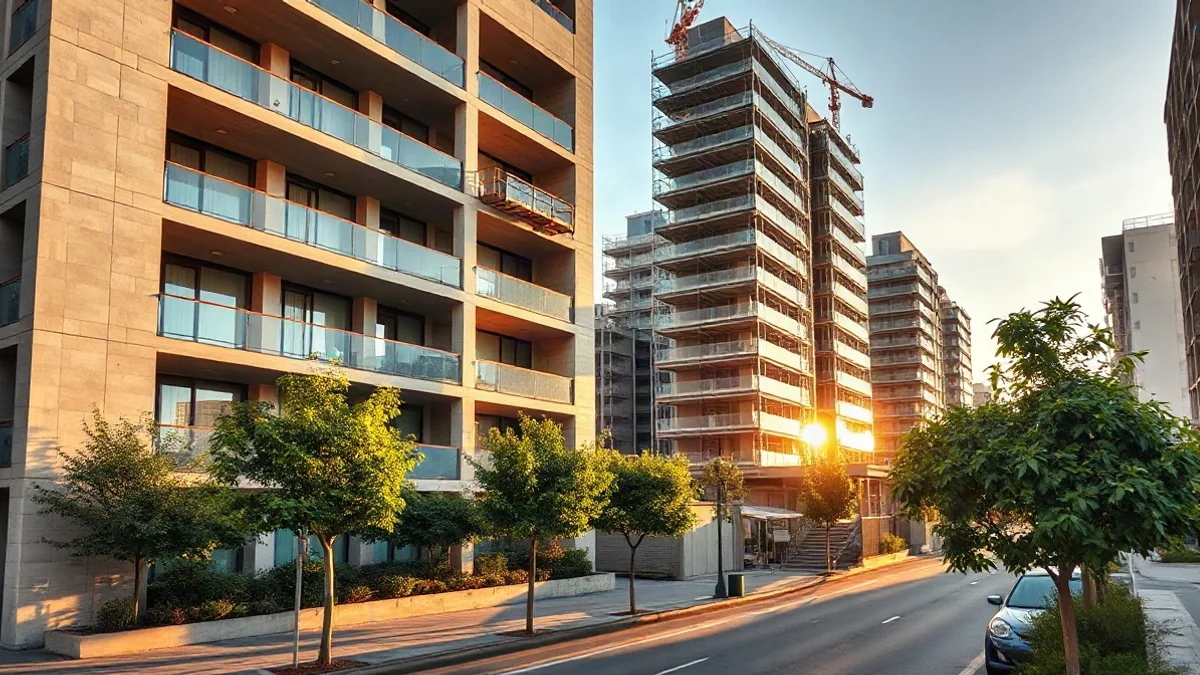
3 Million Shekels for an Apartment in a 'Longevity Island' Project
Two projects with a total investment of about 14 billion dollars aim to turn the UAE capital into a hub for the world's highest concentration of centenarians. How much does it cost to live there, and what similar complexes already exist? Introducing our new section: Longevity Science.
About the "Longevity Science" Section
Longevity clinics are opening at a dizzying pace, and billionaires are investing huge capital in new treatments, but what does science really know about longevity and quality of life?
A weekly section will explore this industry in all its aspects—from research to the capital driving it.
Imagine living in a constant spa atmosphere or residing in an assisted-living environment from a young age. This appears to be the next trend following longevity hotels: living in a complex entirely designed to support long-term health. In Abu Dhabi, the capital of the UAE, they intend to take this concept a step further. Currently, two "longevity islands" are under construction there.
By next year, the SHA Residences residential complex is expected to open on Al Jurf Island, with an investment of approximately 3 billion dollars. This project is led by the longevity clinic chain SHA and real estate developer IMKAN. In 2029, a more ambitious project is slated to open on Al Fahid Island, with an 11-billion-dollar investment from Aldar.
Lighting Adapted to Biological Clocks
SHA, which began as a medical clinic chain, has gradually expanded into clinic-adjacent hotels and is now entering the luxury residential sector. With an existing project in Spain and another planned in Mexico, Al Jurf Island serves as its flagship. Homes there start at 1.25 million dollars (nearly 4 million shekels) and reach up to 18.5 million dollars (about 56 million shekels) for a 6-room villa with a private beach.
The island is designed to maximize quality of life in the medical sense and promote resident longevity. For instance, the island's sewage system will prioritize water purification. Both private and public complexes will feature lighting synchronized with residents' biological clocks. Alongside wellness clinics providing constant monitoring and medical care using cutting-edge innovations, the island will offer healthy-food restaurants, community gardens, bike paths, health-focused community events, and a "longevity club" for children.
The entire island's design will be calming, utilizing organic materials like wood and stone. Despite the desert environment, most homes will enjoy sea views, with some featuring private beaches, boat docks, manicured gardens, and private pools. "Our goal is to create the place with the highest concentration of 100-year-olds in the world," SHA CEO Alejandro Batler told the lifestyle magazine HCM.
Strategically located between Dubai and Abu Dhabi, the island is intended not for retirement, but as a base for an international lifestyle.
In the larger project on Al Fahid Island, the focus is on a green sports and community leisure complex accessible by foot. The emphasis here is less on medical procedures and more on encouraging healthy behaviors. Houses will prioritize privacy and noise insulation. As for pricing, the official marketer states that the cheapest apartment will cost 1 million dollars (about 3 million shekels), while a 5-room penthouse will reach 17 million dollars (about 54 million shekels).
Health and Disconnecting from the Rat Race
Islands of eternal life are deeply rooted in mythology. Irish and Japanese folklore tell of individuals arriving at hidden islands offering exceptionally comfortable lives, but at a price: upon attempting to return home, they discover that many years have passed in the real world while they remained young. These legends warn that longevity and paradise can cost a painful disconnection from reality, home, and the normal flow of human life. Yet, in reality, the concept of such a paradise is gaining popularity.
Motivation guru Tony Robbins is a partner in the launch of The Estate complex in Los Angeles and on the Caribbean island of Saint Kitts. Oracle founder Larry Ellison moved to an island himself and built a longevity hotel there. Forbes magazine recently compiled a list of 33 additional planned complexes of this nature.
The oldest and most intriguing project is likely Serbene in Georgia, USA, established in the early 2000s. Unlike others in the field, it does not offer hyperbaric chamber treatments or constant medical monitoring, but rather a disconnection from the "rat race," organic farming, and community life. It is the oldest project in the field, currently housing 1,200 permanent residents, including 300 children.
Children are arguably the most important indicator of such a community's sustainability. Regarding the new complexes, developers highlight playgrounds and schools but have yet to reveal the actual demographic composition of the residents.