Chinese Businessman Arrested in Panama Amid US-China Clash Over Canal Port
Chinese businessman Zhang Liang's arrest in Panama over alleged multi-million dollar embezzlement triggers a complex legal and geopolitical struggle between Beijing and Washington.
A high-profile arrest in Panama City has thrust a Chinese businessman into the center of a geopolitical tug-of-war between Beijing and Washington, as diplomatic tensions mount over control of strategic infrastructure near the Panama Canal.
Arrest and Extradition Battle
In July, 44-year-old Chinese businessman Zhang Liang was traveling in his black Mercedes-Benz in Panama City when two motorcycle police officers signaled him to stop. A routine document check revealed that he was wanted by authorities in China on suspicion of embezzling approximately $300 million. Within minutes, he found himself handcuffed and led before cameras to local Interpol offices, having only managed to remove his gray suit jacket to cover his head. The arrest marked a dramatic low point for Zhang, who until a few years ago was considered one of the best-connected Chinese business figures in Panama.
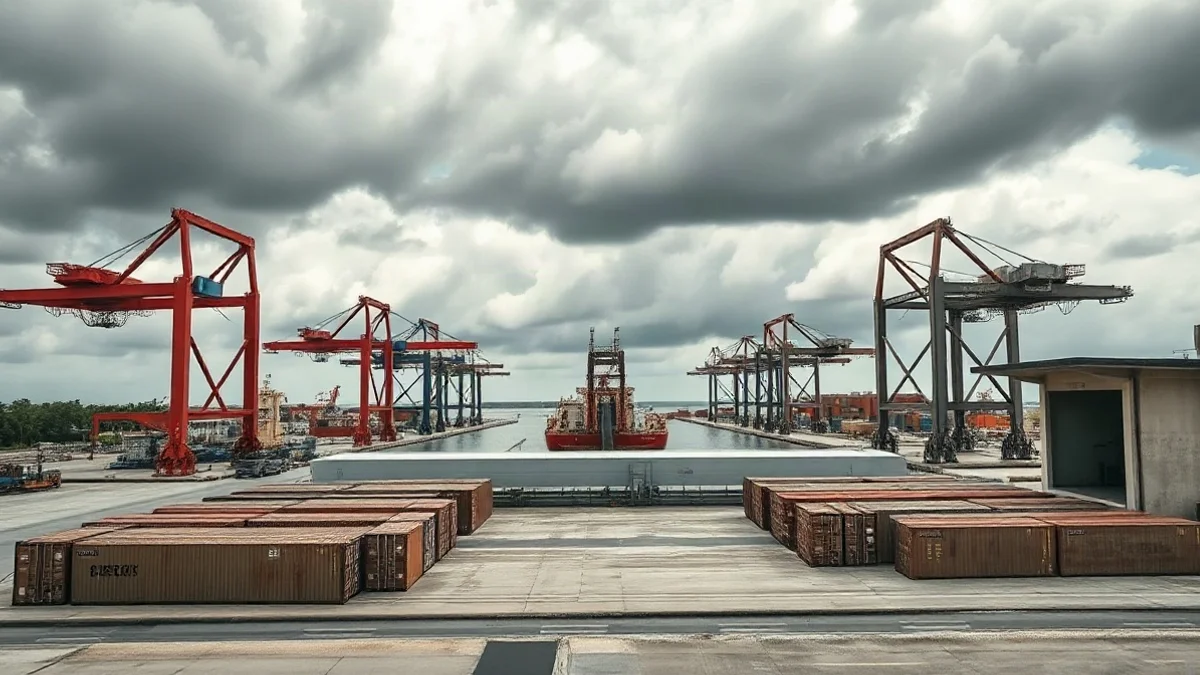
He arrived in the country a decade ago to spearhead massive infrastructure investments, chief among them the development of a container terminal near the Atlantic entrance to the Panama Canal. Today, he sits in a Panamanian prison fighting extradition to China, arguing that the criminal charges against him are a pretext for Beijing to seize his assets and regain influence in the region. In a letter sent from prison, Zhang warned that China sees its influence over the Panama Canal waning and is exerting pressure on Panama. However, former business partners present a completely different picture, alleging that he utilized complex corporate structures and tax havens to misappropriate funds and enrich himself at the expense of others.
The Port Project and Changing Political Winds
Zhang arrived in Panama in 2016 as the representative of a wealthy Chinese investor. A lawyer licensed in both China and New York who had previously received recognition from the Ministry of Justice, he operated from an office overlooking the bay and began promoting massive commercial ventures. His central project was developing a container terminal on Margarita Island in the Colón province, transforming a former US military base into one of Latin America's largest container hubs. Simultaneously, he promoted a gas-fired power plant intended to create roughly 1,000 jobs and lower energy prices.
These deals advanced during a period of rapid Chinese expansion in Panama. In 2017, Panama severed diplomatic ties with Taiwan and established formal relations with Beijing, becoming the first Latin American country to join the Belt and Road Initiative. Zhang served as a vital intermediary between Chinese interests and the Panamanian government, receiving the keys to the city of Colón in 2018 in recognition of his economic contributions. However, the political landscape shifted when President Juan Carlos Varela completed his term in 2019, and the incoming administration demonstrated less enthusiasm for Chinese investments. Financial backing collapsed following the 2020 arrest in China of billionaire Gao Tianguo, who had funded Zhang's operations.
Geopolitical Pressure and Legal Uncertainty
Without political and financial backing, the port project unraveled. In 2022, Zhang agreed to transfer his assets to Notarc, an investment firm operating from the Bahamas and Florida. The transaction ignited an ownership dispute with Chinese businessman Ye Cheng, who claimed to be the rightful controller of the project. While Panamanian authorities initially declined to file charges, ruling it a commercial dispute, Chinese authorities launched a criminal investigation. Meanwhile, the Panamanian government canceled the port concession in 2025 due to delays and contractual breaches, leaving the uncompleted infrastructure asset in dispute.
Zhang's July arrest coincided with heightened pressure from US President Donald Trump, who returned to the White House demanding that Panama curb Chinese influence over the vital maritime trade route. Investigative reports noted that Zhang was arrested the same week a new Chinese ambassador arrived in Panama and days before Panamanian officials traveled to Beijing for high-level talks. Defense attorney Guillermo Cochez argued the timing was deliberate, though no direct evidence connects the arrest to diplomatic negotiations. In August, a Panamanian court denied Zhang bail, and the Ministry of Foreign Affairs advanced the extradition process, leaving Zhang warning from custody that the pressure on Panama will persist long after his case is resolved.