Yoram Cohen on the 'Accused Law': 'I hope we will pass it in the next government'
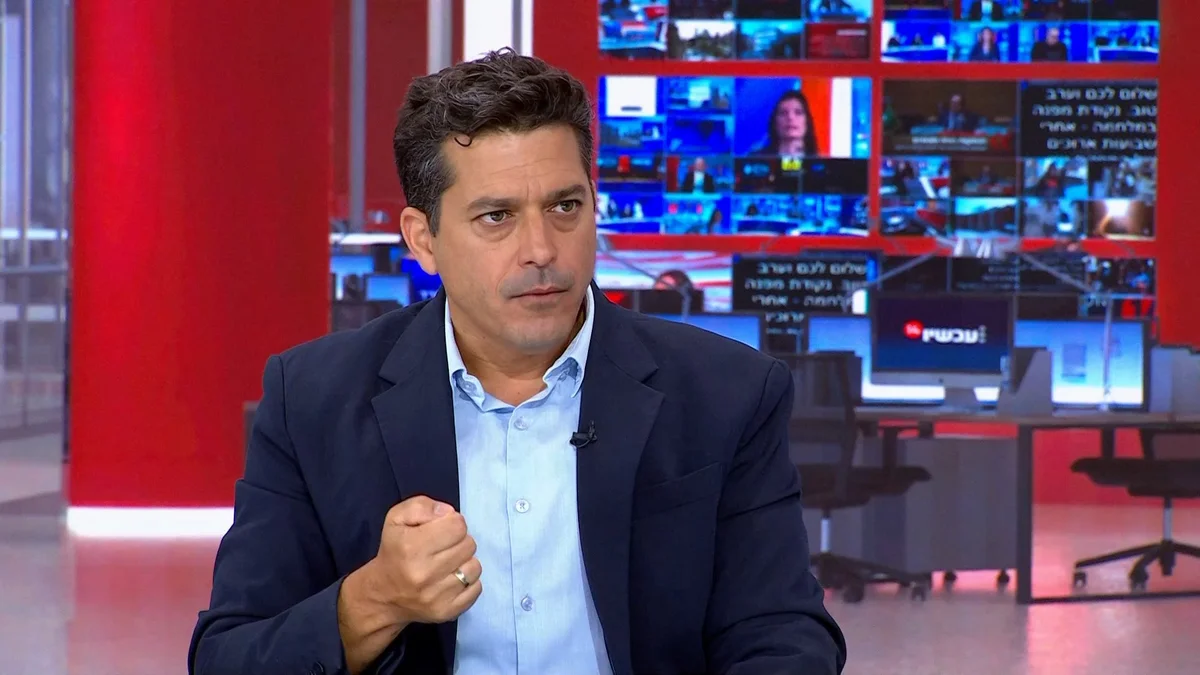
In recordings from a home gathering obtained by ynet, former Shin Bet head Yoram Cohen discussed the political landscape and the state of the organization. He advocated for the 'Accused Law,' expressed concerns regarding the Shin Bet's current leadership, and stated that a Palestinian state is currently irrelevant.
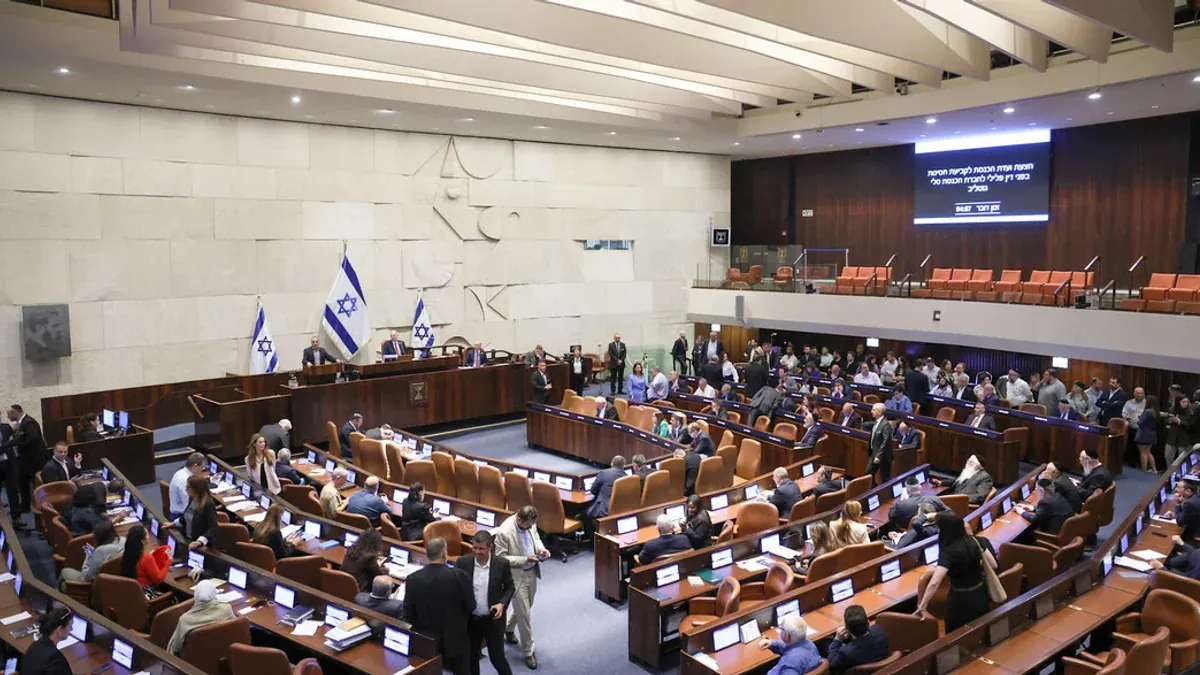
'I do not want to go into specific names, but it was discussed in the previous Lapid-Bennett government, and because of a certain factor ('Ayelet Shaked', the crowd shouted – A.A.) it was not possible to pass it then, and it is a great pity. I very much hope that we will succeed in doing it.' This is how former Shin Bet head Yoram Cohen, considered a senior partner in Benny Gantz's party, answered the question of whether they would promote the 'Accused Law,' which would prevent a candidate from forming a government as long as there is an indictment against him. If the law had passed then, Prime Minister Benjamin Netanyahu would not have been able to form the current government.
Cohen said these things last Thursday at a home gathering in Shoham, in front of an audience identified as supporters of liberal religious Zionism. 'We will establish a government with no more than 24 ministers,' Cohen promised. Both Gantz and Cohen have already said in the past that if they do not manage to reach 61 mandates, they will establish a minority government. At the gathering, Cohen evaded the question of whether they would agree to establish a government with the abstention of Ra'am, stating: 'We want 61 Zionist mandates. I do not want to go into other solutions that exist if we do not achieve it.'
On the Shin Bet and Political Pressure
Cohen, who opposed the appointment of David Zini to the position, addressed Zini's functioning as Shin Bet head: 'There are cracks that we see today in the statehood of the organization; I hope they do not widen and that he acts to close them. The big challenge is not Zini himself, but Mr. Netanyahu. The Prime Minister to this day has approached Shin Bet heads, and I am one of them, with demands that are either illegal or illegitimate. You need a Shin Bet head made of iron, with a backbone, to tell the Prime Minister: "I cannot do this, because it is illegal, unethical, or not part of my duties."'
He emphasized that keeping the organization apolitical is the number one goal: 'If a political echelon wants to use the Shin Bet's capabilities against citizens, or for personal political needs under the guise of security, it will be very serious. It will harm public trust and destroy the organization from within.'
On the Palestinian Issue and Annexation
Regarding a Palestinian state, Cohen was clear: 'A Palestinian state is irrelevant. In the future, perhaps, if the leopard changes its spots, we might reach a scenario called autonomy. Autonomy would be the maximum. In practice, we must preserve the status quo. Our security must remain in the hands of the IDF. Settlement should flourish according to government plans, not individual political initiatives. Our actions must always be legal and serve our national interest.'
He also addressed the idea of full annexation: 'There is a group that thinks so, but it is a small group. The large group thinks that it will make us a binational state, lead to a bigger conflict, and alienate us from the world. We would pay endless blood prices, so I do not think it is right.'
Elections and Crime
Cohen detailed the Shin Bet's role in ensuring election integrity, noting its ongoing work in defending against cyberattacks and protecting critical infrastructure. He expressed hope that the agency, in coordination with the Israel Police and the National Cyber Directorate, would prevent external interference and chaos at polling stations.
Unlike some of his peers, Cohen warned against involving the Shin Bet in combating crime in the Arab sector: 'The Security Service is excellent, but it is very busy and has no reservists. It can assist the police in specific, symbolic cases, but it cannot replace the police. The police require their own reforms. Furthermore, if the Shin Bet acts only against Arabs, it creates an image of alienation. If the Shin Bet acts against crime, it should act against everyone, not just one sector.'