Inside Yanjin: How Residents Navigate Life in the World's Narrowest City
Yanjin in China is widely known as the world's narrowest city, stretching across a narrow mountain canyon where residential buildings stand on pillars above a rushing river.
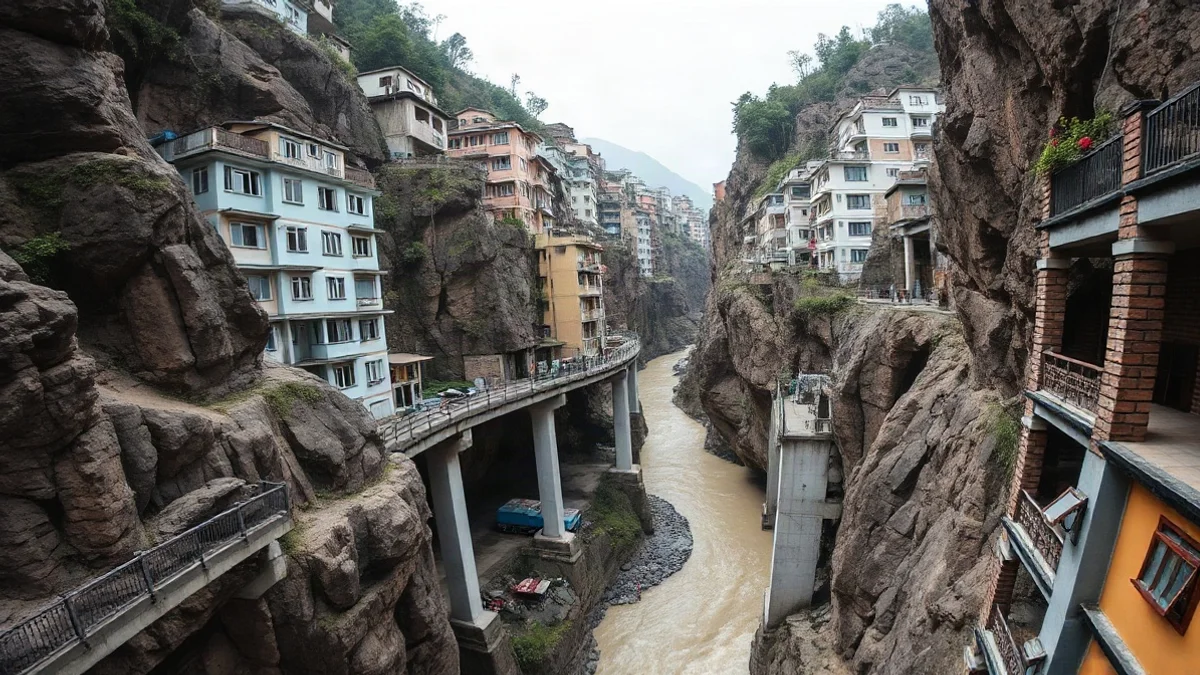
Yanjin, a unique town nestled in China, appears at first glance like a severe urban planning miscalculation. Rows of residential buildings cling desperately to steep cliffs, a river surges directly beneath many homes, and streets have virtually nowhere to expand. Spanning a width of merely 30 meters at its narrowest sections and expanding to roughly 300 meters at its widest points, the older district has earned the moniker of the world's narrowest city online.
Historical Roots and Strategic Geography
Long before the era of skyscrapers and viral videos, the area served as a vital commercial corridor connecting the provinces of Yunnan and Sichuan. Merchants historically transported salt, copper, and tea along the Guan River, drawing settlers who had to cope with a severe lack of flat ground. With steep mountain slopes on one side and rushing river water on the other, early residents pioneered vertical construction techniques. Today, many prominent buildings in Yanjin stand upon reinforced concrete pillars that allow developers to utilize narrow strips of land near the water while providing crucial clearance against seasonal flooding.
Daily life in Yanjin operates quite differently from conventional metropolitan areas. Rather than featuring a complex grid of streets, a single main thoroughfare runs alongside the river, flanked by densely packed residential buildings, shops, and restaurants. Staircases play an indispensable role in daily routines, connecting multi-level structures built right into the canyon walls. While some residents view the vertical climbs as a convenient form of daily exercise, local business owners note that development has driven customer growth.
Tourism Appeal and Modern Mitigation Efforts
In recent years, local authorities have transformed the dramatic landscape into a tourism asset by painting building facades in vibrant shades of pink, blue, and yellow while establishing designated observation decks. However, living inside the mountain canyon exposes residents to genuine environmental hazards including floods and landslides. Authorities actively operate rainfall monitoring systems, issue flood warnings, and promote the relocation of residents from high-risk zones.
Beneath the residential structures lies an unusual piece of infrastructure: an 1,800-meter railway tunnel constructed in 2001. The underground passage prompted a playful designation across China as one of the country's first towns featuring an underground railway, although it functions as a standard rail line rather than an urban metro system. Meanwhile, officials are developing a new district named Shuitian to ease population density in the historic center. While online claims occasionally suggest that 400,000 people reside within the narrow strip, that demographic figure actually applies to the entire surrounding county rather than the constricted urban core.