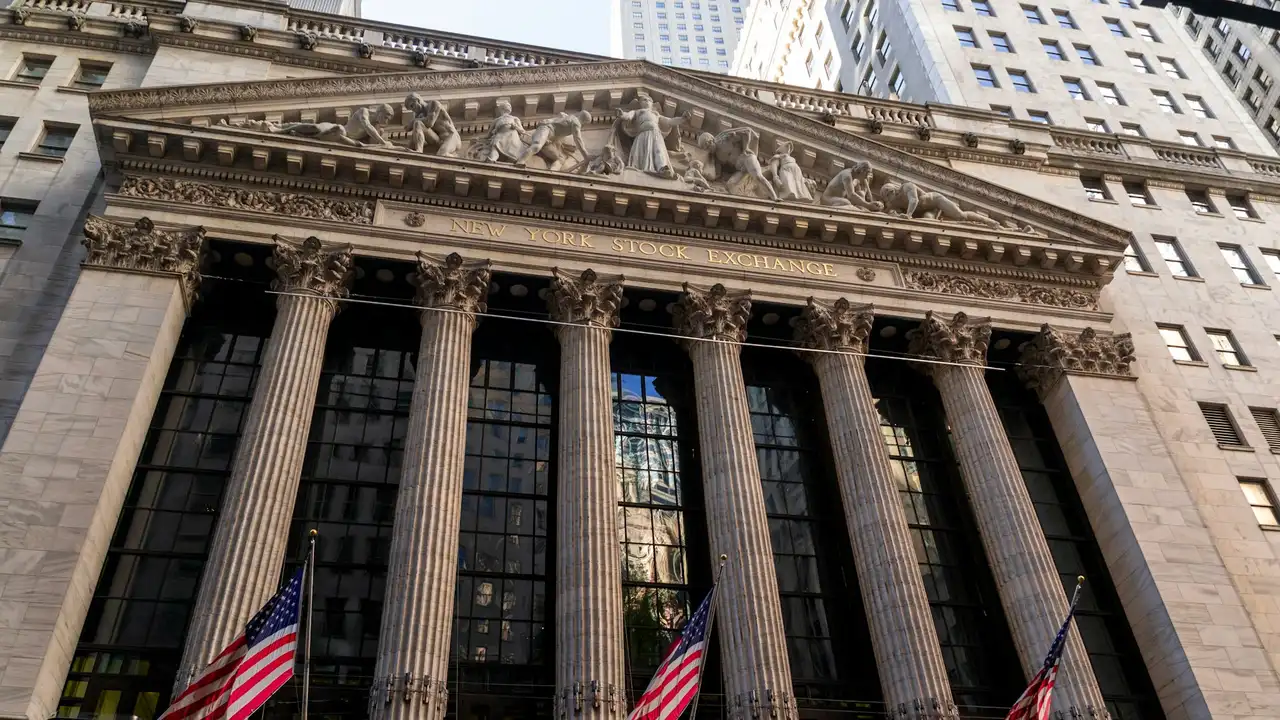
Wall Street under pressure: The dramatic warning of the giant bank is revealed
The main indices closed with sharp declines after investors returned to focus on high financing costs and the huge US deficit, despite temporary calming attempts by the Treasury Secretary.
The optimism recorded in the US bond market did not last long, and at the end of the trading day on Wall Street, the main indices recorded declines. Investors returned to focus on high financing costs and the fiscal situation of the US, while the strengthening of energy prices added to concerns about a resurgence of inflation.
The Dow Jones index ended the day with a decline of 1.1%, the S&P 500 index lost 0.7%, and the Nasdaq index weakened by 1%. The weakness was not concentrated in a single sector: nine out of the 11 sectors that make up the S&P 500 closed with declines. Among the sectors that stood out negatively were consumer discretionary and healthcare, while the technology sector settled for a relatively moderate decline of about 0.5%.
At the center of attention was the development in the bond market. The move by US Treasury Secretary Scott Bessent, who increased bond purchases in an attempt to ease the pressure, initially succeeded in lowering the level of concern. However, the effect proved to be temporary. The yield on the 30-year government bond climbed by six basis points and reached 5.25%, while the yield on the 10-year bond rose by five basis points to a level of 4.7%.
In the background, investors continue to deal with the US deficit and the scale of the national debt, which has already crossed the $40 trillion mark. At ING Bank, they used a particularly sharp description for the Treasury's move and compared it to "rearranging deck chairs on the Titanic." JP Morgan also warned that without significant treatment of the deficit, the market might see the steps taken as a solution that does not address the root of the problem.
The energy market also contributed to the pressure. The price of WTI crude oil climbed by about 3% and crossed the $88 per barrel level, while Brent crude rose by about 3% and traded above $94. The increases were recorded against the backdrop of escalating tensions between the US and Iran, and they strengthened the fear that the rise in energy prices could make the fight against inflation difficult.
Among the stocks that were in focus was Moderna, which retreated after jumping by an exceptional rate of 177% the previous day — the sharpest daily rise of a stock in the S&P 500 index in 25 years. The jump came following the success of the cancer vaccine developed by the company together with Merck in preventing the recurrence of melanoma.
SpaceX also lost altitude and returned towards the offering price, after about 319 million shares held by early employees and investors became tradable. Additional pressure came from the words of Elon Musk, according to which the next attempt to catch the Starship spacecraft using the launch tower is expected only in a few months.
On the other hand, in the crypto market, an opposite trend was recorded. Bitcoin rose by about 5.2% and reached about $72,000, and Ether jumped by more than 9% to about $2,300. The increases came after US President Donald Trump called on Congress to promote a law expected to support the crypto industry.
Walmart provided investors with a complex picture: the retail giant raised its annual forecast after managing to beat Wall Street's expectations on revenue and profit. Despite this, the stock fell following a slowdown in sales at identical stores in the US, which reached the lowest pace recorded in the last six years.