Want to raise Olympic champions? These are the things children should know
24 medals, including nine gold: Israeli students achieved impressive results this year at international science olympiads. So what makes a student an Olympic champion? Dr. Carmel Bar, director of Israel's national teams on behalf of the Future Scientists Center, shares tips that can make the difference.

Israeli students returned this year with excellent achievements in science olympiads held abroad. The students returned with 24 medals: 9 gold, 7 silver, and 8 bronze. In Israel, five national science teams are trained — in physics, chemistry, biology, mathematics, and computer science. This year, Israel also competed for the first time in the Artificial Intelligence Olympiad.
The Ministry of Education and the Future Scientists Center lead the training of Israel's national teams for participation in international science olympiads, with each team trained at a different academic institution.
So what made these students Olympic champions? Not just knowledge and a sharp brain. What is certain is that it takes quite a bit of investment to be — or to raise — an Olympic champion.
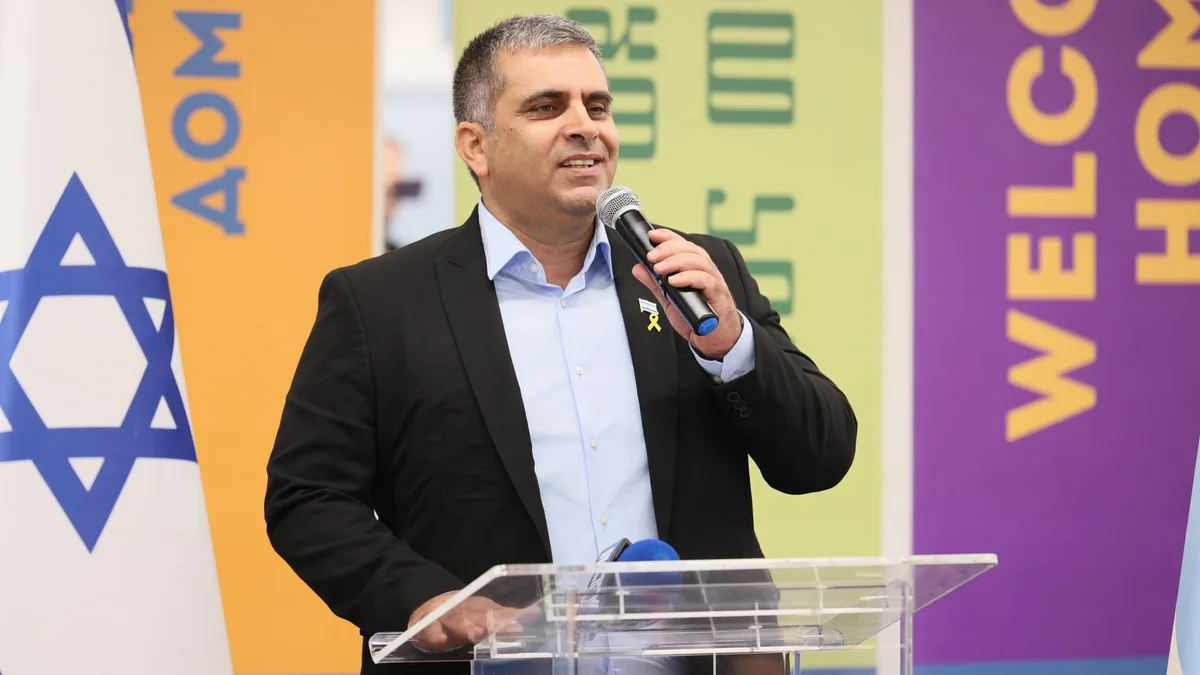
Dr. Carmel Bar, director of Israel's national teams on behalf of the Maimonides Fund's Future Scientists Center, gives several tips:
-
Find your field — the one you enjoy, in which you have high abilities and talent. Found it? Excellent. Now you need to add hard work to the equation.
-
Look for partners on the path — friends with the same love for the subject. It is much easier to train and improve together.
-
Encountered a big and complicated problem that you have no idea how to solve? Excellent! Challenges improve our skills. Try to break the question down into smaller and simpler problems. In olympiad questions, you also need to try to understand what information is missing and how it can be obtained.
-
It is always better to try and fail than not to solve at all — every mistake is an opportunity for learning, and every failure brings you closer to the next success.
-
Do you know how people say not to talk about an exam after it is over? We do the opposite — after every exam, we conduct a debriefing, check where we were right, where time could have been saved, and where it was worth lingering and explaining to get more points.
-
Managed to solve a question in the team selection exams? Great! Now try to teach — explain how you solved it and why it is correct, coach other students, and even try to compose interesting questions yourself.
-
Is there a big and important exam ahead of you? It is important to do a simulation — practice an exam of similar length, with questions in the same style. In the science teams, when we do simulations, we even try to find a room that will be similar to the real olympiad, with the same glitches and noises. The more prepared you arrive, the better.