US Army Set to Detonate Five Tons of Unstable Lead Azide at Iowa Plant
The U.S. Army is set to detonate five tons of unstable lead azide at an Iowa munitions plant following a federal court ruling, despite environmental concerns and prior delays.
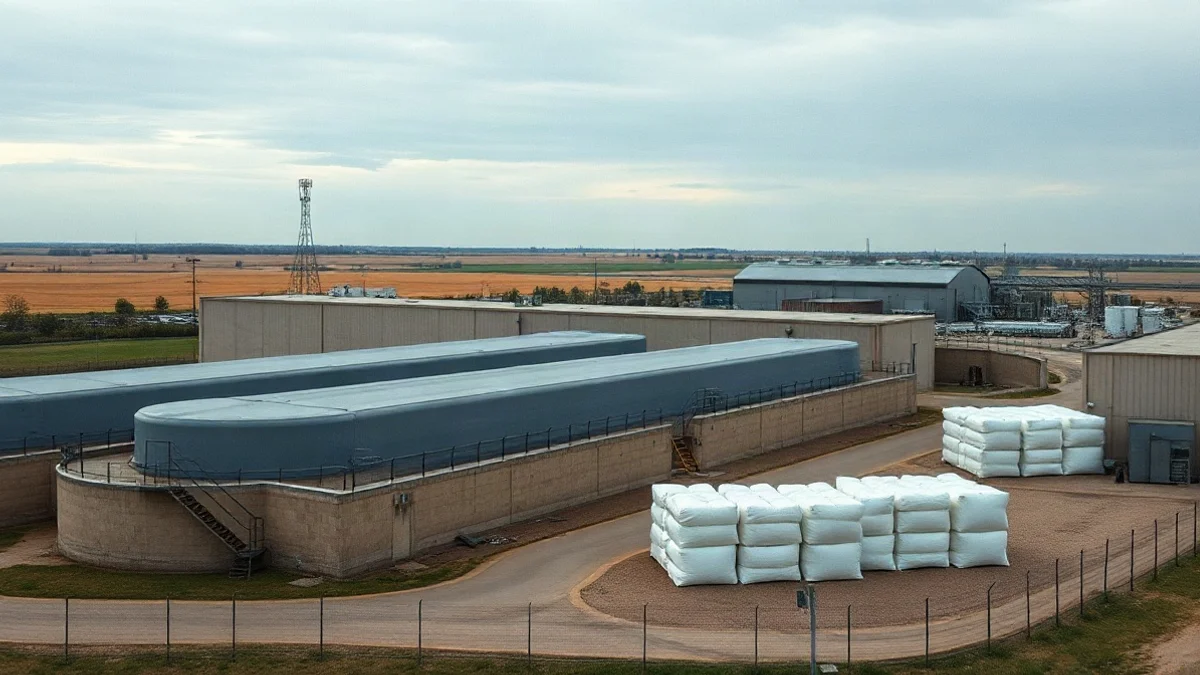
The United States Army is scheduled to detonate approximately five tons of unstable lead azide at an ammunition plant near Middletown, Iowa. Discovered in March inside deteriorating containers stored for over two decades, the highly volatile explosive material has become too unstable to transport safely. Brigadier General Eric Shirley, who is heading the operation, stated that inaction is no longer an option as the compound poses an immediate danger.
Legal Battles and Public Concern
The decision to conduct the controlled detonation on site triggered a week of intense legal, political, and public controversy. Environmental organizations filed emergency lawsuits to block the operation over fears of a toxic lead dust cloud, while President Donald Trump initially ordered a delay pending judicial review. After three postponements, a federal appeals court lifted its temporary stay and ruled that the U.S. Environmental Protection Agency emergency permit included adequate safeguards and that the military had evaluated all available alternatives.
Acting Army Secretary Adam Tali emphasized during a press briefing that the public does not need to panic. Officials noted that additional blast barriers, ballistic gels, and foams have been deployed around the bunkers, with thousands of gallons of water slated to be sprayed during the blast. Early morning emergency alerts were sent to local residents, advising those within an eight-kilometer radius to prepare for possible evacuations, while individuals living within 32 kilometers were instructed to shelter indoors with windows sealed to mitigate noise, vibrations, and airborne dust.
Official Responses and Technical Risks
Iowa Governor Kim Reynolds announced her support for the detonation following consultations with senior defense officials, including U.S. Secretary of Defense Pete Hegseth, stating she trusted the military to protect local residents. Environmental groups criticized the military for creating the emergency through long-term neglect, arguing that residents deserved more transparency and health protections.
According to military ordnance experts, the explosive barrels were originally preserved in an ethanol-water mixture designed to maintain stability. However, evaporation caused the liquid levels to drop, leading to the formation of friction-sensitive lead azide crystals that could detonate from the slightest disturbance. Military officials maintained that attempting to move or handle the degraded barrels would have drastically increased the risk of a catastrophic explosion.