New Urban Renewal Model Offers Housing Vouchers Instead of Waiting Years
Israeli urban renewal developers are introducing housing vouchers, allowing apartment owners to receive alternative ready properties at demolition instead of waiting years for construction.
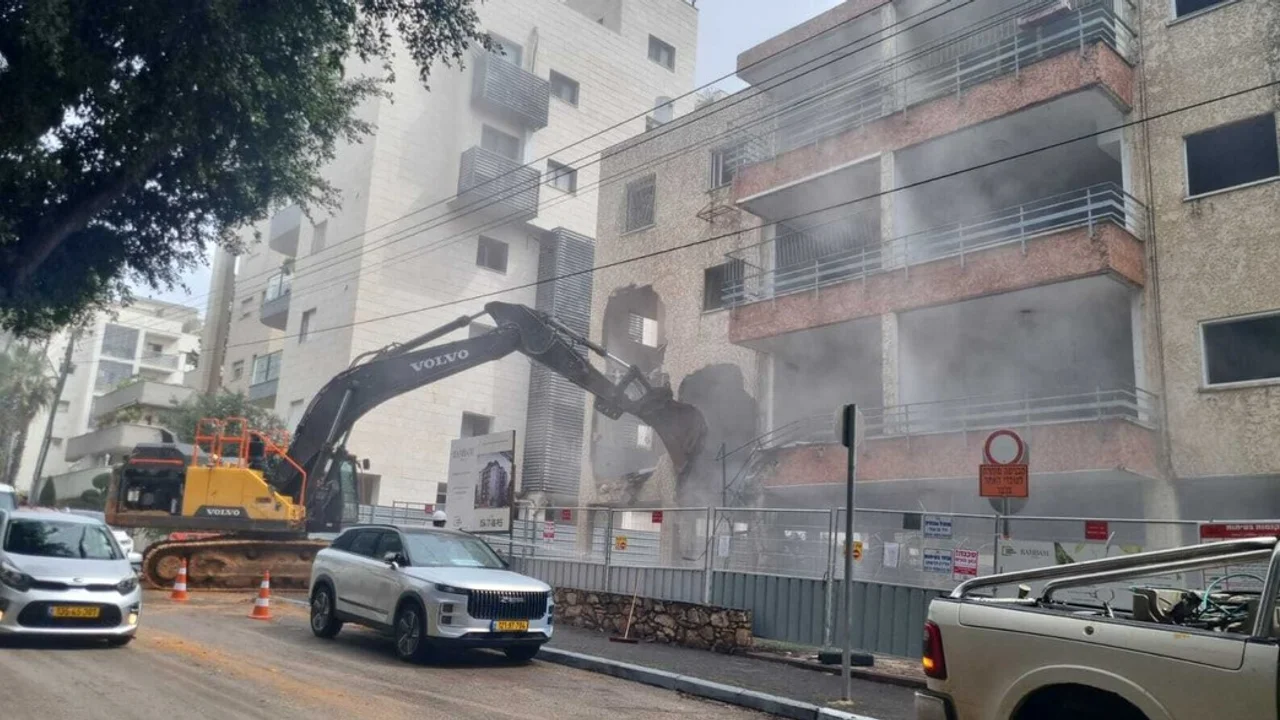
A new commercial model emerging in Israel's urban renewal sector allows apartment owners to bypass years of construction delays by receiving a housing voucher instead of waiting for their original building to be rebuilt.
How Housing Vouchers Work at Demolition
At least two development companies are currently marketing variations of this approach. Under this arrangement, property owners are not required to wait out the multi-year construction process on their original site. Instead, upon the demolition of their building, they receive a voucher equivalent to the value of their future replacement apartment.
This voucher can be redeemed for a ready or near-completion property from the developer's existing inventory or through other projects, whether in an adjacent street or in another city. Gil Vynles, co-owner of Q Real Estate, explains the valuation mechanism for a 16-apartment project along Arlosorov Street in Tel Aviv, where approximately 115 compact apartments and commercial spaces are planned.
"The valuation of the apartment is carried out through an agreed and straightforward appraisal process, which examines the value of the future replacement apartment once built and ready, and defines an agreed discount rate for advancing the schedule and reducing risk," Vynles stated.
Property owners retain the right to remain in the original development if they prefer to wait for construction to finish under their initial agreements. A similar model is promoted by Azorim under the name "Pinui-Zikuy" (Evacuation-Credit), where residents receive a monetary voucher corresponding to their future entitlement.
Flexibility and Financial Efficiency for Developers
Dan Gingis, Vice President of Urban Renewal at Azorim, notes that the voucher can be applied toward any project within the company's portfolio. While tenants must still wait for municipal zoning approvals and committee decisions, the mechanism eliminates the waiting period during actual construction.
"The goal is to save the tenant the construction time," Gingis explains. "If tower construction is expected to take four years, the tenant can move into their evacuation-credit apartment upon demolition, provided it is ready, thus bypassing that wait."
From the developer's perspective, this model optimizes financing and planning structures. Developers are no longer obligated to cover rental stipends for years or post financial guarantees for the duration of construction. Furthermore, developers gain design flexibility, as they do not need to construct large units with pre-agreed specifications for returning owners, allowing them to build marketable compact units instead.
Legal Framework and Tax Challenges
Attorney Nir Edri, partner and head of the real estate department at Meitar, Mizrachi, Wachtel & Co., who represents property owners at the Arlosorov project, highlights the structural differences compared to traditional "Build-Evacuate-Build" methods.
"In this track, the tenant leaves the apartment and receives the new apartment on the day of evacuation itself, but not necessarily within the same project," Edri notes. While this offers a shortened timeline, it introduces complexities regarding taxation and acquisition costs.
Developers purchasing alternative apartments to transfer to owners may face purchase tax liabilities that are not fully exempt under standard urban renewal frameworks. While major firms can absorb these expenses in specific developments, tax implications and capital gains exemptions remain subject to careful scrutiny by the Israel Tax Authority and the Government Authority for Urban Renewal.