A conveyor belt like at Ben Gurion Airport and a giant arena: multi-billion shekel plan revealed for Haifa
Haifa Municipality has unveiled an ambitious vision with an investment of up to 4 billion shekels, aiming to transform the city's entrance into a major tourist and economic hub, despite potential environmental and budgetary hurdles.
The Haifa Municipality is promoting an unprecedented move that could turn the southern entrance area of the city into an economic and tourist hub on a national scale. The plan, which is still in the planning and economic review stages, is estimated at the initial stage at a sum of 2.5 to 4 billion shekels.
At the center of the vision is the establishment of a continuous urban strip that will connect the Hof HaCarmel station, the Congress Center, hotel complexes, commerce, entertainment, and the beach. The area of the complex is expected to grow from about 76 dunams to about 130 dunams, and within it, about 191,000 square meters of new construction are planned.
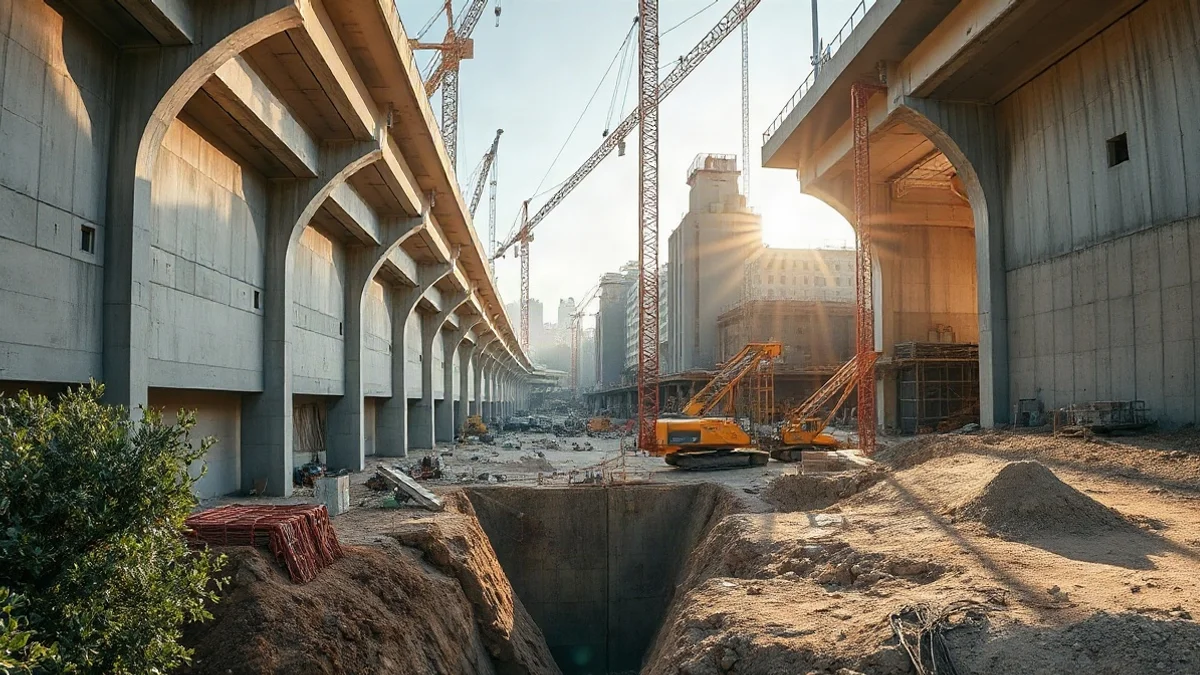
According to the report in Yedioth Ahronoth, one of the prominent components is a covered and air-conditioned passage system that includes a moving conveyor belt, similar to the systems existing in airports. The conveyor is intended to allow passengers arriving by train or bus to move easily between the centers of the complex. Above it, an elevated and shaded promenade is planned, featuring vegetation, restaurants, cafes, and small businesses.
The main economic engine on which the plan relies is the conference and business tourism sector. Alongside the expansion of the Congress Center, an arena is being promoted that will be able to accommodate about 10,000 spectators for cultural and sports events. In addition, a hotel district is planned, including about 750 rooms, an addition that could increase the supply of guest rooms in Haifa by about 40%.
The municipality hopes that the proximity to the MATAM park, which employs more than 15,000 workers, as well as to the Technion, the University of Haifa, the science park, and medical centers, will attract conferences of technology companies, biotech, artificial intelligence, and defense industries. At the same time, accessibility to the train is supposed to encourage visitors from the center of the country to come to the city for a day trip.
However, the road to implementation is still long. The sources of funding have not yet been secured, and therefore the project may depend on private capital, the expansion of building rights, and government assistance. The plan has also not yet entered the district approval track, and the planned construction near the coast could raise environmental objections and lead to lengthy proceedings. At this stage, it is an ambitious vision, the success of which depends on the ability to turn impressive visualizations into an economic and feasible model.