A Double Battle: The Battalion Commander Fighting for His Country and Against Cancer
Lt. Col. A., commander of an IDF rescue battalion, faced a severe cancer diagnosis in the midst of the war. Despite aggressive chemotherapy and complex surgery, the officer refused to leave his post, finding strength in his service to fight the disease.

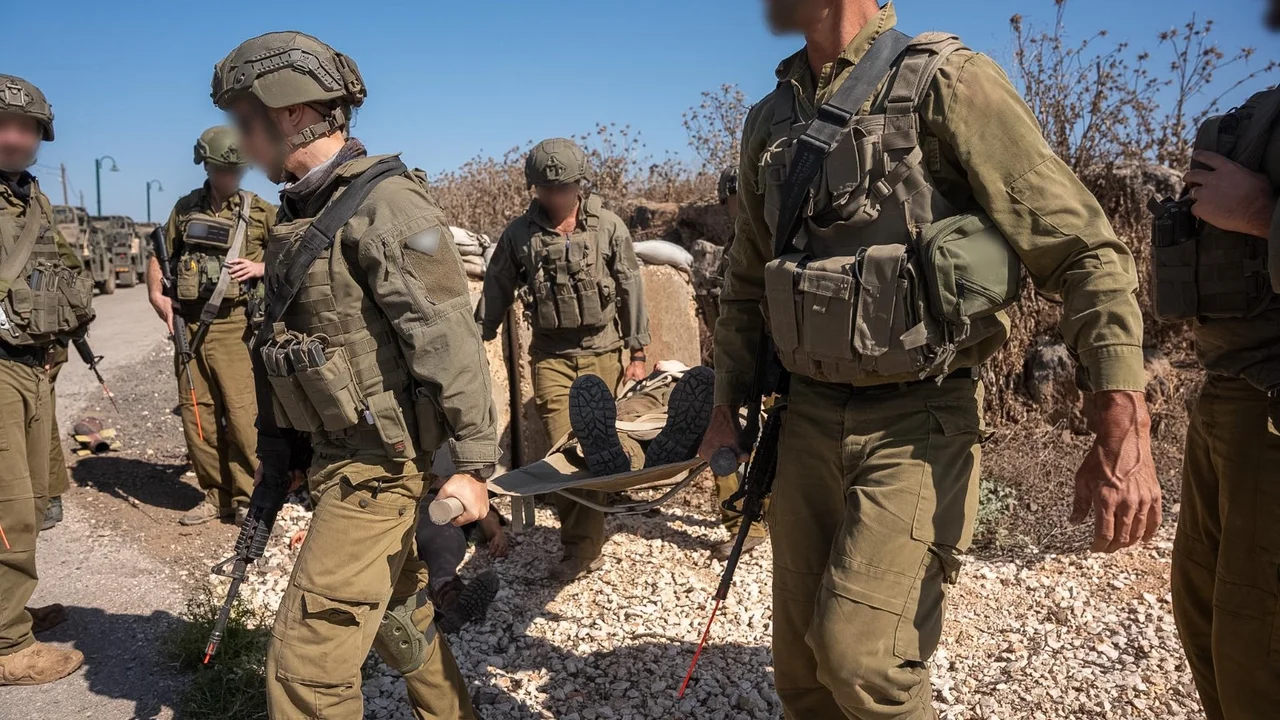
On October 7, Lt. Col. A. was on a family trip in Italy when news began to flow about the situation in Israel. "Two hours later, I was already in conversation with the brigade commander," he recalls. "My deputy took the reins and began to mobilize the commanders. I found myself managing an operations room from an apartment in Italy—with one hand trying to keep the family on vacation, and with the other hand frantically looking for a way to return to the country as quickly as possible." A. understood the importance of returning, as for the last five years he has commanded the Northern Rescue Battalion of the Home Front Command. Within four days, the family boarded a rescue flight, and A. arrived directly at the battalion from the airport.
Prior to the war, rescue battalions performed very few reserve duty days, but since that Saturday, an impressive turnout was recorded. During the first three months of fighting, 45-year-old A., a married father of three from Tzur Yitzhak, felt that something was wrong with his health. "But these were things that paled in comparison to the mission," he says. After medical examinations, the discovery was shocking: a stage 3-4 cancerous tumor in the transition between the esophagus and the stomach.
A. was required to undergo chemotherapy to shrink the tumor before a complex surgery. Two weeks before the first session, he shared the news with his superiors. "The doctor who accompanied me was anxious to start, and I understood how dramatic the situation was. The entire treatment period is a very dark time for the human soul. You need to be very strong to lift your head and carry on until the next treatment," he shares.
Doctors urged him to focus solely on recovery, but A. refused to give up. "It was clear to me that after the round of treatments I would return to serve. It gave me something to hold on to." The officers under his command did not know about the illness, and even those who saw him in his condition chose out of sensitivity not to raise the subject. The chemotherapy worked, the tumor shrank, and A. underwent a complex surgery to remove parts of his stomach and esophagus.
In September 2024, during an operational activation in the north, A. decided to join to test his abilities. "Slowly I started to get stronger. In December 2024, I already joined 50 days of service in full capacity. In 2025, I officially entered the status of 'recovering'." For him, the battalion is home. "I am proud to lead a rescue battalion. We are a diverse unit—we have Druze, Muslims, Christians, and Jews. We are also a mixed battalion where 35% are female combat soldiers, and some of them are commanders."
When asked what he would say to someone who chooses to put everything aside in such a situation, Lt. Col. A. showed empathy. "Many decide to quit their job and leave the reserves. But when you have something else to deal with besides the illness, it prevents you from sinking. The service gave me light and strength. I am happy that I was given the privilege to choose."