"I have a lot of money, I don't need to apologize": A glimpse into life in luxury assisted living
The activities: wine workshops, a brain gym, an infrared sauna, and meetings at the bar. The audience: 67-102 year olds. The cost: a deposit of 2-6.5 million shekels per apartment, and another 10,000 to 20,000 shekels per month. The longevity trend has also reached assisted living and is changing the perception of old age. We spent 48 hours at the luxurious residential complex of the 'Ad 120' chain in Ramat HaHayal and heard why the residents are willing to part with so much money: "Age should not prevent fulfilling dreams."
On Sunday, just before the start of the World Cup final match between Argentina and Spain, several dozen women and men went up to the roof of the 'Ad 120' assisted living building in Ramat HaHayal and sat around tables, with beer glasses and snacks prepared for them in advance. Among the spectators, all of whom are residents of the house, were former businessmen, lawyers, and military personnel, as well as the house's CEO, Yaron Ben-David.
"Are you enjoying yourself?" Ben-David asked one of the women. "She is 98 years old," the CEO informed me, a reserve colonel who was appointed to the position after finishing his career service in the Air Force. "Excuse me, 97," the woman corrected him indignantly. "They remember and insist on every detail," smiles Limor Shapira, the singer, actress, and the house's culture director.
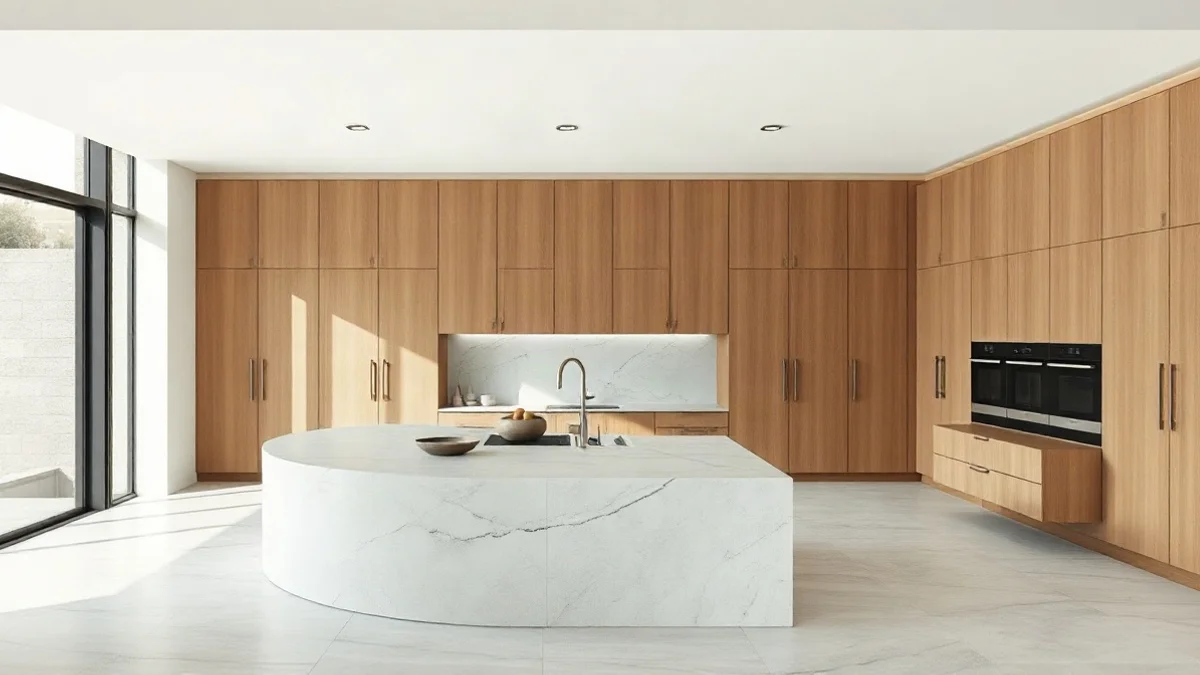
Exactly a year ago, 'Ad 120' launched the renovated house in northern Tel Aviv, with an investment of about 120 million shekels. To the complex, which opened about 14 years ago, two new residential floors were added with luxury apartments. "This longevity residential complex," as Ben-David brands it, includes a variety of apartments, from 2 to 4 rooms, in sizes ranging from 45 sq. m to spacious penthouses of 140 sq. m and more. Just don't mention the phrase 'assisted living' near Ben-David. They used to call it an old-age home, then a nursing home, and now a 'longevity complex', the new magic word in the industry.
The prices are accordingly. A person who wants to move to these luxury assisted living complexes needs to leave a deposit of about two to four million shekels and maintenance fees ranging from 10,000 to 20,000 shekels per month. For a couple, it is a monthly expense of more than 20,000 shekels, not including the deposit from which 3%-4% is deducted annually. In many cases, the monthly payment does not include meals, laundry services, cable and internet, electrical appliances, furniture, and more. Although here too, like in vacations abroad, the "all-inclusive" method is gaining momentum. In any case, it is an expensive business that is not suitable for every pensioner. Not to mention the children and grandchildren who watch with longing eyes as their inheritance shrinks.
"They call it a residential complex, for me it's a resort," one of the residents, an architect by profession who has crossed the age of 80, tells me while we sit for a healthy lunch. "By chance, I didn't go to work today, I had to be at an event in the morning. In my routine, I work every day, and at the end of every day I return here, and my wife and I start our leisure time. Besides the regular activities, this month we were at a wine workshop, one evening at a piano bar, another afternoon at a lecture, and one day we sat in the lobby and talked with friends. Even during the war, we continued as usual. When I return here at the end of the workday, I feel like I'm coming home. We are not here out of compulsion. We thought quite a bit before we decided to leave the house we lived in and come here. We are here by choice."
According to CBS data, as of the beginning of 2026, there were 1,286,000 senior citizens living in Israel, about 45% of them over the age of 75. Considering the increase in life expectancy, the number of senior citizens in Israel will reach about two million by 2040, about 14% of the population. This figure explains the large increase in the number of assisted living homes. From a business perspective, it is income-generating real estate with a nice profit, low risk, and rigid demand. It is not for nothing that assisted living has become a popular investment target for large groups in the economy: the Azrieli Group owns the 'Palace' chain, Bank Hapoalim purchased 20% of the 'Beit BaKfar' chain, and Shapir Engineering purchased control of the 'Ad 120' chain from Phoenix at a valuation of 1.35 billion shekels.
I spent the night in a large and well-equipped apartment on the ninth floor of the building, facing an amazing view of the park. Silence enveloped. I thought about the vitality that the residents showed in the game, some of them 90 years old and older. "I am 95 years old," said the woman who sat next to me in a brain gym class. "It's no longer easy to think fast," she justified herself, while trying to beat the computer. Later we were two in the gym: me and the machine, which read every muscle in the body. From there I continued for fifteen minutes of sitting in 55-degree heat, in an infrared sauna. According to the regulations, the heat that penetrates deep into the tissues helps in relieving chronic pain, reduces stress, and raises the mood level. Did it work? Honestly, how can I be stressed when I know that immediately after that I am entering a guitar lesson, and in the evening I am offered listening to Mozart's Don Giovanni?
"The renovations we did here are not just physical, they are part of a whole life concept of the third age," says Tomer Rosenberg, CEO of the chain. "We connect body and soul," adds Guli Levy, director of longevity and community.
"I immigrated to Israel from Turkey," says Yitzhak Zaga, who will soon turn 87. In the half hour I sit with the man, who was a carpenter and built the ZAGA furniture empire, I learn about the Turkey of the past and about the small Tel Aviv after the establishment of the state. "My children are now managing the business. Unfortunately, my wife passed away. I have been here for four years. I have someone to talk to here, the children and grandchildren come to visit. At my age, this is the best way of life one can ask for."
This week, one of the residents, who has been there since its opening, will celebrate her 102nd birthday. When I arrive at her room, I find her, Dr. Thea Friedman, an ophthalmologist and Holocaust survivor, playing solitaire on the computer.
"I have a lot of money, I worked hard for it, I don't need to apologize for it," she says. "We are all here with the same fear of time passing and age. Not once am I asked if I don't miss home, the house we built, in which we raised our children. I try not to let this thought penetrate me. The place here makes time less threatening to us. Each and every one of them left a house by choice, knowing that the remaining years of their life they will spend in a place that benefits their body and soul. Age should not prevent fulfilling dreams."
Friedman, who survived the horrors of the Holocaust in a ghetto in Romania and underwent torture when she sat in prison for her desire to immigrate to Israel, lit one of the six torches in 2018 at the official opening rally at Yad Vashem. "I had a hard life, like any Holocaust survivor," she says. "I remember everything. The path I took since 1941, through the prison, Transnistria, the bribe that saved me, the fake passports, Bucharest, and the arrests. In 1958, my husband and I and our baby son immigrated to Israel. I don't look back with regret. I only look forward. Although it's not easy in the country during this period, I am optimistic. My husband taught me Zionism, I follow in his footsteps." On what she wishes for her birthday, she smiles at me: "Quiet and peace. Here, in this house, I find it, but it's not enough, because the country is not quiet. Like many others, I hope that we will get out of this not-so-simple period, and peace will also come to the country."