Turkey Plans 86% Defense Budget Hike by 2027 Citing Regional Threats
Turkey plans an 86% defense budget hike to $30.4 billion by 2027, explicitly citing Israeli military actions, regional conflicts, and NATO targets amid severe domestic inflation.
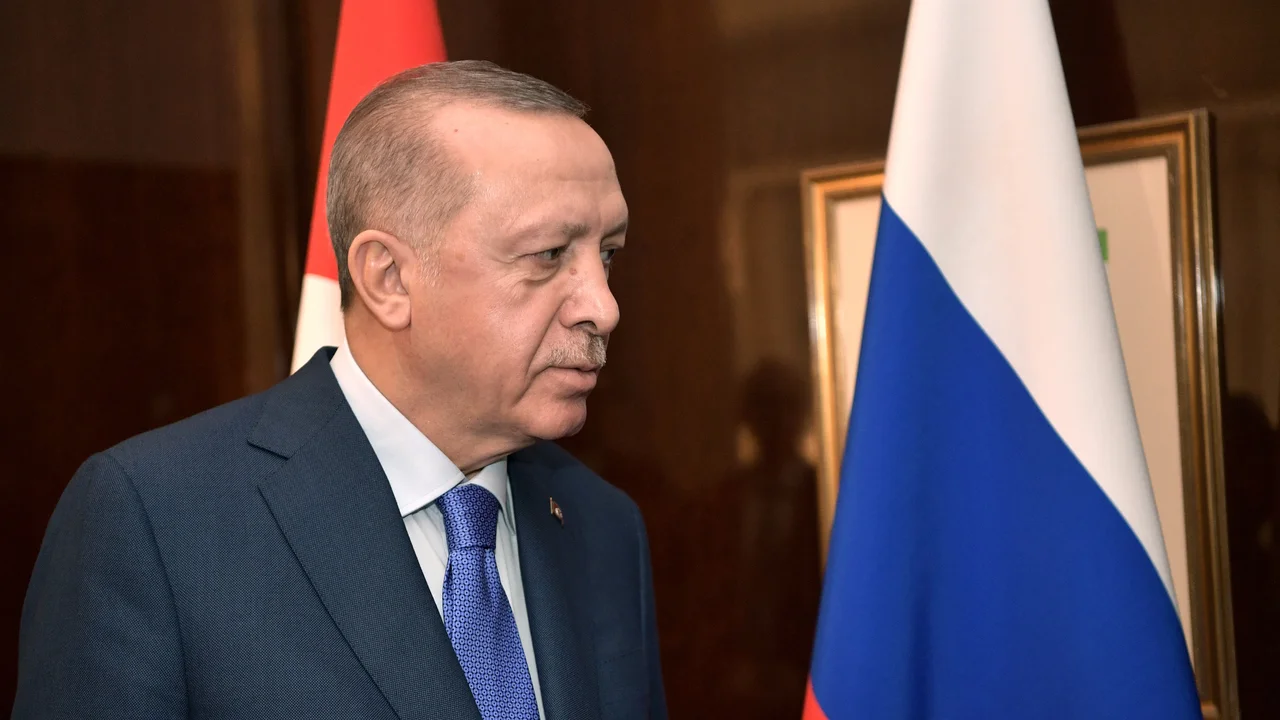
Turkish President Recep Tayyip Erdogan's government plans to nearly double the Turkish Ministry of Defense budget, projecting a dramatic 86% surge to 1.53 trillion Turkish liras, approximately $30.4 billion, by 2027. The sweeping defense spending blueprint, which still requires parliamentary approval, reflects Ankara's response to escalating regional tensions and shifting global security demands.
Regional Escalation and Strategic Pressures
Turkish officials have openly linked the defense expansion to regional conflicts and military campaigns involving Israel. Turkish Defense Minister Yasar Guler explicitly pointed to "Israeli attacks on neighboring countries," alongside the protracted Russia-Ukraine war and US-Israeli military actions involving Iran, as core justifications for boosting national defense investments.
Minister Guler emphasized that these complex geopolitical developments require a multi-dimensional security policy capable of rapidly adapting to volatile conditions. He also aligned the budgetary targets with NATO's overarching goal of dedicating 5% of gross domestic product to defense by 2035, noting that Turkey's current defense allocations account for roughly 2.85% of GDP.
Beyond immediate neighborhood friction, Ankara maintains binding defense commitments across multiple strategic theaters. Turkey has deployed significant military forces to Somalia, Libya, and Qatar, alongside a mutual defense pact with Saudi Arabia and Pakistan.
Dr. Hay Eitan Cohen Yanarocak, a Turkey expert at the Moshe Dayan Center at Tel Aviv University and the Jerusalem Institute for Strategy and Security, underscored that Ankara must service all its international defense obligations while concurrently expanding naval armament contracts. Meanwhile, Dr. Gallia Lindenstrauss, a senior researcher at the Institute for National Security Studies, noted that the planned defense acceleration directly mirrors lessons drawn from Operation Rising Lion.
"Turkey reached the conclusion that it must accelerate its missile program, the construction of air defense systems, and other defense capabilities, including shelters," Dr. Lindenstrauss explained.
Economic Strain Amid Defense Expansion
The broader Turkish defense budget, which encompasses expenditures beyond the core ministry, is projected by government officials to jump by 229% between 2027 and 2029. According to Stockholm International Peace Research Institute data, Turkey ranked as the world's 11th largest arms exporter between 2021 and 2025, capturing 1.8% of global arms trade as annual defense exports surged from roughly $2.3 billion in 2020 to about $10 billion.
This aggressive military industrial growth occurs against a backdrop of severe domestic economic distress. The Turkish lira has depreciated by 19% against the US dollar over the past year and by 78% over the last five years, while annual inflation remained elevated at 29.77% in October.
Despite the heavy financial burden placed on citizens, experts note that public and media discourse in Turkey treats the defense buildup as a source of immense national pride, largely muting domestic criticism regarding tax hikes or public spending cuts.