Iranian and Israeli Activists Launch Joint Dialogue Tour Across US Campuses
An Iranian expat and an Israeli activist completed a joint US campus tour using Persian carpets and dialogue circles to discuss regional conflicts and resistance against the Tehran regime.
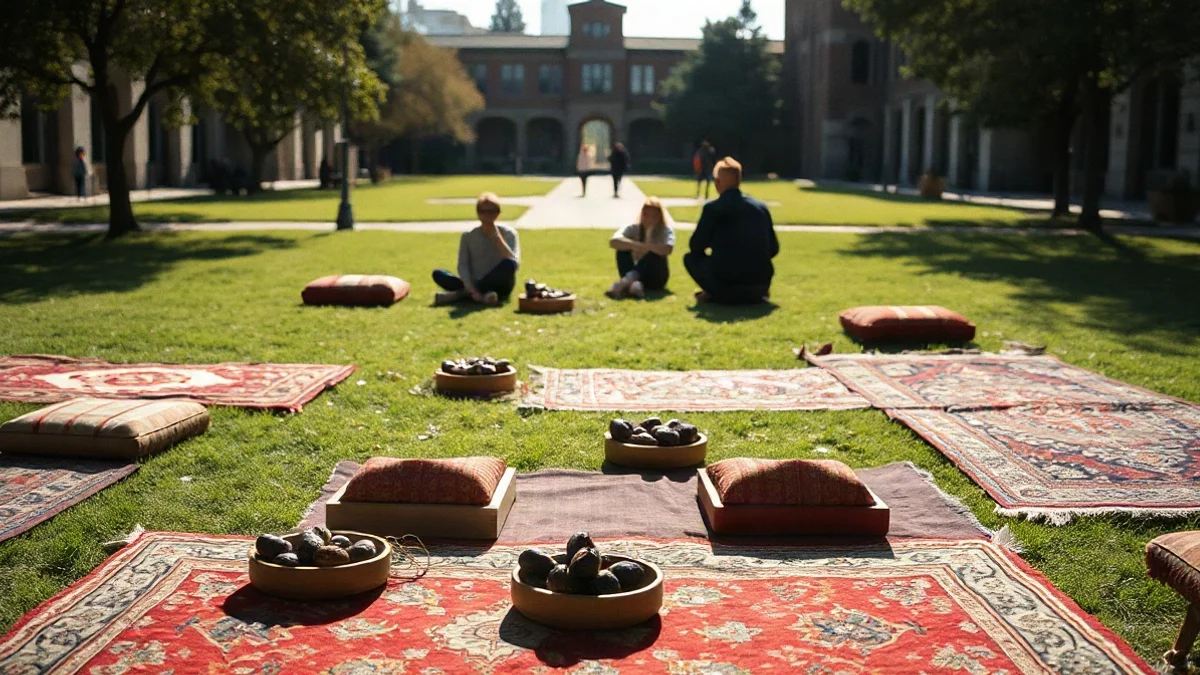
An Iranian exile and an Israeli activist have completed a joint campus tour across the United States, utilizing an unconventional format featuring Persian carpets and floor cushions to foster dialogue among American university students. The initiative, titled Middle Eastern Salon, is organized by the Israeli nonprofit ISRAEL-is, which works to enhance Israel's international standing.
Building Bridges on American Campuses
Fady Daneshzad, a 33-year-old Iranian expat residing in Toronto, joined Israeli representative Neria Kfir, 26, to engage with students at eight academic institutions, including UC Berkeley, UC Santa Barbara, the University of Southern California, the University of Colorado Boulder, and the University of Kansas, alongside two Jewish community events. The delegation set up inviting seating areas with Persian rugs, offering dates and welcoming students to discuss life in both countries, the ongoing conflict, and opposition to the regime in Tehran.
Daneshzad, who serves as the women's affairs manager for the organization ICARE, left Iran with her family at age 17. She described growing up under the Islamic Republic as living under the control of authorities who did not represent the population's values. "As women who lived in Iran, our freedom was taken away from us in many ways, and we lived in constant fear," she recounted, detailing how her sister was once detained and interrogated by plainclothes security personnel over suspected ties to dissident student groups.
Confronting Misconceptions and Ignorance
During the campus tour, delegation members encountered significant gaps between student rhetoric and factual knowledge regarding the Middle East. At UC Santa Barbara, Kfir met a political science student who discussed the environmental impacts of the conflict and alleged Palestinian casualties, yet admitted he could not locate Iran on a map, was unfamiliar with Hamas, and had not heard of the October 7 attacks.
Kfir, a Tel Aviv native living in New York who lost friends at the Nova music festival, emphasized the power of direct personal testimony in countering misinformation. "The normative image is to see Iranians and Israelis as bitter enemies at total war, rather than as supporters and friends sitting together on cushions, sharing dates, and encouraging each other in the struggle for freedom," Kfir stated.
Shared Pain and Empathy
Despite ideological differences at various stops, the delegation reported moments of connection with students from diverse backgrounds. At the University of Southern California, an Iranian student initially critical of Israeli and American involvement eventually engaged in constructive dialogue, later proposing a filmed exchange event between Israelis and Palestinians in Los Angeles. At the University of Colorado Boulder, local student Hailey drew parallels between the anguish of waiting for news regarding a missing campus peer and the narratives shared about captives held in Gaza.
Daneshzad noted that the tour also served as an essential platform to amplify the voices of Iranians remaining inside the country, particularly during periods of heavy internet censorship and communication blackouts enforced by the regime. "I felt a deep responsibility to be the voice of my people while they could not convey their messages to the free world," she said.