Trump decides - and Israel is on the sidelines: "Everything is subject to his will"
American planes attacked in Iran for consecutive nights, but Israel did not join. In Jerusalem, they learned about the cancellation of a massive attack from a tweet by Trump, who publicly declares that Netanyahu does what he asks. While in the US they are looking for an "exit path" from the war with Iran, here they insist that the achievements against it have been preserved. As the campaign continues, the question sharpens: has Israel chosen to stand on the sidelines, or has it simply lost the ability to influence?
Four months have passed since Operation "Lion's Roar" ended after 40 days of intense fighting. Then, after a series of Israeli strikes in Iran, the elimination of senior officials, and damage to nuclear and missile infrastructure, a ceasefire was announced — which was defined from the outset as temporary and fragile. Since then, it has been violated time and again, the Iranian threats have not disappeared, and the confrontation between Washington and Tehran has flared up again.
Only last night (between Friday and Saturday) it was reported on CNN that the Chairman of the Joint Chiefs of Staff of the US military, General Dan Kane, is looking for an "exit path" from the war with Iran. But the reality created in the recent exchange of blows is clear: the United States attacked in Iran for consecutive nights, while Israel remained outside the campaign.
Israel did act in Iran since the end of the operation. On June 7, 60 days after the ceasefire, the Air Force attacked launch sites, air defense systems, and other targets in response to the firing of 11 missiles toward Israel. But in the recent American round, the picture was different: for almost two weeks in a row, the US military attacked in Iran — military bases, infrastructure, ports, bridges, and airports — while the IDF did not participate in the waves of attacks.
Israel's remaining outside was not just the result of an independent decision in Jerusalem. The Americans made it clear that they want Israel not to intervene as long as Iran does not attack it directly. The meaning was a kind of new game rule: the US manages the campaign, Israel maintains readiness — and will join only if Trump wants it or if Tehran provides it with a pretext.
Challenges to Israeli Strategy
Dr. Avishai Ben Sasson-Gordis, head of the US program at the Institute for National Security Studies (INSS) and a senior lecturer at Tel Aviv University, explained that "in the situation that has been created, there are three main problems and a half-full glass that is still worth paying attention to."
"First, in the practical aspect, Israel finds itself in a situation where if it identifies a significant and emerging, but not immediate, threat — it cannot act against it independently because its actions are integrated and subject to the wishes of the US President. This particularly challenges the Israeli security concept after October 7," he noted.
Another issue is that Israel's enemies on the various fronts recognize the subordination of Israeli independence of action to the American discourse — and challenge Israel more. "At this stage, they still understand that it is wise for them not to challenge Israel directly, but as the US becomes more tied to the quiet that the arrangements on the ground produce, these challenges will grow and Israel currently has no answer to them," he said.
Trump: "If I tell Netanyahu to do something — he does it"
The most important decisions are now being made in Washington, and sometimes are published on the Truth Social network owned by the American president even before the public understands where Trump is headed. About a week ago, the American president announced that he had canceled a massive attack that was planned in Iran. Only a short time before that, he threatened that the US is "prepared and ready to act against Iran at levels of horror, power, and military force not seen since World War II."
However, in a surprising nightly announcement, he claimed that Iran and other countries in the Middle East asked him to refrain from the action, and that the "outlines" of a possible deal had been reached. According to him, Israel also joined the commitment to refrain from an attack. This created a pattern that is difficult for Israel to build a strategy around: Trump threatens an unprecedented attack, the American military prepares, the forces in the region are reinforced — and then comes a post announcing that everything is canceled.
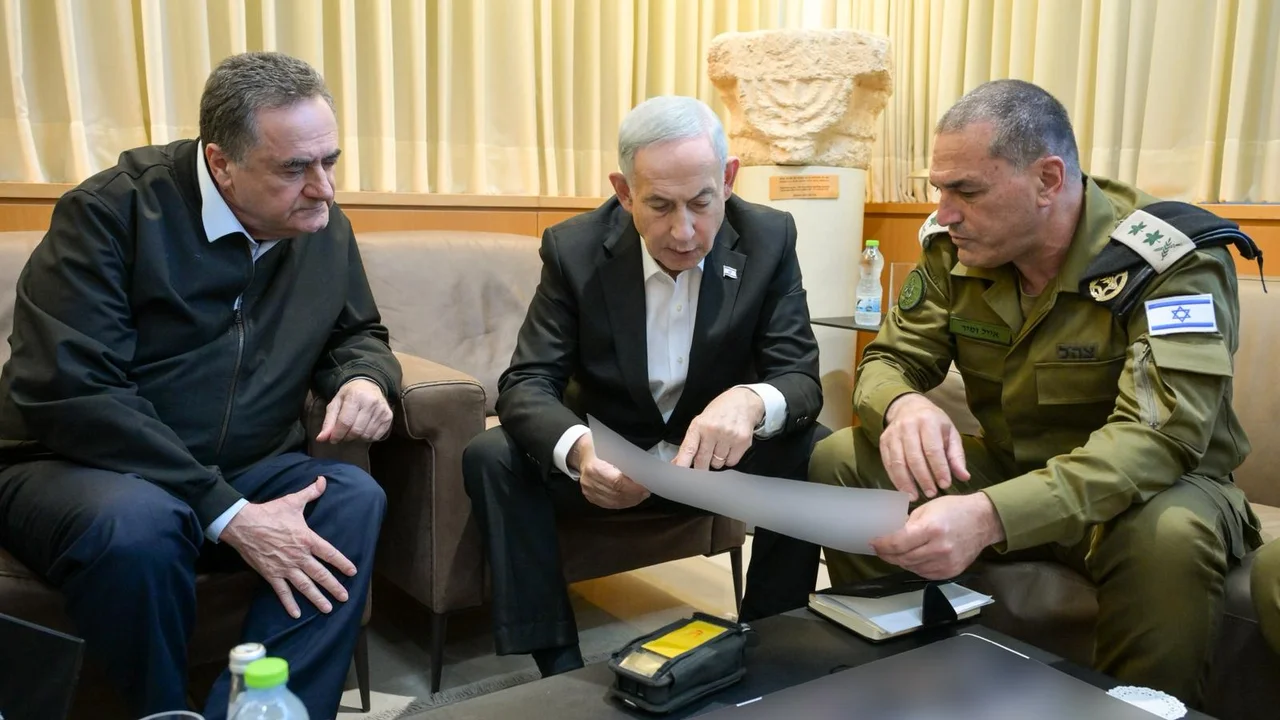
Above all these also hover the public statements of Trump toward Prime Minister Benjamin Netanyahu. At the beginning of June, the American president was asked if Israel might return to fight in Iran, and replied: "If I tell Netanyahu to do something — he does it." From Israel's perspective, it is a much more problematic message. The US President is not satisfied with presenting the close coordination with Netanyahu, but publicly describes the Prime Minister as someone who receives orders from him and carries them out.