The Tongue Map Myth: Why Science Textbooks Got Taste Wrong
Scientific textbooks long taught that different areas of the tongue perceive specific tastes, but modern biology confirms this famous map is a complete myth. All taste buds detect all five basic tastes across the entire tongue.
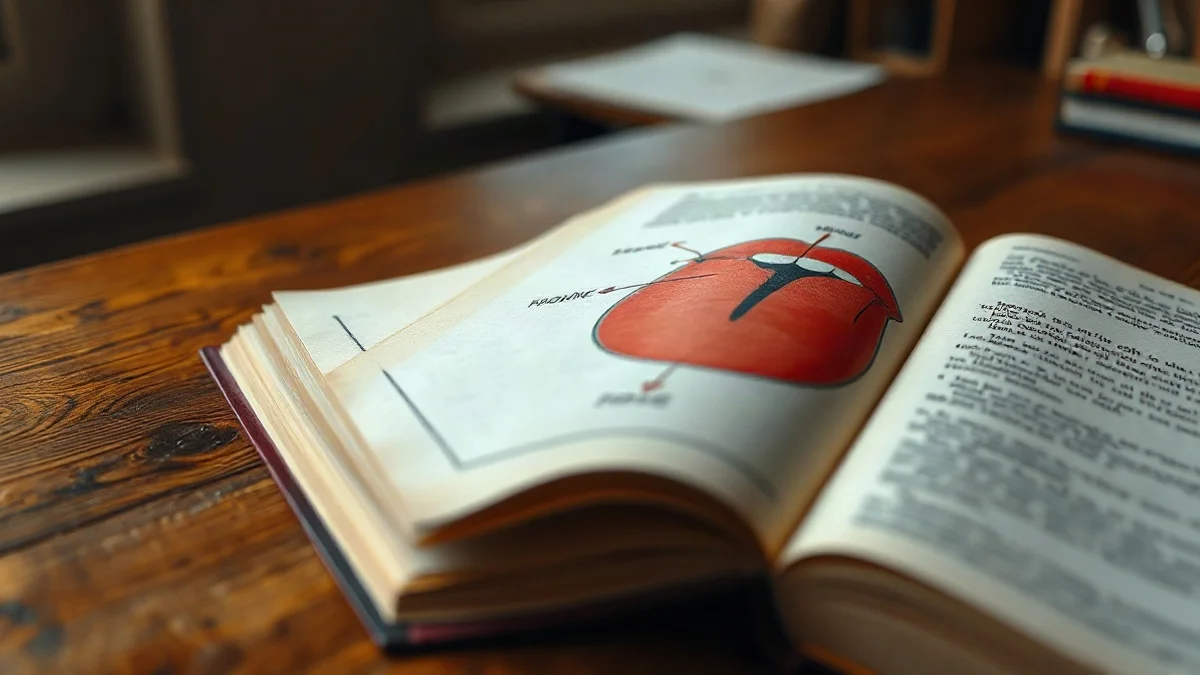
A familiar illustration in school science textbooks depicts the human tongue divided into four colorful zones, each dedicated to a single taste: sweetness at the tip, saltiness on the front sides, sourness on the back sides, and bitterness at the base. This neat and tidy diagram has long looked convincing and easy to memorize for exams. Yet, this tongue map is an absolute myth, one that is easily debunked without a laboratory. Placing a grain of salt on the tip of the tongue—the region supposedly reserved exclusively for sweetness—reveals that the sensation is just as salty as anywhere else. Similarly, a piece of chocolate tastes sweet even on the sides of the tongue, an area the map assigns to sourness. Where did this myth originate, and why has it persisted so successfully?
To understand the truth, one must examine the biology of taste. Thousands of taste buds, known scientifically as papillae, are scattered across the surface of the tongue. Each of these buds contains dozens of cells capable of detecting all five basic tastes: sweet, salty, sour, bitter, and umami—the rich flavor associated with savory foods, triggered by glutamic acid. The classic tongue map only recognizes four tastes because umami was discovered in Japan in the early 20th century and gained widespread recognition in the West decades later. These tiny taste buds hide within the small bumps that give the tongue its rough texture. While a few are also located in the throat and palate, every area of the tongue equipped with these buds can perceive all five tastes.
The origin of the map stems from a real scientific finding distorted by a game of telephone. In 1901, German scientist David Hänig published a study measuring sensitivity thresholds to various tastes across different areas of the tongue. He discovered that all tastes are perceived across all parts of the tongue, though slight differences in sensitivity exist; for instance, the tip is slightly more sensitive to sweetness. His paper included a diagram showing taste buds forming a belt around the edges of the tongue.
In 1942, Harvard University psychologist Edwin Boring presented this research in his book on the history of experimental psychology. Boring redrew Hänig's data into a normalized graph without clear units. Subsequent readers apparently misinterpreted the peaks on the graph as areas where only a single taste is perceived, and the troughs as areas where that taste is absent entirely. Minor variations in sensitivity thus transformed into sharp territorial boundaries, paving the way for an illustration of a tongue divided into four distinct zones. This pseudo-scientific anecdote quickly spread through educational materials.
In 1974, researcher Virginia Collings revisited the issue, definitively proving that all basic tastes can be identified across all parts of the tongue. However, by that time, the map was already entrenched in textbooks worldwide. Despite repeated refutations, the colorful and simplistic map persists in classrooms because it is remarkably easy to teach, proving that simple stories often outlive scientific accuracy.