"Ticking bomb": Parents of at-risk teenagers warn of the danger
Hundreds of teenagers are waiting for placement in "Youth Protection" locked facilities, but a shortage of beds leads to at-risk youth committing serious crimes. Only after arrest do places suddenly become available. The Ministry of Welfare promises to expand the network of hostels over the next two years.

Last month, the thing that the parents of 17-year-old Tomer (pseudonym) feared most happened: he was involved in an incident of severe violence and stabbed a person. The writing was on the wall long before this event. For months, even years, Tomer's parents watched their son deteriorate: into drugs, violence, crime.
"The judge knew 'where we didn't cry out'," says Tomer's father, Ariel. "We are the parents who didn't cover up, who didn't hide, who involved all the authorities from the first moment." However, attempts to find a solution that would fit the son's difficult situation were in vain: Tomer was forced to wait until a place became available for him in the locked institution of "Youth Protection" (Chasut HaNoar). Meanwhile, the deterioration continued. Following the stabbing, while waiting for a place in the locked institution, Tomer was arrested.
The problems began as early as Tomer's early childhood: behavioral problems, difficulties in integration. When it turned out that Tomer could not adapt even in a school for behavioral problems, his parents accepted the recommendation of the social services and sent him to a boarding school intended for at-risk children. But after a few years in that boarding school, it seemed that the place was no longer suitable for him. He began to get involved in fights, behaved rudely to the counselors, and from time to time police files were opened against him for assaulting a counselor. His parents took him home, thinking that in the boarding school he would only get more entangled, but the deterioration continued - this time rapidly.
"Thefts at home, wandering, temper tantrums," describes Ariel. At some point, the parents realized that the source of the tantrums was Tomer's addiction to drugs. From that moment, says Ariel, there was no door they didn't knock on. They turned to the police - who referred them to the social services. In the social services, they recommended placement in "Gilam," one of six locked hostels operating under the responsibility of Youth Protection in the Ministry of Welfare - and considered the last chance for delinquent youth.
However, the queues for this framework, as for the other locked frameworks of "Youth Protection," are long. As of this moment, 132 boys and girls are waiting for placement. "All those waiting for placement receive treatment in the community and are accompanied at all times by social workers of the local authorities," the Ministry of Welfare stated - but it seems that the assistance from the welfare offices in the authorities, which are collapsing under the burden, is far from enough.
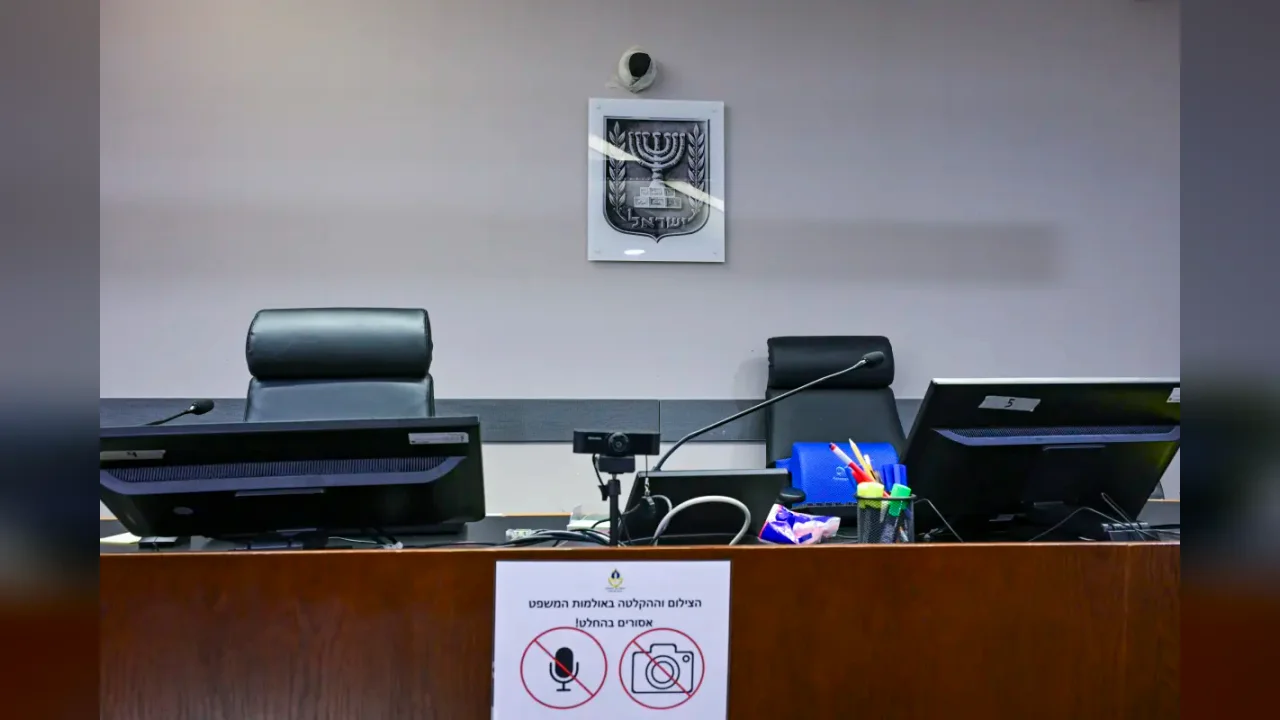
Tomer's story illustrates this well: while the family members were waiting for placement in the framework, the teenager's condition only escalated. "He stopped taking his medication, stopped going to school," says Ariel. After the stabbing, Tomer was arrested in "Ofek" prison. "What I feared has come upon us," wrote the judge of the Youth Court at the hearing held regarding Tomer. The judge noted that the court had repeatedly warned about Tomer's condition even before he got involved in the current case. "The shortage of places in Youth Protection is well known to this court, but nevertheless, I think that attention should also be paid to the court's comments."
Ariel shares the frustration. "As much as we cried out even before, it didn't help us. The probation service, the welfare - no one could do anything, just wait for something to happen," he says. At the end of last week, after an inquiry by ynet, Tomer's parents were informed that a place had been found for him in a Youth Protection framework that serves as an alternative to detention. "When the teenager commits an offense - suddenly there is a place," says Ariel in frustration.
Tomer's lawyer from the Public Defender's Office, Sarit Yakobovitz-Paz, hopes that for him it will not be too late. "The longer these teenagers stay in prison, the lower their motivation to integrate into therapeutic frameworks," she says.
A five-year cry
Tomer's case is far from being the only one. A long line of indictments and protocols from youth courts present the most dismal products of welfare systems stretched to the limit: youth who waited for the locked hostels operated by the "Youth Protection" authority and meanwhile got into even more trouble with the law.
The locked hostels of Youth Protection are considered the end of the spectrum of frameworks for high-risk boys and girls. Teenagers are referred to them after they have gotten into trouble with the law, or were on the verge of it. In the background, there is often violence, inappropriate sexual behavior, and intensive drug use. The number of those waiting is high, but it is also a result of increasing demand: in the past year, close to 3,000 boys and girls were referred to the protection institutions.
"One needs to ask where the local authorities were, where there is a shortage of social workers, where the schools were, where the probation service was," says a source who knows the subject well, "No one saw the child until he became a ticking bomb, and then suddenly everyone wants a locked hostel. True, there is a wait, but one needs to see the big picture. What happens along the way."
And indeed, Youth Protection recently expanded the number of beds in the hostels, and inaugurated a new wing in the "Gilam" hostel. Even after the authorities reached the conclusion - perhaps with a delay - that the child needs an out-of-home framework, the road is paved with difficulties: a shortage of beds in emergency frameworks, dropping out of post-hospitalization boarding schools that do not always manage to deal with the boys and girls - everything drains into the locked hostels.
This is, for example, the story of 16-year-old David (pseudonym), who is diagnosed on the autism spectrum: David was already in a boarding school, where he did not manage to integrate well, and a committee of the Ministry of Welfare determined that he should move to the Youth Protection institution "Neve Choresh." But the wait dragged on, and meanwhile David remained in a boarding school that did not suit him. During this time, David got into trouble - and big time. He committed a series of quite serious offenses of fraud, obtaining by deception, and driving without a license in a way that endangered the public, and also himself.
At the court hearing, the details of which were permitted for publication at the request of the Public Defender's Office representing the child, David's mother, who raises him alone, cried out: "I have been crying out for five years, in front of every possible factor." The mother described how her son was placed in open frameworks that did not suit him, and where they could not restrain his dangerous behavior. "I always asked for a locked institution, with tools and treatment and rehabilitation for problems that were small and became bigger. I want him to enter 'Neve Choresh' as soon as possible. I am begging," she said.
After an inquiry by ynet, the Ministry of Welfare stated that "the case is known and is being handled by the professional factors in the Ministry of Welfare and Social Security," and that "it is a complex case." It was also promised that the teenager would be admitted to a locked hostel next Monday.
Warning of the danger
Similar things can be said about Amichai (pseudonym), not yet 15, who has been defined as a dropout teenager for more than two years. In the welfare department in his city of residence in the south, they know him well: Amichai regularly visits the welfare club, where lunch is served. The social services turned to the Ministry of Welfare months ago, with a request to place Amichai in an out-of-home framework. Amichai himself also expressed a desire for this, and his family cooperated with the request. A committee of the Ministry of Welfare confirmed that the teenager's place is in "Youth Protection," but added that he must wait patiently.
Meanwhile, Amichai got into criminal trouble: a month ago he stabbed another teenager with a sharp object during a fight, and was arrested. At the hearing held regarding him, the social worker who knows him from the club told about her pleas for placement in a suitable framework. "I send an email every two-three weeks to warn about the danger, that he must go to a boarding school as soon as possible," said the social worker. "As a system, I feel that we failed, because if he had been in a boarding school he would not be in this state. He should not have been behind bars if we had reacted in time."
In the two weeks he was arrested, Amichai underwent an attack that was clearly visible on his body. The District Youth Court reprimanded the IPS (Israel Prison Service), and ordered Amichai to be released to house arrest with an electronic tag. Now he is waiting for an admission interview for a Youth Protection framework. The expected time for placement: another two weeks.
"But if he had reached the framework in time - it is possible that this file would have been avoided, that the victim's pain would have been avoided, and also his own pain," says Adv. Rinat Yahav from the Southern District of the Public Defender's Office. "This case is worrying because it is another minor who is known to the welfare, and still forced to wait. What about those who are not known?".
In the Ministry of Welfare, they are aware of the waiting issue, and note that, as mentioned, the background to the situation is population growth and an increase in the complexity of the risk situations of teenagers. Despite these starting conditions, the ministry notes that "there is a significant decrease in waiting times for locked hostels, while in open hostels there is no waiting at all and placement is done immediately. The ministry is expanding the number of locked hostels as part of a structured multi-year plan to expand the responses in the Youth Protection authority. As part of the plan, dozens of new places are expected to open in the next two years in hostels across the country, alongside strengthening the workforce and expanding therapeutic responses in the community."