Tiberias Prepares for Luxury Tower Project at Historic Elizabeth Hotel Site
Developers in Tiberias are launching a major project to transform the historic Elizabeth Hotel site into an 18-story luxury residential and hotel tower, blending modern upscale amenities with mandated heritage preservation.

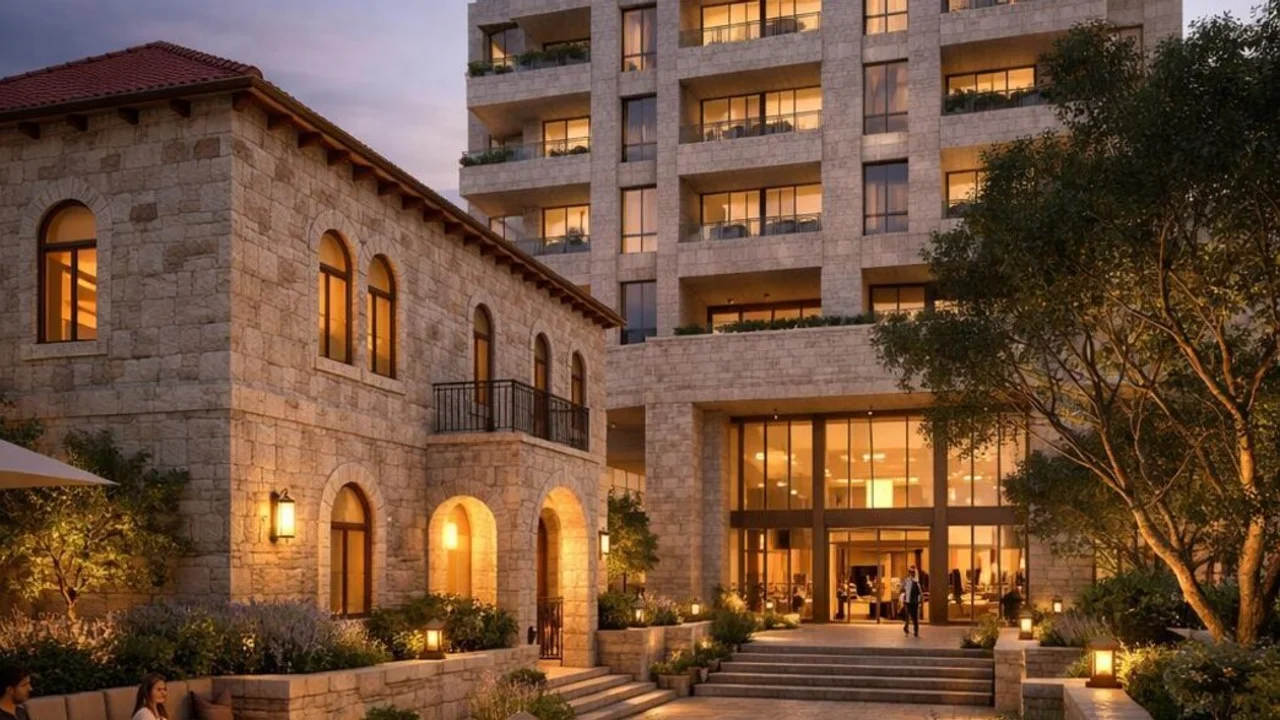
A historic milestone is approaching in Tiberias as the long-delayed restoration and redevelopment of the iconic Elizabeth Hotel complex prepares to break ground. Developer groups Yuchman-Arbov and Yehezkel Morad have secured excavation permits and are advancing plans for a luxury residential and hospitality project at the corner of Ahad Ha'am and Bialik streets in the Kiryat Shmuel neighborhood. The initiative combines the preservation of Tiberias heritage with modern high-end development, introducing a striking 18-story complex to the city's northern skyline.
According to developer Zeev Yuchman, the project will feature a 14-story residential tower rising above a four-story hotel, standing separately from the two-story historic structure. The development is slated to comprise 154 luxury apartments ranging from two to four rooms, alongside 80 hotel suites. Residents will have access to a doorman, a gym, and a rooftop featuring an infinity pool, a bar, and a lounge area, while hotel guests will enjoy a separate restaurant, gym, and pool. Yuchman noted that the hotel's caliber aims to match that of The Norman Hotel in Tel Aviv, with construction projected to take approximately four to four and a half years.
Preservation of Tiberias Heritage
The architectural legacy of the site remains a central focus of the municipal and regional planning. Dina Absalom Gorni, Northern District Manager for the Council for Conservation of Heritage Sites in Israel, emphasized that the approved plan mandates the preservation of the southern facade in its original position, including the historic entrance steps, courtyard, and boundary wall. The regulatory framework requires maintaining the existing structure rather than dismantling and rebuilding it, ensuring that passersby will continue to recognize the landmark entrance facing the Sea of Galilee. Comprehensive engineering surveys and documentation files were prepared to guide the rehabilitation of the complex following decades of neglect.
Built originally in the 1920s by entrepreneur Shlomo Feingold and his business partner Margaret Alice Palmer, the grand establishment was named after Palmer's adopted daughter Elizabeth Colville. Designed by architect Dov Hershkowitz, the original property included 80 guest rooms, a ballroom, and a 500-seat theater where residents from the Jordan Valley and Lower Galilee traveled by mule-drawn carts to attend performances. On February 1, 1929, British High Commissioner Sir John Chancellor and his wife inaugurated the hotel amidst festive celebrations featuring British and Hebrew flags, alongside notable Jewish and Arab dignitaries, the Mandate Government Chief Secretary, and the President of the Supreme Court.
Decades of Transformation
Financial setbacks saw the original founders declared bankrupt shortly after opening, though Feingold continued to reside on the premises until his death in 1935. During World War II, British officers used the hotel for accommodation and social gatherings. Following the establishment of the state, the building underwent extensive renovations and reopened in November 1949 as the Ginosar Hotel, while the adjacent cinema retained the name Alisheva. Local historian and researcher Haim Hatzav noted that generations of Tiberias residents held fond memories of attending film screenings at the cinema until its closure in 1983. The property subsequently fell into disuse and suffered major fire damage in 2001, leaving it abandoned for years.
Collaborative efforts between the Council for Conservation of Heritage Sites and the Tiberias Municipality eventually paved the way for the current revitalization plan, balancing modern economic viability with historic preservation. With excavation underway and marketing for the residential units preparing to launch pending the full building permit, the Elizabeth Hotel complex stands poised to bridge its storied past with a vibrant future, breathing new life into a prominent urban corner of Tiberias.