Tel Hai University Opens First Academic Year as Israel's 11th Research Institution
Tel Hai University opens its academic year as Israel's 11th research institution, welcoming 5,000 students and aiming to boost regional growth and post-war recovery in The North.
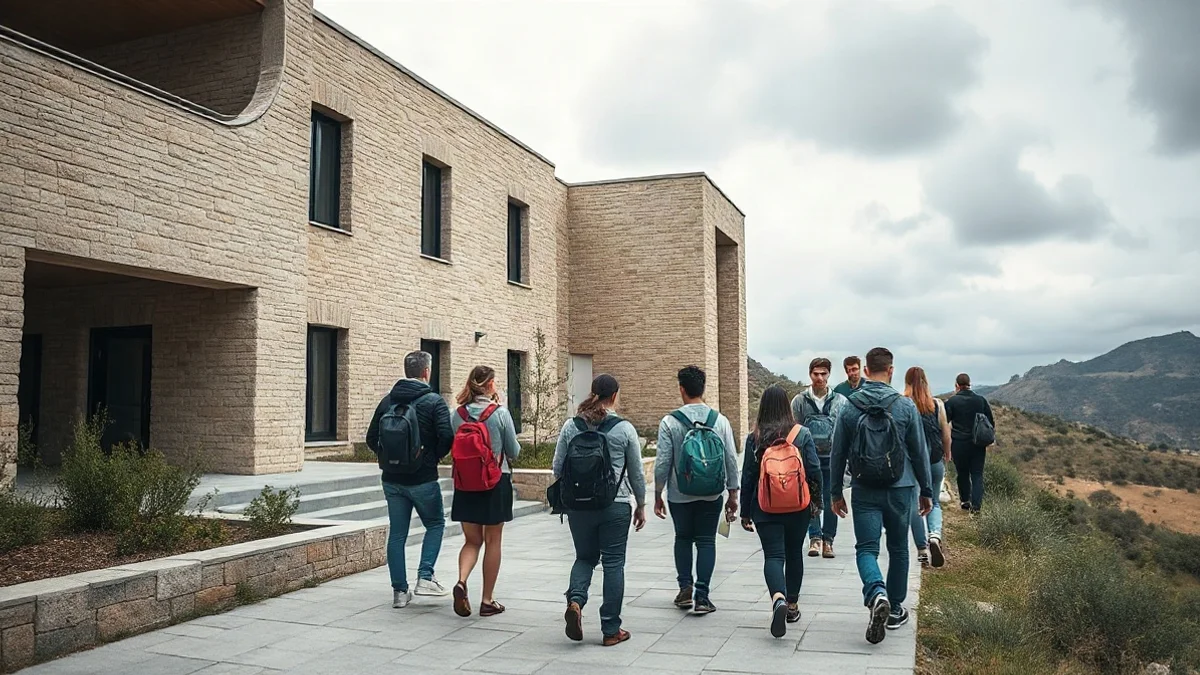
Nearly 5,000 students are expected to begin the academic year at Tel Hai University in Kiryat Shmona, operating for the first time in its new status as Israel's 11th research university. This represents a growth of about 7% in the student body compared to last year, when roughly 4,700 students studied at the institution. During the first year of the war, when classes were held online, the number stood at only 4,400. This year's enrollment returns Tel Hai to its pre-war student numbers.
The university has set a target of 8,000 students within five years, alongside the mission of significantly increasing the number of graduates who choose to reside in The North. Twenty-one years have passed since the Israeli government decided to establish a university in the Galilee, and on Tuesday, the gates of Tel Hai University will officially open for the 5787 academic year. For Kiryat Shmona and Galilee settlements attempting to recover from the war and restore economic activity, this is a major milestone designed to attract young populations.
Expanding Horizons in The North
One of the most notable figures for the region is that over 70% of students are not local residents of the Eastern Galilee, but arrive from all across the country. Many relocate to Kiryat Shmona and confrontation line settlements, including Metula, Misgav Am, Kfar Giladi, Manara, Dan, Dafna, Kfar Yuval, and Beit Hillel. In Metula alone, more than 150 students are expected to live this year, returning while the town still grapples with war aftermath.
Beyond academics, Tel Hai views students as an economic and social engine. They rent apartments, work in local businesses, and integrate into educational and welfare systems across the Galilee and the Golan. However, a primary challenge remains retaining these young professionals after graduation. University data shows that only about 8% of alumni previously chose to stay in the Galilee, a figure the administration aims to raise to at least 30% through innovation clusters and job creation.
Strategic Vision and Personal Resilience
"Our next major mission lies in the demographic and employment arena," says University CEO Eli Cohen. "While only about 8% of alumni historically stayed in the Galilee, our strategic goal is to retain at least 30% of our graduates in the coming years by building innovation clusters and attracting leading companies to the region."
Cohen, a native of Kiryat Shmona, views the transformation with deep personal significance. "As a son of Kiryat Shmona, I am deeply moved on both a personal and national level. The opening of the university's first academic year is a historic and defining moment, the realization of a long-held vision and hope that the Galilee has looked toward for over two decades."
The university will operate across three campuses: the Rodberg Campus in Kiryat Shmona, the Western Campus in the Upper Galilee Regional Council territory, and the Katzrin Campus in the Golan. Studies will span four multidisciplinary clusters: Humanities and Social Sciences, Life and Environmental Sciences, Education, and a newly launched Engineering and Advanced Information Technology cluster.