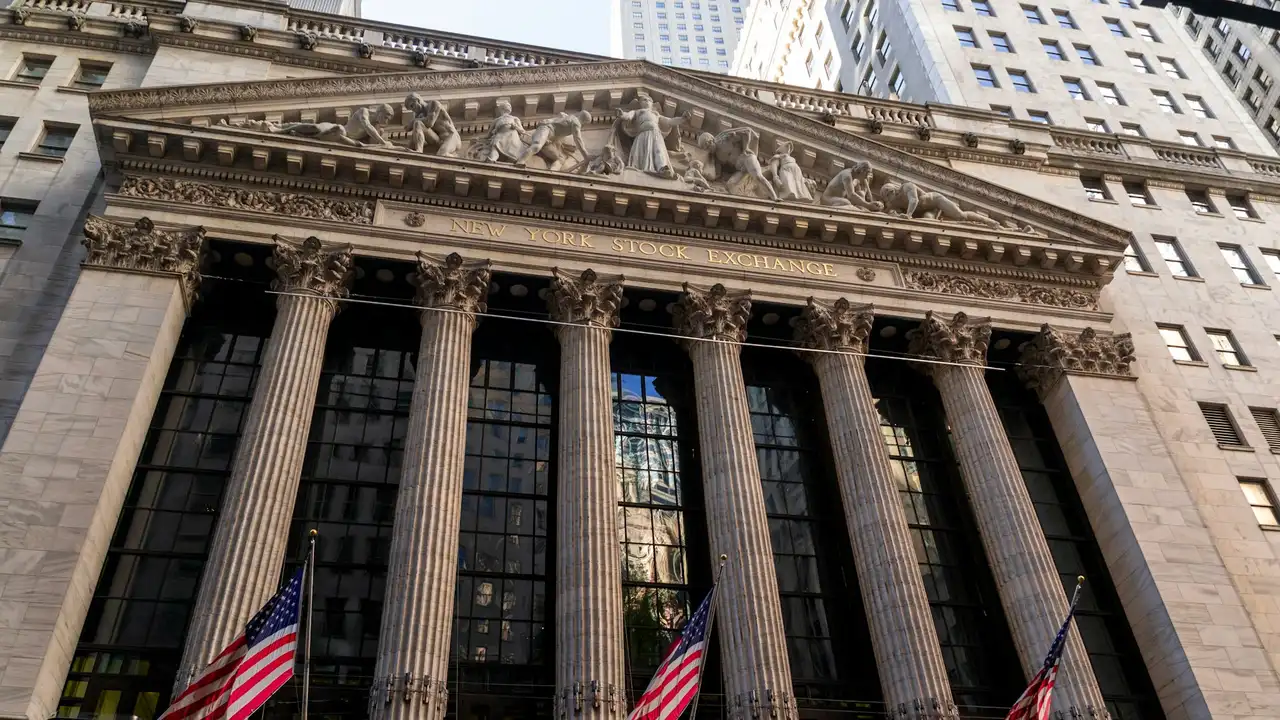
September is the worst month on Wall Street: Why this year might be different
The S&P 500 has lost an average of more than 1% every September since 1928 — the only month with negative returns over time. But analysts argue that the strong momentum of 2026 is changing the picture, while concerns about a Fed rate hike could spoil the party. So who should you listen to?
September opened this week on Wall Street with a history that weighs heavily: for nearly a century, it has been the worst month in the US stock market. The S&P 500 index has fallen in September by an average of about 1.2% since 1928, ending the month in negative territory in 56% of the years. It is the only month on the calendar where the long-term average return is negative.
The question currently occupying investors — including those who hold an S&P 500 tracking fund in their pension or advanced training fund — is whether 2026 will be an exception for the better.
The phenomenon, known in professional jargon as the "September effect," repeats itself with disturbing consistency. Nine of the 40 worst monthly drops in the index's history occurred in September — more than any other month.
The last five years have been particularly difficult: four of them recorded an average decline of 4.2% in September, far exceeding the historical average. The Nasdaq and the Dow Jones also share this fate, with their lowest average monthly returns in September.
There is no single, unequivocal explanation for this decline, but rather several theories. Melissa Brown, head of global investment research at SimCorp, explains it by the fact that traders return from summer vacations and react with greater intensity to accumulated news.
Arnim Holzer, global macro strategist at Easterly EAB, points to a technical reason: towards the end of the year, fund managers and institutional investors perform a "cleaning" round of their portfolios and compare their performance to benchmarks — an activity that concentrates in September and creates selling pressure.
And this is where Ryan Detrick, chief strategist at Carson Group, enters the picture, warning investors not to get carried away by the statistics. His central argument is simple: the truly bad Septembers occurred when the market had already entered them weak and battered — and that is definitely not the case today. "Don't forget, the worst Septembers happened when the situation was already shaky or weak to begin with," says Detrick. "This year is not like that."
The data supports his forecast. The market enters September with a strong tailwind: the S&P 500 has risen nearly 13% since the beginning of the year, the VIX fear index is at low levels around 15, and about 70% of the index's stocks are trading above their 200-day moving average — a sign that the rise is broad and involves large parts of the market, and does not rely on a handful of giant stocks.
This breadth is significant: historical data shows that when the index enters September above the 200-day moving average, the average return for the month becomes positive and climbs to about 1.3%, compared to a sharp drop when the index enters below this line.
Detrick adds a strong statistical point: in the 11 times since World War II that August was positive and the year-to-date return ranged between 10% and 17.5% — just like today — only in one year did September end in a loss.
But there is a second and important side to the coin, and its name is interest rates. The real risk for 2026 comes from the bond market. The yield on 10-year government bonds has climbed from 4.2% at the beginning of the year to about 4.7%, close to the peak of the last year. High long-term yields erode the value of stocks in a way that does not depend on the calendar at all — they make the "price of money" more expensive and lower the attractiveness of risk assets.
The event that the entire market is waiting for is the Federal Reserve's interest rate decision on September 16. Fed Chair Kevin Warsh surprised negatively in a speech he gave at the Jackson Hole conference: he took a more hawkish tone than expected, emphasized that inflation is still too high (the CPI rose by 3.4% in the year ending in July), and clarified that "we have work to do."
The result was immediate — according to forecasters, the probability of a quarter-percent interest rate hike in September jumped from about 35% to about 60% within a day. In other words, the market is no longer pricing in a rate cut, but rather estimates that it is more likely that the Fed will raise it.
Not all analysts are equally worried. Peter Boockvar, chief investment officer at One Point BFG Wealth Partners, argues that the focus should be on long-term interest rates rather than the Fed itself. "The yield curve has already priced in the cost of capital at a rate much higher than where the Fed rate is," he explains. "The Fed is pretty irrelevant here, because the inflation data has sort of cornered it."
Beyond all the arguments, it is worth remembering a fascinating paradox that undermines the very existence of the "September effect": if enough investors know about the phenomenon and act on it — for example, selling already in August to get ahead of the expected decline — they are effectively moving the weakness to August and canceling the effect in September.
This skepticism is backed by research. A study spanning about 300 years, based on data since 1693, found no clear evidence for the existence of the effect — and in three out of six fifty-year periods, the average return in September was actually higher than in other months.
The bottom line for the average Israeli investor is relatively simple. Historical statistics describe what tended to happen under certain conditions — and those conditions (a weak market entering the month wounded) simply do not exist at the moment.
An average decline of about 1.2% is probably not a sufficient reason to sell holdings and try to time the market, a move that could entail tax costs and the risk of missing out on strong up days. Many analysts recommend continuing regular deposits into the investment and pension portfolio, in order to accumulate "gunpowder" to take advantage of opportunities if the month does indeed turn out to be volatile.
The real spotlight should be turned not to the calendar, but to bond yields and the Fed's decision on September 16. If the 10-year yield climbs back towards 4.75% or the Fed raises interest rates, the parts of the market most sensitive to pricing — led by growth and technology stocks — will feel it, regardless of market breadth or seasonality. The debate about September is interesting, but the interest rate is the variable that will truly determine the direction.