Sde Teiman: The war between military supervision and the soldiers' psychological needs
When reality exposes soldiers to endless death, seniority becomes a means of self-definition. The veteran's ability to command the young is a privilege that grants an informal status, like a game of king and subject in the field. But what happens when this game is played against a backdrop of raw and infinite death?
The events that took place at the end of July at the Sde Teiman camp — the removal of symbols, the dismantling of positions held by fighters who had just returned from Lebanon, and the subsequent rebellion — are not merely a disciplinary incident. They expose a traumatic convergence point where the harsh reality of war meets the soldiers' attempts to process it.
To understand the depth of this fracture, we must view Sde Teiman as a "transitional space" — a place where two opposing axes meet: rituals and symbols of processing death, and initiation rituals of seniority and military service. In all human societies, initiation rituals are designed to transition the individual from one stage of life to another while proving skills, while death rituals (such as funerals) are intended to give meaning to the body emptied of life. In the army, the achievement is to become a "veteran" in a place where surviving for three years is an accomplishment in itself.
A Mechanism for Survival
"Seniority" is not merely hazing; it is a mechanism that creates group identity under extreme pressure. Human games are a desperate attempt to interpret reality and anchor oneself during times of crisis. The veteran's ability to command the young is a privilege that grants an informal status, like a game of king and subject in field conditions. But what happens when this game is played against a backdrop of raw and infinite death?
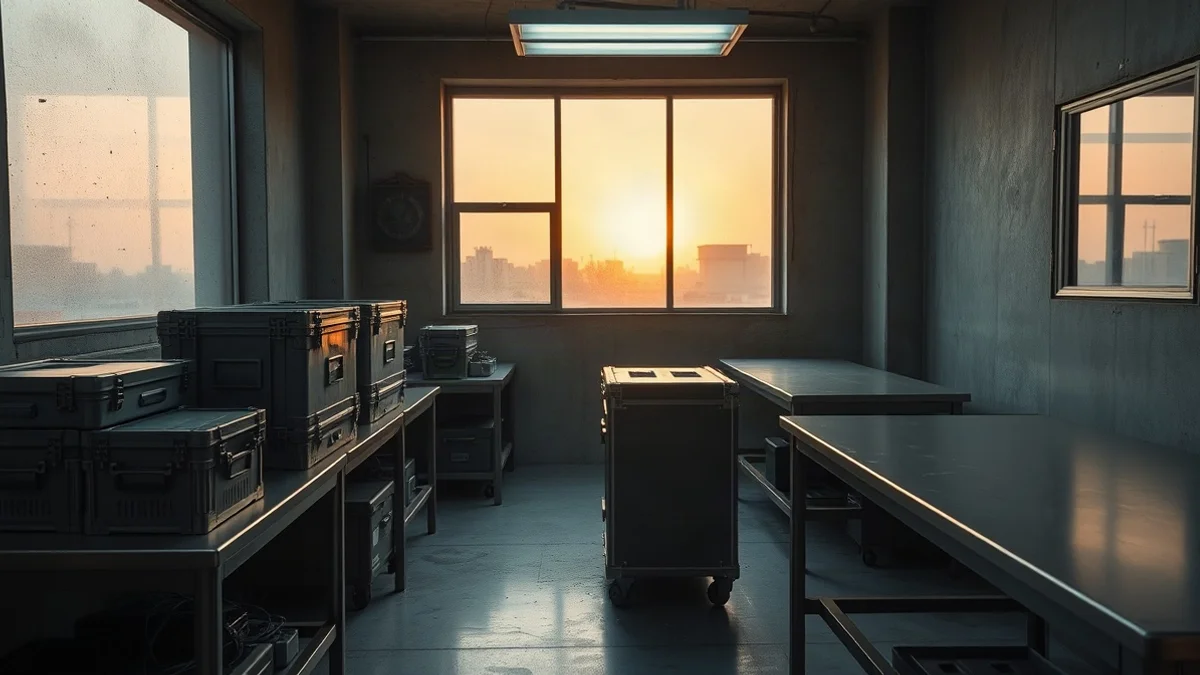
On one side stands the axis of death: the constant reminder of loss. On the other stands the axis of initiation: for a soldier who has witnessed the horrors in Gaza and Lebanon, informal customs and unit spirit are mental survival mechanisms. The containers found within the camp represent these axes: refrigerated units for corpses, and containers for belongings and souvenirs, which act as "memory boxes" designed to protect personal and collective identity from the death that threatens to consume the soul.
The Gap Between Command and Soldiers
When the command orders the removal of signs and the destruction of positions, it is not just enforcing procedures; it is dismantling the space where soldiers store their identity. The use of folklore and symbols — such as the "Kingdom of Demons" sign — is a defensive tool, much like the black humor used by the Chevra Kadisha throughout generations to cope with bereavement.
This reveals a profound gap in culture and testimony between the command and the soldiers. Commanders often fail to understand the cultural baggage through which a soldier seeks to find meaning. Imposing dry command norms without understanding the cultural and mental space only intensifies the tension. The solution is not sweeping dismissals or disciplinary punishment alone. It is highly likely that the soldiers marked as "rebels" are those who need help and trauma-processing workshops. Sending them to prison without mental health support is a critical mistake.
The army must develop tools to deal with "transparent battle shock." True rehabilitation will only occur when Israeli society understands the expressions of grief of its sons, processes the moral injury, and strives for compassion, recognizing that the army and society are reflections of one another.
Haviva Pedaya is a poet, author, and researcher of culture, Judaism, Kabbalah, and Hasidism. She is a professor of the history of the Jewish people and the founder of the Reshimu Institute and the Petichta Beit Midrash.