Northern Photographer Roee Kasher Documents Daily Resilience in Border Towns
Photographer Roee Kasher returned to Kfar Giladi in March 2026, documenting northern border residents through interviews and portraits. His project highlights daily resilience under fire and is featured in exhibitions across Israel.
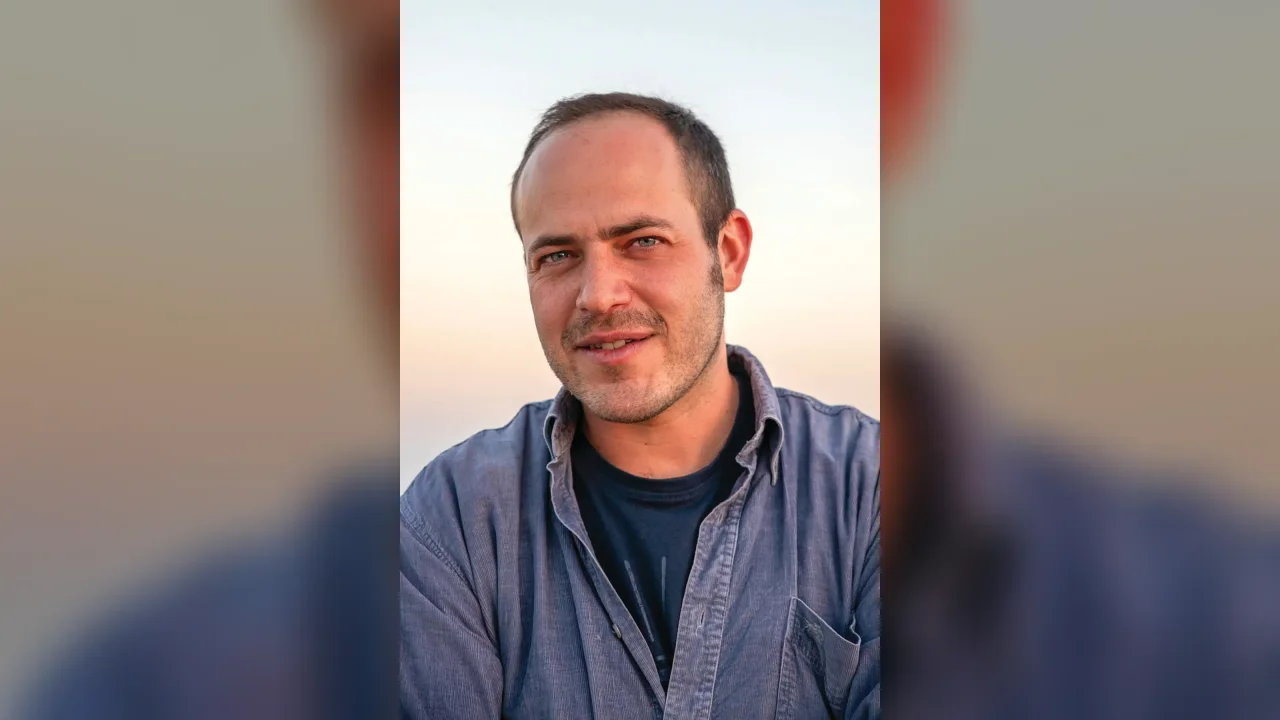
In March 2026, after spending eight years in central Israel, 32-year-old photographer Roee Kasher returned to Kfar Giladi in the Upper Galilee, where he was born and raised. Returning during a time when the region was heavily impacted by conflict, Kasher initially anticipated staying for only a few months before heading back south. However, personal ties and the strong pull of his community anchored him in the kibbutz. "When I returned to the kibbutz, there was a war here and the North was burning more than ever," Kasher recalls. "I chose to come back due to life's circumstances. At first, I thought I would be here for a few months and move back to the center, but I don't think I'll be leaving the kibbutz anytime soon. I want to stay here. It is good for me. My family is here, and that is a great advantage." Residents of Kfar Giladi were evacuated at the outset of the war to hotels around the Sea of Galilee, returning gradually after roughly a year, though Kasher's parents were among the first to come back home just six months after October 7 to manage the local tourism and dairy operations.
Discovery of Photography and Military Service
Kasher's transition to professional photography emerged directly from his service during Operation Iron Swords. Shortly before the outbreak of the war, he completed studies in composition and conducting at the Rimon School and was preparing to launch musical projects. Instead, he was mobilized with his reserve unit in the 16th Brigade, deploying to the Gaza Envelope. While stationed there, he began capturing images on his smartphone to document historical moments, discovering an innate talent for visual storytelling. He subsequently acquired an old digital camera, photographing military scenes inside Gaza before turning his lens toward Kfar Giladi and the heavily shelled northern frontier. Reflecting on his insider perspective, Kasher notes that residents trusted him because he was documenting his own community, family, and personal reality rather than arriving as an outside journalist from central Israel.
Documenting the Human Fabric of the Border Region
Upon returning to the kibbutz, Kasher initiated a comprehensive multimedia project, photographing and interviewing residents across the northern border, including Metula, Kiryat Shmona, She'ar Yashuv, Misgav Am, Manara, and former Upper Galilee Regional Council head Giora Salz. Through his project, which he shared widely on social media, he aimed to move past generalized news reports and give a distinct face to the daily realities of roughly one million northern residents. His subjects ranged from lifelong kibbutz members to recent arrivals, and even included a Thai agricultural worker employed at the local dairy. Among the most emotionally significant encounters was photographing his 86-year-old grandmother, Bracha Malmud, who was born in the kibbutz and lives in its northernmost house overlooking Metula and southern Lebanon.
Exhibitions and Future Mission
Kasher's documentation has since evolved into public exhibitions. His project "Borderline People," curated by Basmat Zeevi HaReuveni, features 16 portraits accompanied by excerpts from the interviews and is on display at the "HUBayta" complex in Agmon Market near Junction 90 until January 31. Simultaneously, his solo exhibition "A Man Hangs His Yesterday" at the Beit HaShomer Museum in Kfar Giladi presents images of wartime destruction alongside scenes of daily resilience, complementing his participation in a group photography exhibition in Jerusalem. Having earned second place in the Local Testimony photography competition last year, Kasher views his artistic trajectory as a calling. "During the war, I discovered my calling," he concludes. "I saw that I was good at this, and I only wish for myself to continue documenting, photographing, and bringing the story of the North through the camera lens to as many people as possible in Israel and abroad."