The Secret Behind Perfect Food Delivery Packaging and Home Tips
Discover how restaurants choose the perfect takeaway packaging to keep food crispy and hot, and learn practical tips to upgrade your home food delivery and storage experience.
The moment of truth for food delivery often arrives at the front door: the bag is opened, and instead of the golden, crispy fries from the app photo, a soggy and sad pile awaits. The meal left the kitchen in pristine condition, but over the course of twenty minutes it endured transport bumps, temperature shifts, and trapped steam. The difference between a dish that survives the journey and one that disappoints is frequently determined not by the stove, but by the choice of packaging.
For restaurants where delivery forms a core part of the business, the packaging is treated as an integral component of the dish itself. It regulates temperature, preserves texture, and shapes the crucial first impression. Professional kitchens adhere to strict principles when selecting takeaway containers, insights that can easily be adopted at home.
The Arch-Enemy of Every Delivery: Steam
Hot food continues to release steam even after it is removed from the heat. In a completely sealed container, this steam condenses on the lid and drips back onto the food, turning previously crispy items soft within minutes. Consequently, professional kitchens pack fried foods, schnitzels, and crunchy dishes in cardboard or kraft containers that allow steam to escape gradually, avoiding hermetically sealed plastic boxes. The paper also absorbs excess moisture, ensuring the food maintains its texture.
Saucy dishes require the exact opposite: a securely closed, leak-proof container. The gold standard for top-tier restaurants is tailoring the packaging precisely to the dish type rather than relying on a universal box for the entire menu. A wide assortment of specialized containers, bowls, and sauce cups is readily available through suppliers like Roll Market, an online store specializing in disposable tableware and food packaging for businesses.
Pizza Packaging and Kraft Bowls
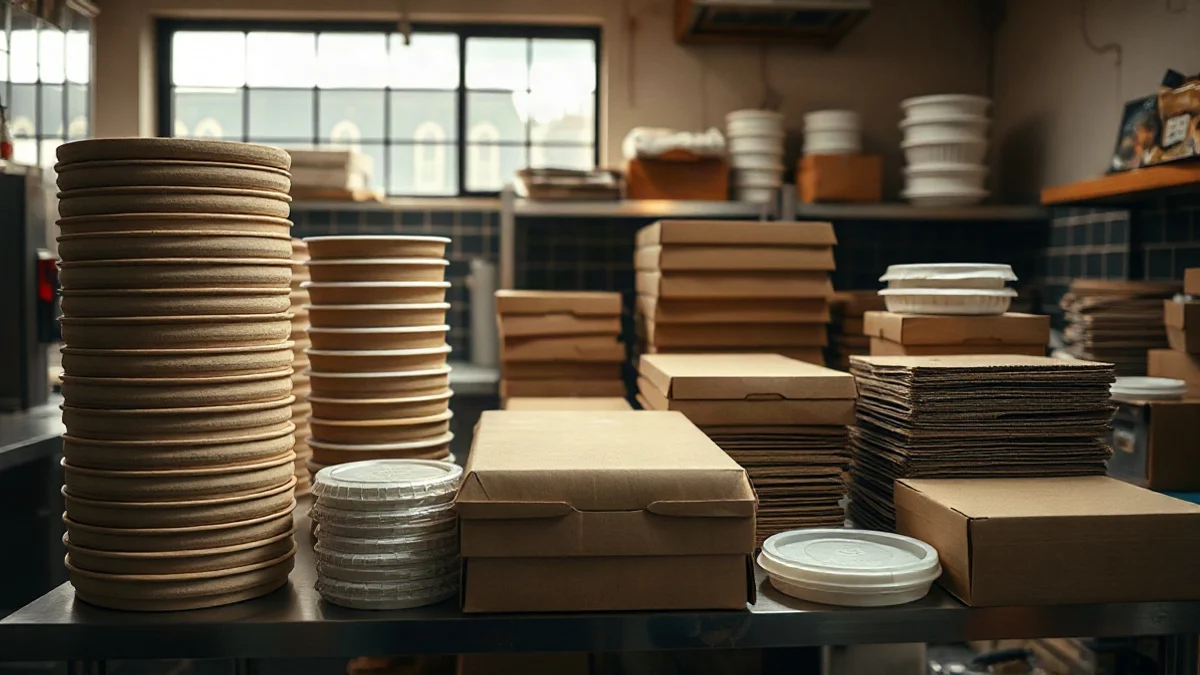
Pizza boxes are engineered marvels. Typically made of corrugated cardboard, the trapped air between the layers acts as insulation to retain heat. Many boxes feature small ventilation vents to release steam and prevent the dough from becoming soggy. Size precision is equally critical: a pie that shifts inside an oversized box arrives with the cheese smeared against the wall, while one crammed into a tight box gets crushed at the edges. Pizzerias ensure exact sizing, ranging from 22 to 45 centimeters.
Kraft bowls have become a staple of modern takeaway, prized for their natural aesthetic, ability to hold hot soups, and internal lining that prevents leaks. The crucial detail often overlooked is the lid: polypropylene (PP) lids withstand heat for warm dishes, whereas glossy, transparent polyethylene terephthalate (PET) lids are intended exclusively for cold salads.
Practical Tips for Home Deliveries
-
Unpack immediately: Remove fried items from bags upon arrival to let steam escape.
-
Revive in the oven: Reheat fries, schnitzel, and pastries on a tray in a hot oven rather than a microwave to restore crispiness.
-
Check materials: Never put aluminum containers in the microwave, and transfer PET-lidded dishes to a plate before heating.
-
Sauce separately: Add sauces and dressings only after reheating to keep dishes fresh and intact.