Reichman University Overhauls Academic Degrees to Prepare Students for AI Era
Reichman University is overhauling higher education to prepare students for future labor markets by launching new AI degrees, multidisciplinary programs, and virtual simulation platforms.
As artificial intelligence rapidly transforms the global labor market by automating entry-level tasks such as data gathering, drafting, preliminary analysis, and basic coding, Reichman University is overhauling higher education to prepare students for professions that do not yet exist. The university's leadership emphasizes that the AI revolution requires a fundamental reinvention of academic training rather than mere course additions.
Direct Training: A New Generation of AI Experts
Beginning in the current academic year, the Efi Arazi School of Computer Science at Reichman University introduced a Bachelor of Science (B.Sc.) degree in Artificial Intelligence and Machine Learning. The program combines a rigorous mathematical and scientific foundation with specialized coursework in machine learning and deep learning starting from the first year. By their second year, students engage in practical projects and AI system development.
The curriculum covers natural language processing, computer vision, generative models, robotics, and cyber security, alongside ethical and societal considerations. Graduates are equipped for research and development within the artificial intelligence industry, including the creation of large language models (LLMs), or to pursue advanced academic degrees. Furthermore, the Sammy Ofer School of Communications is set to launch a Bachelor of Arts (B.A.) in Artificial Intelligence in Information Science next academic year, marking a first-of-its-kind program in Israel designed to train professionals in organizational AI integration, data-driven decision-making, and socio-ethical impact assessment.
The Machar Program: Multidisciplinary Social Sciences
Recognizing that technical execution is increasingly handled by algorithms, the university stresses the growing importance of distinctly human attributes such as critical thinking, creativity, mental flexibility, and cross-disciplinary knowledge integration. To foster these skills, Reichman University developed the Machar Program, a multidisciplinary social sciences bachelor's degree that enables students to construct flexible, personalized study paths connecting diverse knowledge domains.
Integrating AI Across All Disciplines
The institutional overhaul extends far beyond dedicated AI specialists. Graduates in law, economics, sustainability, entrepreneurship, psychology, government, communications, and business administration will not become machine learning engineers, but they must master the technological tools reshaping their respective fields. Reichman University CEO Dr. Ayelet Ben-Ezra Gelbard highlighted this shift:
"What we know is that the most sought-after professions will be those situated at the intersection of professional expertise, technology, and an understanding of people. Therefore, I would recommend choosing a field that genuinely interests you, while simultaneously cultivating critical thinking, creative thinking, problem-solving abilities, interpersonal communication, continuous learning capacity, and AI literacy."
To implement this strategy, dedicated AI committees comprising faculty members, industry experts, and alumni have been established across all schools. These bodies track technological trends, evaluate essential market skills, and continuously update curricula. Additionally, a new skills and competencies division offers specialized courses in critical thinking, data analysis, and communication, while also developing short refresher courses for alumni to maintain career-long proficiency.
UNITRAIL: Combating the Junior Paradox
Another critical hurdle posed by the AI revolution is the junior paradox, where automated entry-level tasks make it difficult for young professionals to accumulate initial workplace experience. Because employers increasingly demand prior experience even for entry-level positions, graduates risk being trapped in a cycle where they cannot secure work without experience and cannot gain experience without work.
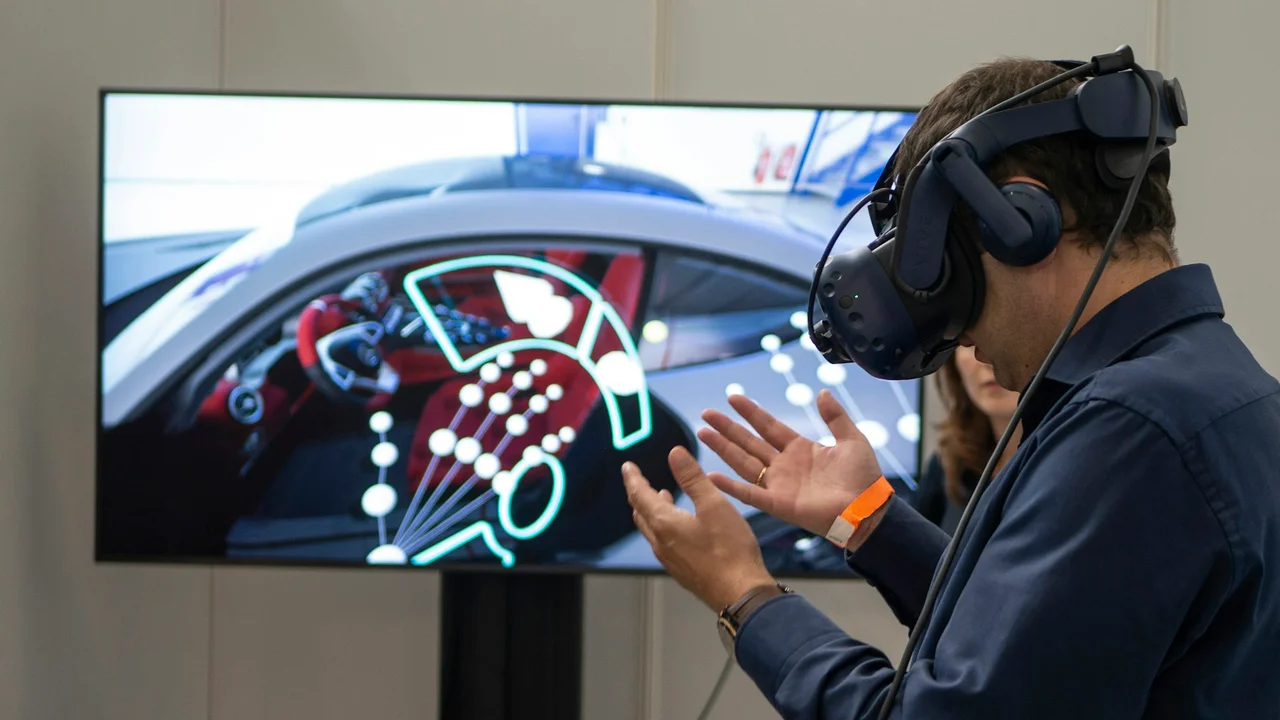
To counter this challenge, Reichman University is developing UNITRAIL, a virtual business simulation platform that allows students to tackle professional tasks and build a comprehensive portfolio during their studies. Students are integrated into simulated corporate departments—including development, legal, marketing and public relations, business development, government relations, and human resources.
Participants navigate real-world professional dilemmas and interact with managers, clients, and colleagues simulated by AI personas. Consequently, graduates can enter their first job interviews equipped not only with transcripts and academic credentials, but also with practical experience and a documented portfolio demonstrating their competencies.