Israeli Space Tech Startup Ramon.Space Secures $124M Series B Funding
Israeli space tech firm Ramon.Space secured $124 million in a Series B funding round led by PSG and Micron Technology to scale its space-based computing infrastructure.
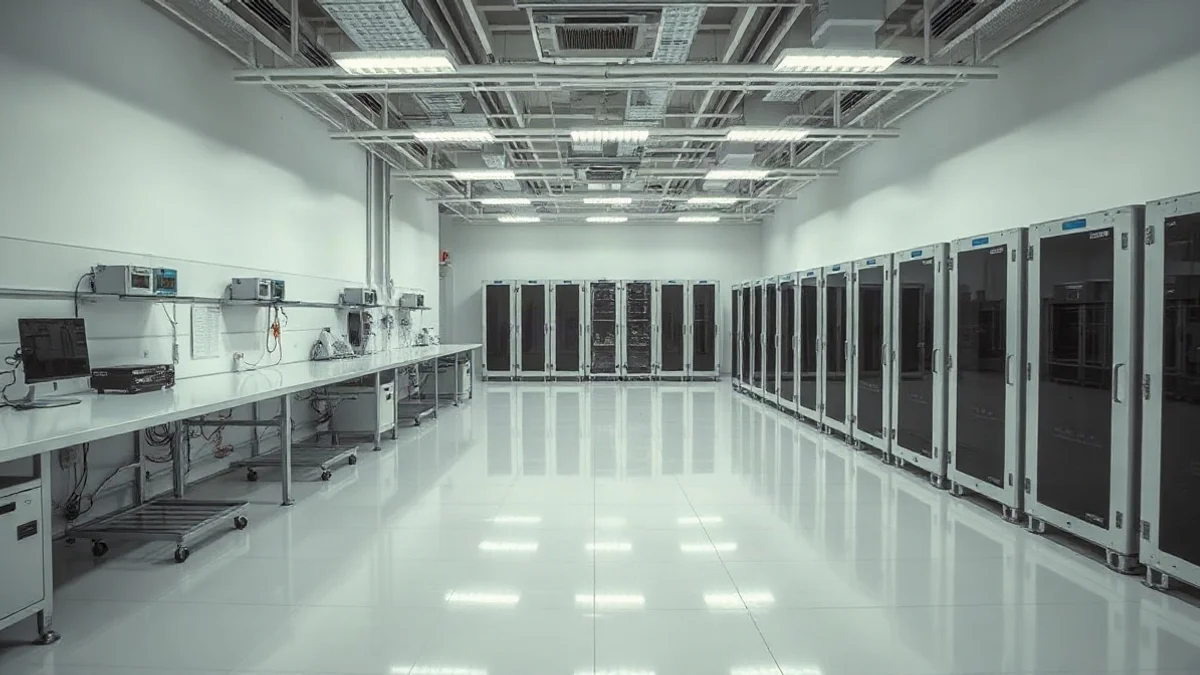
Israeli space tech startup Ramon.Space has successfully completed a $124 million Series B funding round to advance its space-based computing infrastructure and support the future deployment of orbital data centers. The investment round was led by PSG, with strategic participation from American semiconductor giant Micron Technology, along with Senvest and Phoenix Holdings. Existing investors StageOne, Deep Insight, and Grove Ventures also participated in the round.
Expanding Operations and Manufacturing
Employing approximately 130 people, Ramon.Space plans to use the capital to scale up its manufacturing capabilities, accelerate the development of new products, and expand its footprint in international markets. Chief Executive Officer Avi Shabtai stated that the company is preparing to double its workforce. While its primary operations are centered in Israel, the company also operates in the United States and the United Kingdom, and is currently establishing an additional facility in Germany.
Founded in 2004, Ramon.Space shifted its core business focus in 2020 toward the development of computing infrastructure for space missions. The company engineers systems that enable satellites to process, store, and transmit data autonomously, eliminating the traditional requirement to relay raw information back to Earth for processing. These systems are deployed in commercial and governmental missions, including communications satellites and Earth observation platforms.
Commercial Catalysts and Orbital Data Centers
Industry growth is being heavily driven by the commercial space sector and the proliferation of artificial intelligence. Shabtai highlighted the impact of SpaceX, founded by Elon Musk, which has made space launches commercially accessible and paved the way for new market entrants. According to Shabtai, SpaceX acts as a primary market catalyst, drawing more players into the industry and elevating space as an economic frontier.
"SpaceX is one of the main catalysts of this market," Shabtai noted. "We see more and more players entering the industry, and space is gradually becoming a more central field in the economy."
Among its primary long-term objectives, the company aims to supply the foundational computing architecture for orbital data centers designed to store and process massive datasets directly in space. However, operating computing hardware beyond Earth introduces severe environmental obstacles. Systems must withstand intense cosmic radiation, extreme thermal fluctuations, energy constraints, and complex cooling challenges in a vacuum where conventional air-cooling systems are useless.
Sovereign Capabilities in AI and Space
To capture rising demand, Ramon.Space is bridging terrestrial telecommunications with satellite arrays, developing technology tailored for satellite-based cellular networks and orbital data hubs. Shabtai emphasized that nations are increasingly seeking sovereign control over critical technologies, viewing artificial intelligence and space infrastructure as matters of national independence. With strong backing from private markets and strategic partners like Micron, the company is positioning itself at the intersection of these two transformative industries.