Scientists Discover Dark Magic Mushroom Containing Both Toxins and Psychedelics
US scientists discovered Galerina indica, a unique mushroom producing both psilocybin and deadly amatoxins. The rare hybrid challenges foraging safety rules and evolutionary biology.
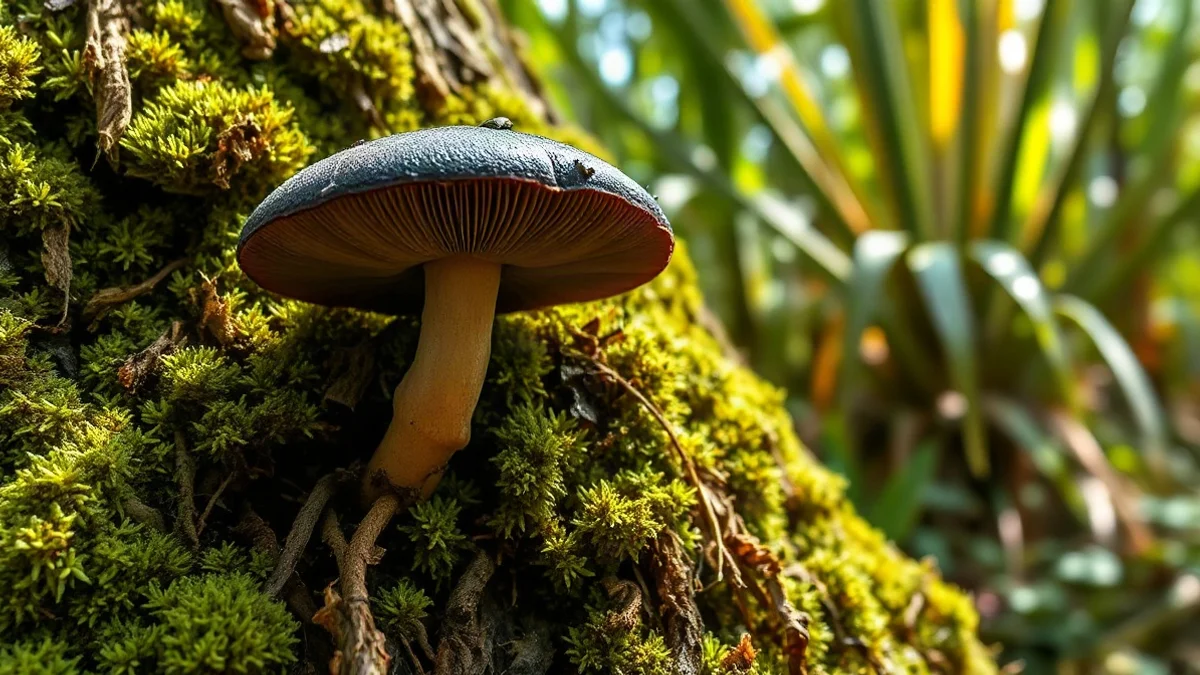
Scientists in the USA have discovered a rare mushroom species that simultaneously produces a psychedelic compound and lethal toxins, a combination previously unknown in nature. Published in the scientific journal Current Biology, the discovery centers on the species Galerina indica, dubbed the dark magic mushroom, which was found growing on a moss-covered palm trunk in Florida wetlands after originally being identified in India over a decade ago.
While thousands of mushroom varieties exist with varying properties ranging from edible to extremely toxic and psychoactive, researchers had never documented a single specimen synthesizing both psilocybin, the hallucinogenic agent found in magic mushrooms, and amatoxins, the deadly poisons present in infamous species such as the death cap. Andrew Konick, a researcher who conducted the study while at the University of Florida before moving to Harvard University, expressed astonishment at the findings, noting that the team initially struggled to believe the lab results until thorough genetic and chemical analyses confirmed the presence of both substances.
Genetic Transfer and Evolutionary Mystery
To understand how this unprecedented chemical profile developed, the research team examined the mushroom's genetic makeup and uncovered evidence of horizontal gene transfer. This rare biological process allows unrelated organisms to exchange genetic material, akin to shaking hands and having a portion of one person's DNA integrate into another's genome. According to co-author Bryn Dentinger from the University of Utah, the ancestral lineage of the mushroom likely possessed the capability to manufacture deadly toxins before acquiring the genetic pathway for psilocybin synthesis.
Scientists remain uncertain about the exact evolutionary advantage this dual production offers in the wild. While both compounds may theoretically serve as defensive mechanisms against predators, the precise ecological roles of both psilocybin and amatoxins are still not fully understood. Researchers are investigating why natural selection would favor an organism that synthesizes both mind-altering agents and deadly poisons simultaneously.
Public Health Warning for Foragers
Beyond its evolutionary significance, the discovery carries critical implications for wild mushroom foragers. A common rule of thumb among amateur pickers relies on the observation that many psychedelic mushrooms bruise blue when damaged or handled, using this color change as an indicator of safety from deadly toxins. However, Galerina indica also turns blue upon contact, proving that this visual indicator is dangerously unreliable.
"From a public health perspective, our finding warns against the assumption that a color change to blue indicates that a mushroom containing a psychedelic compound does not also contain amatoxins," the researchers emphasized in their study.
The findings underscore the severe risks of relying on superficial visual markers to determine whether wild fungi are safe for consumption, while opening new avenues for understanding microbial evolution and chemical diversity in nature.