More than two million fans are looking for heroes: ahead of the return of the Super League
On the eve of the new season, there is a shortage of superstars in Israeli football, but fans continue to flock to stadiums for the atmosphere and sense of community.
The memory of Mohammed Abu Fani in Israel remains etched in the minds of many, specifically that move near the corner flag where he protected the ball like a lioness cradling her cubs. We don’t remember a spectacular bicycle-kick goal or a brilliant assist from him, but that heroic act of time-wasting became legendary. And yet, on the eve of the 2026/7 season, Abu Fani became, if only for a moment, a splash of water in the desert—a fantasy that faded as quickly as it emerged. One wishes Israeli football had a thousand more players like him, right? This August obsession with him highlights our current reality: we are desperate for heroes on the pitch, and the Super League suffers from a shortage of dominant players who can carry a team.
Let’s conduct a small experiment and list the Super League stars worth buying a ticket for this year. Off the top of our heads: Shua, Atzili, Turiel, Zlatanovic, Dor Peretz (when he’s in form), Ogrisa, Shon Weissman (if he’s sharp), perhaps Oz Bilu, Amir Ganah, Eliel Peretz, and Navot Ratner—if you appreciate classy defenders. The list is too short and thins out every season. This year, we’ve lost names like Kangwa, Levizo, Dan Biton, Abu-Farhi, and likely Roy Revivo, who is already mentally on another continent. These are the few for whom it’s worth sitting in traffic, buying an overpriced hot dog and soda, and enjoying the smoke grenades. Yet, the crowd keeps coming.
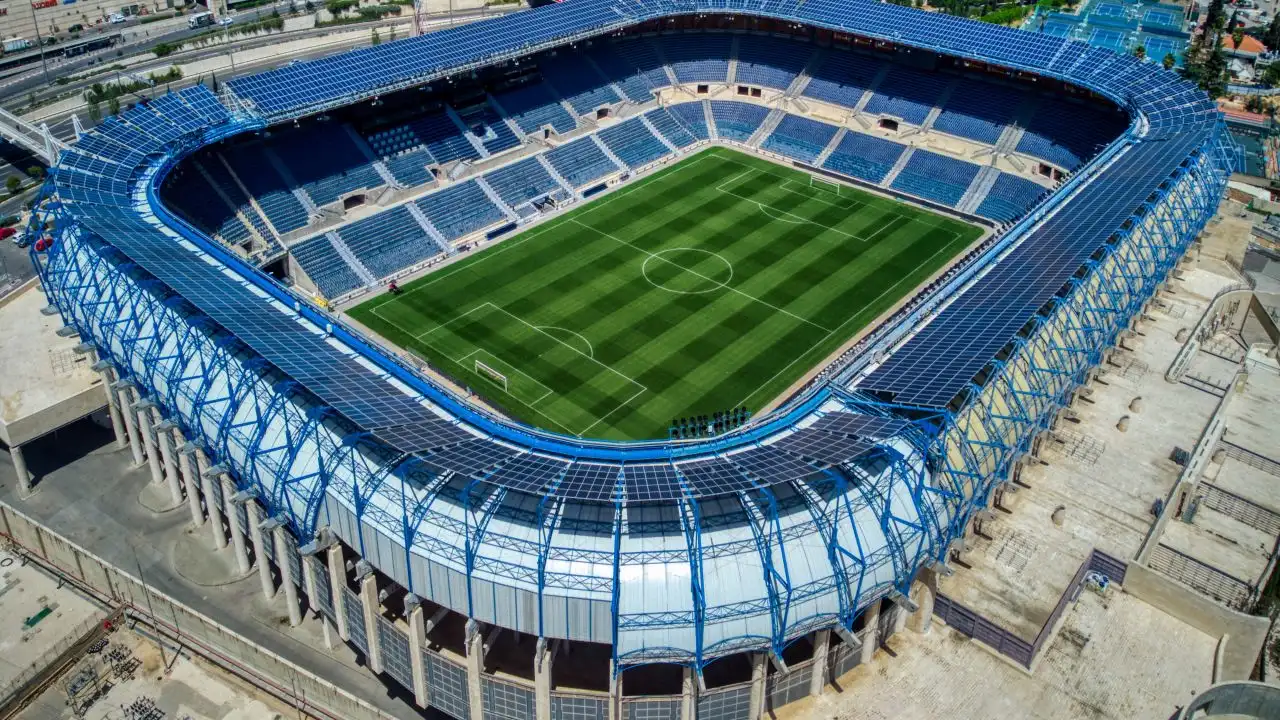
Last season, nearly 2.2 million fans attended stadiums—half a million more than the year before. These contradictory facts can be interpreted in several ways: arguing that fans come to see the team rather than individual players; debating whether the influx of mediocre foreigners harms club identity; or simply agreeing that Israelis come not just for the football, but for the added value—community and escapism in times when unity is a rare commodity.
Either way, the sky above our league is not filled with stars. There are few leaders to hold onto. If you are Kiryat Shmona, it’s not a catastrophe. If you are Maccabi Haifa, you won’t have a quiet week. Bakhar’s last season, characterized by a necessary shift toward integrating youth, could become a model for others. The next in line to potentially follow this path is Maccabi Tel Aviv, which sees more parts falling off its "Lamborghini" every year. Compare the current squad to the team from two years ago with Zahavi, Turgeman, Kanichowsky, and Patati. This year, they are fighting just for Ido Shahar. Historically, Maccabi Tel Aviv prefers to disperse its youth, and it remains the hardest Israeli club for young players to develop in. Perhaps it is time for a change in narrative to build the next generation.
The only big team that doesn’t need to hunt for star signings is Beitar Jerusalem. With Shua, Atzili, Yona, Muzie, and Weissman, the club offers a level of stability unseen elsewhere. Comparing Beitar’s status this week to its position two years ago, its definition as a "big team" is no longer in doubt. In fact, after over a decade and a half of dominance by Maccabi Tel Aviv, Maccabi Haifa, and Hapoel Be'er Sheva, there seems to be a realistic chance for a new champion. A fresh wind. No prophecies, of course.