Not just the Middle East: The new front opening a stone's throw from Israel's shores
From an Iranian threat to British bases to a Turkish ultimatum against a European electricity project: The analysis of a senior admiral reveals how Cyprus has been drawn into the heart of the regional storm.
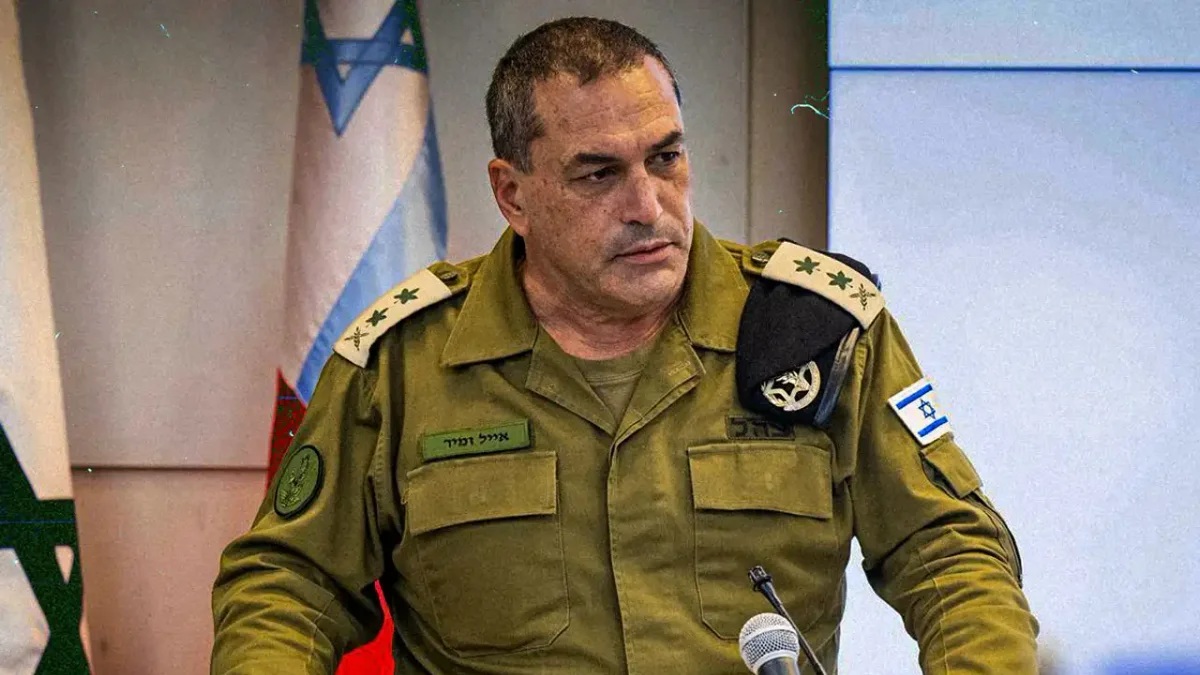
Three different developments around Cyprus are connecting, according to an analysis published by retired Turkish Admiral Prof. Cihat Yayci, into one strategic picture: the escalation of security risks around the island, the struggle over maritime borders in the Eastern Mediterranean, and the attempt to renew the discourse between the Turkish side and the Greek side in Cyprus. According to him, the common denominator for all of them is the security of the Turkish Cypriots, the status of Northern Cyprus, and Turkey's rights in the region.
Yayci, one of the voices in Turkey identified with the "Blue Homeland" concept, argues that it would be a "big mistake" to examine the three developments separately: the possibility that British bases in Cyprus will become targets in the context of a regional conflict, the renewal of contacts around the electricity cable project between Crete and Cyprus, and the meeting planned for August 26 between the President of Northern Cyprus Tufan Erhurman and the President of Cyprus Nikos Christodoulides.
The fear: Cyprus will be drawn into a regional conflict
The first issue that Yayci points to is the possibility that the island will become a direct part of conflict scenarios in the Middle East. According to him, based on reports attributed to sources close to the Iranian regime, in the event of additional extensive American attacks against Iran, American targets and their allies in Southeast Europe might be considered — including the British bases in Cyprus.
Yayci emphasizes that there is no information that an Iranian decision to attack has been made, but he claims that the very possibility that the British facilities on the island are included in possible military planning illustrates how much Cyprus is already integrated into regional struggles.
From here he moves to a broader political argument: if, in the context of future talks, the removal of the Turkish army from the island, the cancellation of guarantees, and the reduction of Ankara's right of intervention are required again, he says one must also ask what will become of the British bases and the Greek side's security agreements with other countries. He argues that it is impossible to present only the Turkish presence as a security threat while simultaneously ignoring the foreign military activity in the south of the island.
The electricity cable that became a struggle for the "Blue Homeland"
The second arena is the Great Sea Interconnector project — the underwater electricity cable that is supposed to connect Crete and Cyprus. According to the article, Greece, Cyprus, and France are working to re-promote the project, including the surveys on the seabed required before laying the cable. The involvement of the French Meridiam group has also made Paris, according to Yayci, a more prominent player in the issue.
However, from his point of view, the dispute is not really about electricity. He argues that Turkey does not oppose the laying of underwater cables or pipelines, but rather activities carried out in an area that Ankara sees as part of its continental shelf without treating it as a party with rights. The message he presents is simple: "Lay the cable. Turkey does not object. But if you are passing through Turkey's continental shelf — notify it of the route and treat it as a party."
According to him, this is precisely where the Greek and Cypriot sensitivity stems from: providing the cable route to Ankara could, from their perspective, be interpreted as practical recognition of Turkish claims in the Eastern Mediterranean. "The cable is not the problem," he writes. "The real issue is Turkey's maritime jurisdiction zones." Later he phrases it even more sharply: "The matter is not the cable. The matter is the Blue Homeland."
He also mentions that similar maritime research in the area was stopped in July 2024 after Turkish intervention, and argues that now the same file is returning to the table with the addition of French and European political weight.
The next test: August 26
The third development is the meeting expected on August 26 between Tufan Erhurman and Nikos Christodoulides. Yayci sets three central demands ahead of the meeting. The first — to stop, according to him, proceedings and arrest efforts against senior officials and citizens in Northern Cyprus regarding issues of a political nature. The second — to change the way the Deryneia events of 1996 and the conflict surrounding the attempt to lower the Turkish flag are presented.
The third demand concerns the status in which Erhurman will arrive at the table: whether as the "leader of the Turkish-Cypriot community" or as the President of Northern Cyprus. From Yayci's perspective, the answer is unequivocal: Erhurman should sit at the table as president, alongside the flag of Northern Cyprus. "This is not a question of decoration or protocol," he argues, "this is a question of sovereignty."
He continues and argues that if Christodoulides arrives at the meeting as the President of the Republic of Cyprus, a situation where the Turkish side is presented only as a "community" must not be accepted. From his point of view, the Turkish Cypriots have government institutions, a parliament, a government, a judicial system, and a flag — and therefore the question of how they will be presented at the negotiating table is essential and not just symbolic.
"Not just the future of Cyprus"
In conclusion, Yayci connects the three arenas: the fear that foreign bases in Cyprus will become targets in a regional conflict, the Greek-Cypriot-French move around the underwater cable, and the attempt to bring the sides back to the negotiating table. He argues that therefore the meeting on August 26 is not just another routine meeting, and the dispute is no longer limited to the old question of "federation or two states."
From his point of view, sovereignty, security, guarantees, maritime borders, property, and political status are all on the table at the same time. He calls on the Turkish side not to refuse dialogue, but also not to "make its state invisible" just to hold negotiations. The message with which he concludes is much broader than Cyprus itself: "What is being discussed today in Cyprus is not just the future of the island — the future of Turkey in the Eastern Mediterranean is also up for discussion."