"Total paralysis - and we have no way out": The Iranian target in Hormuz that collapsed during the war
Qeshm Island, with its 150,000 residents, was a tourism success story: millions of visitors a year, thriving hotels and restaurants, and investments flowing in. With the bombings, businesses closed - and the island remained desolate: "Life has been disrupted, there is no income," a local fisherman shared. Peace is not on the horizon, and uncertainty has become permanent: "In front of us is an enemy that attacks, and behind us is a cruel government."
Until the 40-day war that broke out at the end of February, the Iranian island of Qeshm was considered the leading vacation destination in the Islamic Republic, despite its location in the heart of the Strait of Hormuz, south of the port city of Bandar Abbas. The island attracted millions of visitors every year, partly thanks to its beaches and cliffs. On the island, part of which was declared a "geopark" by UNESCO, also lies the giant Namakdan salt cave, 6.6 km long. However, the war - which is already in its sixth month - has turned the place into a wasteland and created an extreme crisis in the local industry.
"Many residents owned boats and were engaged in transporting passengers, managed guesthouses, rented motorcycles to tourists, or operated cafes. Almost all the cafes closed gradually, sometimes one or two a day. Some people just packed up and left the island." This was shared by Farida, 25, a tourism worker in Qeshm, in an interview with the "New York Times". According to her, the industry was significantly damaged, and following the airstrikes that continued even after the ceasefire, the war never subsided for the residents of southern Iran, unlike other areas of the country. Fearing retaliation, Farida and other interviewees agreed that only their first names would appear in the extensive "Times" article. According to Farida, the island residents who remained live in a "state of constant alert" and the local population is struggling for its existence.
Before the war, the island was considered one of Iran's rare economic success stories, whose population has suffered for years from an economic crisis because most of the revenues from oil sales were transferred to the Revolutionary Guards and for the development and production of weapons. Qeshm's success stemmed from the fact that the island enjoyed significant local investments that led to the development of the place and growth in employment. According to government data, in 2025 alone, nearly four million visitors arrived in Qeshm, while investments in the island grew by 241% compared to 2024. The tourism industry provided employment for about 40% of the island's 150,000 residents, and its free trade zone, which allowed import and export at minimal costs and without tax, turned Qeshm into a major trading hub.
However, many military infrastructures of the Revolutionary Guards were also located on the island, and in statements published time and again by the United States Central Command after the attacks in the area - it was reported that missiles, UAVs, launchers, weapons depots, surveillance infrastructure, communication systems, and air defense sites were bombed, alongside mine-laying capabilities, coastal radars, ports, and bridges. The bombing campaign - which began with the outbreak of the war and continued even after the signing of the memorandum of understanding that was not implemented - focused mostly on southern Iran and along the Strait of Hormuz, and in its course, critical infrastructure used by civilians was also damaged.
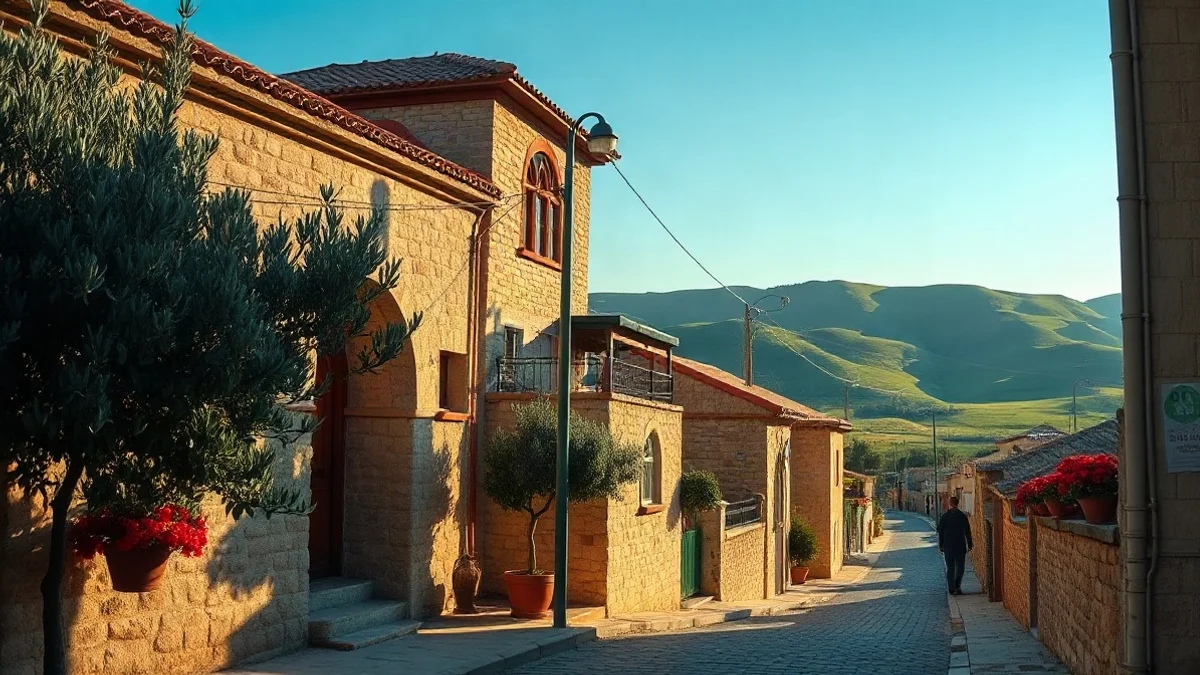
Before the war, residents of cities from all over Iran used to come to the island for weekend vacations and during the winter, but given the situation, the trend has stopped, according to the locals. The traditional houses in Qeshm that were converted into fashionable boutique hotels, and which were usually booked weeks in advance, stand empty. Cafes and restaurants along the coast, known for spontaneous dance parties to the sound of local drums, are closed. It is oppressive. I swear we are exhausted. The best thing the government can do is make peace with the world.
Another major economic activity that characterized the island is fishing - and it too has come to an almost complete stop. Nearly 20 residents, business owners, and travelers in Qeshm told the "Times" that fishermen are afraid to go out into the open sea. "Life has been completely disrupted," shared Ali (48), a local fisherman, in a telephone interview. "I spent my whole life fishing. It was my only source of income, but right now I have no income at all." He added that fishermen from the nearby islands, as well as from the coastline in southern Iran, are facing similar distress. "There is fear in us, fear, fear," he said. "Fear of terrible events and fear of war."
According to Tayeb Mufidi, a member of the Qeshm Tourism Council, the island's economic distress is spreading to a variety of fields. From hotel owners facing bankruptcy to the local fishing industry and the handicrafts market. According to him, some people have started selling personal belongings just to survive. "The situation is simply devastating," shared Hussein, a 29-year-old local teacher. "The regional economy has reached a state of total paralysis."
Since the end of February, the region has experienced a lull in only two periods, unlike other areas in Iran where the US has almost stopped attacking. Although according to US military statements, mainly military facilities were attacked and later also ports and bridges, according to documentation and statements by officials in Iran, bombs also hit tunnels, railways, docks crowded with fishing boats, factories, and water desalination plants. Last month, the US military announced when the ceasefire collapsed again that more than 1,000 new targets were bombed in southern Iran, with the strategy being to cut the region off from supplies.
Trump "lowers profile" in Iran: "The negotiations are partial, their economic situation is very bad." From a review of Central Command statements, from April 8 - when Tehran and Washington announced a lull and began negotiations on a temporary peace agreement - until July 30, the US attacked southern Iran almost every night except from April 8 to May 7 and again from May 7 to May 25. During the war, a fairly constant pattern developed: Iran attacks tankers and vessels trying to bypass the blockade it imposed on the Strait of Hormuz, the US responds by bombing targets in southern Iran, and the Revolutionary Guards respond by launching UAVs and missiles at countries in the region, among other things in an attempt to hit American bases.
"In front of us is an enemy that attacks, behind us is a cruel government." As is known, southern Iran constitutes the heart of the country's oil and gas industry. Major ports, refineries, energy and military facilities are located there. All these make the region critical for the Iranian economy and also for the country's security. Alongside this, the region is also home to millions of citizens forced to bear the economic and human burden of the war. The effects were felt in many cities: in Jask, at least 100 fishing boats in the port were destroyed, according to local officials, which affected the livelihoods of more than 3,500 people. In the port city of Konarak, 17 fishermen have been missing since May when their boat disappeared in the Sea of Oman after warning fire from an American helicopter. The largest city in southern Iran is the port city of Bandar Abbas.
"Since the attacks began, there is a constant feeling of uncertainty," said Reza, a 28-year-old local resident. "Even when Bandar Abbas itself is not being attacked, people are still worried because no one knows what might happen next." Fatemeh, 35, a mother of two in the city of Lar west of Bandar Abbas, shared that the relentless attacks and the feeling of uncertainty are harming her mental health, and she testifies to panic attacks and a feeling of helplessness. "Every time I hear the word 'war' I panic, and it lasts for days," she said. She explained that the residents find themselves in a state of complete helplessness: "We have no way out. In front of us stands an enemy that attacks, and behind us is a cruel government that makes life difficult."
Amir (45), a businessman from Tehran who moved with his family to Qeshm about a decade ago, said he was drawn to the island because of the slow pace of life, natural beauty, and economic opportunities. He bought a property, renovated it, and opened a business converting houses into fashionable hotels. He shared that he faced various difficulties, such as undeveloped roads, poor medical care, and spotty internet - but the last year was the hardest. First, he said that the government cut off the internet to suppress protests during the widespread uprising across Iran that was brutally suppressed earlier this year, during which tens of thousands of Iranians were murdered. This step, according to him, disrupted the marketing and bookings that were carried out mainly through social networks. In February, the war broke out, at the peak of the tourist season, and the economic losses piled up. He told of daily power and water outages during extreme heat, alongside damage to infrastructure that made travel difficult. "I would like the world to know that ordinary people never wanted this war and they are not a party to it," he said. "And yet they are the ones paying the highest price."
Abbas (38), a tour guide, boat operator, and local surfer, said that the island and its beaches were a home for him and many others. "People are deeply frightened, and the feeling of everyone's fear also affects me," he shared, "It is oppressive. I swear we are exhausted." In conclusion, he expressed hope and said that "the best thing the government can do is make peace with the world."