Palestinian Authority Asks UNESCO to Recognize Jerusalem Bagel as Heritage
The Palestinian Authority petitioned UNESCO to recognize the Jerusalem bagel as Palestinian cultural heritage, scheduling a committee review in China while embedding political claims against Israel in the bid dossier.
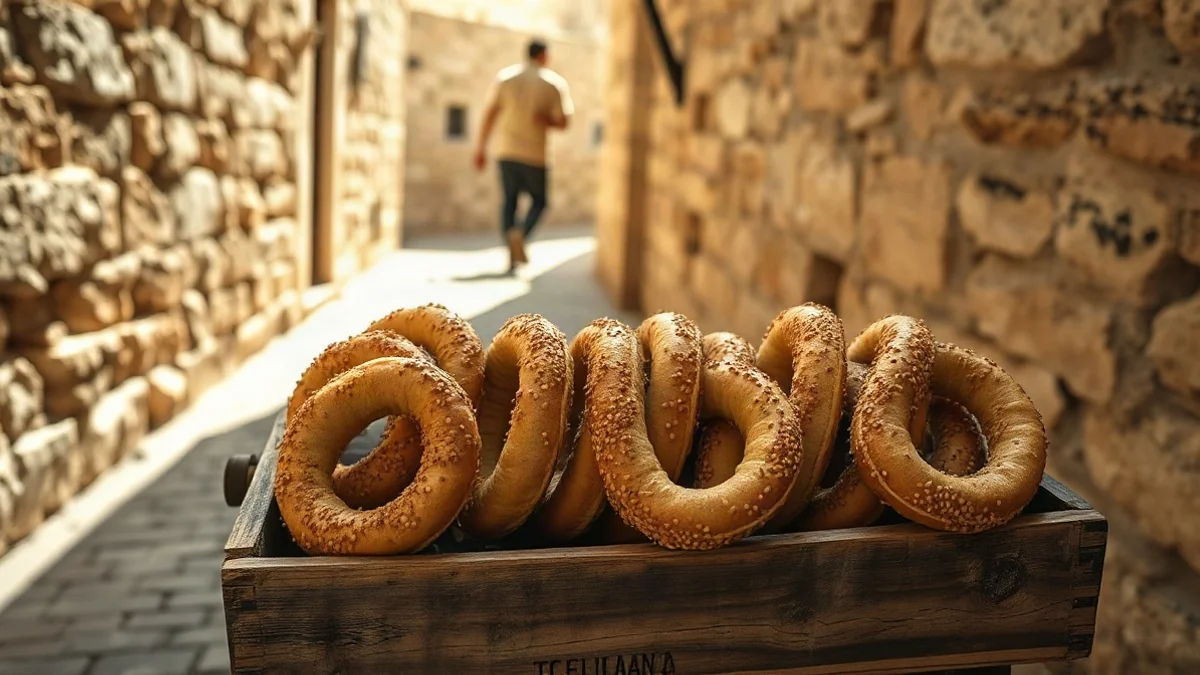
The battle over the identity of Jerusalem has extended to the traditional street food cart, as the Palestinian Authority has formally petitioned the United Nations Educational, Scientific and Cultural Organization to recognize the elongated, sesame-topped Jerusalem bagel as Palestinian cultural heritage.
The official submission was lodged under the name of the State of Palestine and includes comprehensive documentation, photographs, and letters of support from Palestinian bakery owners in Jerusalem. Between November 30 and December 5, the application titled "Ka'ak al-Quds, the Jerusalem Sesame Bread" will be reviewed by UNESCO's Intergovernmental Committee for the Safeguarding of the Intangible Cultural Heritage during its upcoming session in Xiamen, China.
Culinary Symbol and Collective Memory
In the submitted dossier, the baked good is portrayed as a distinct emblem of Palestinian national identity and an inseparable link to Jerusalem. The application form asserts that the bagel belongs to Palestinian culinary arts and urban heritage, serving as a pillar of collective memory and diaspora nostalgia. It is further described as a symbol of social equality accessible to all strata of society, bridging families, pilgrims, and visitors.
The application details familiar scenes near Nablus Gate in the Old City, where vendors sell golden, sesame-crusted rings from wooden carts. Typically consumed in the morning—often paired with falafel, eggs, olive oil, or za'atar—the bread holds particular significance for worshippers en route to Al-Aqsa Mosque. Proponents of the bid argue that Jerusalem-baked ka'ak cannot be replicated elsewhere, attributing its unique flavor to secret recipes, local water, or the sanctity of the city.
Historical Claims and Political Accusations
According to the documentation, the pastry evolved over decades, absorbing outside influences. While residents originally learned to bake round breads from the Turks until the 1980s, the familiar oval variant was reportedly developed by local baker Nasser al-Din Abu Sanina to streamline dough preparation. The submission enlists various families and bakeries presented as traditional guardians, with some claiming lineage spanning over a century.
Beyond culinary preservation, the background document levels explicit political accusations against the municipal and national authorities, claiming the Jerusalem tradition has survived despite what it terms the "Judaization of Jerusalem." The text alleges that since 1967, heavy taxation and licensing restrictions forced numerous bakeries in the Old City to close, leaving only around a dozen producers of the traditional pastry. The conservation plan demands protective measures against economic pressure and criticizes entry restrictions into the Old City.
The Palestinian bid regarding the pastry follows earlier UNESCO friction involving Israel, notably the designation of Sebastia in Samaria as a World Heritage Site in July despite Israeli objections. The upcoming December session will evaluate the living tradition alongside other cultural nominations.