"Lowering the profile": Trump's new message to Iran
Donald Trump prefers at this stage to exert economic pressure on Iran rather than start a new round of fighting. At the same time, contacts regarding the opening of the Strait of Hormuz are becoming complicated, and Tehran is setting new demands as a condition for an agreement.
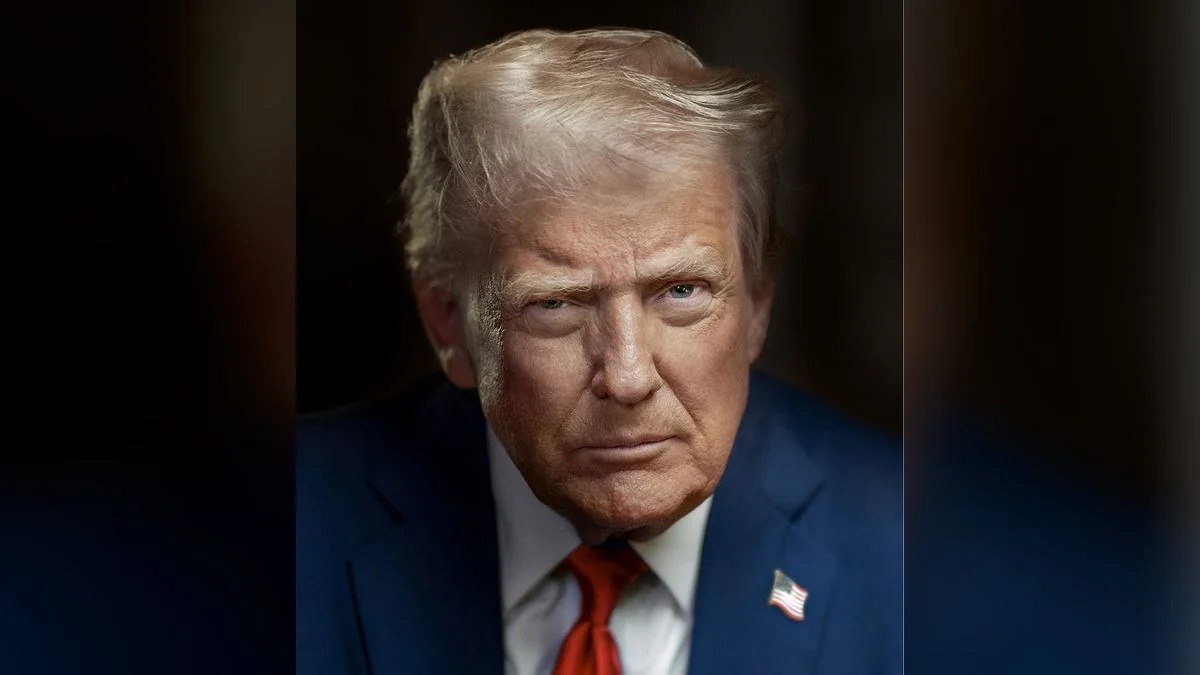
US President Donald Trump signaled that at this stage he prefers to continue and increase economic pressure on Iran, instead of ordering a new military round - even as Tehran continues to set conditions and refuse to be flexible towards Washington. The remarks were made in an interview with Axios just a week after Trump was close, according to American officials, to ordering a return to large-scale military activity.
In a short conversation with Axios, Trump said: "We are lowering the profile." According to him, "We are only conducting half-negotiations with them. We are just looking at Iran, with its massive inflation and the fact that they have no money."
Trump emphasized that Iran's economic situation is particularly difficult. According to him, Iran is in "very bad shape" economically, and is even struggling to pay its soldiers. He added that the American naval blockade has further exacerbated the economic crisis the regime is in.
Smoke in the Strait of Hormuz area after a report of an attack in the strait, July 12, 2026 (Photo: Iranian social networks)
At the same time, Trump noted that the drop in oil prices to a level of just over $75 a barrel reduces the pressure on American consumers. "It will work out. It always works out. It's like a chess game," he said about the conduct with Iran.
In the background is the emerging agreement to regulate traffic in the Strait of Hormuz, which is being discussed between Iran, Oman, and the United States and has been waiting for an official announcement for several days. As part of the proposed agreement, Iran is supposed to receive partial control over traffic in the strait - an authority it did not have before the war.
Mediators from Qatar and Pakistan were convinced that the agreement would be announced as early as Wednesday, but since then it seems that the chances of this are decreasing. In the American administration, they also point to a growing and worsening internal dispute within the Iranian regime. One camp, led by President Masoud Pezeshkian, is very afraid of economic collapse and believes that Iran must reach an agreement with the United States. On the other hand, another camp led by the commander of the Revolutionary Guards, Ahmad Vahidi, opposes any concession.
President Pezeshkian and Foreign Minister Araghchi at a rally in support of the regime in Tehran (Photo: Arab networks, use according to section 27a)
On Saturday, the head of Iran's Supreme National Security Council, Mohammad Bagher Zolqadr, presented new conditions for opening the Strait of Hormuz, beyond those already agreed upon in the contacts in Oman. In a statement he published, he demanded that the United States "never threaten or insult Iran in any language," "permanently end the war against Iran and its allies in Lebanon, Gaza, Yemen, and Iraq," and also lift the naval blockade and withdraw its forces from areas adjacent to Iran.
Zolqadr also added a demand for full compensation for war damages, the lifting of all sanctions, and the release of all frozen Iranian funds. Until a few weeks ago, these demands were presented as conditions for a nuclear deal; now Iran is setting them as conditions for reopening the strait only.
A diplomat from one of the mediating countries said that Zolqadr's statement reflects the internal political struggle within the Iranian regime. According to American officials, Trump was inclined just a week ago to renew large-scale military activity against Iran, but was persuaded at this stage to choose a lesser escalation.
American attack in Iran, at the Shalamcheh border crossing (Photo: Iranian social networks)
One of the officials explained that the fighting allowed the Iranian regime to avoid dealing directly with the consequences of the war, the damage to infrastructure, and the deep economic crisis that was created. According to him, when Iran is not busy fighting, it is forced to deal with a particularly difficult reality, without real solutions at hand.
At the same time, according to the same American official, about 8 million barrels of oil leave the Gulf every night through the southern route of the Strait of Hormuz, in coordination with the American military. The United States is expected to try to further increase the volume of oil exports as long as an agreement is not reached.
Vice President J.D. Vance clarified on Saturday that from Washington's perspective, the campaign is still far from over. "This thing is not over. It's clear that we are no longer at the beginning. We are in the middle of the game, and we are using a whole range of tools - diplomatic, economic, and military - to ensure that we achieve the best result for the American people," he said in an interview with Fox News.